Midnight’s Furies: The Deadly Legacy of India’s Partition, by Nisid Hajari

IMG_0420Famously the Indian sub-continent freed itself from British rule through a non-violent struggle led by Gandhi. However rather than this being a great triumph for passive resistance, the efforts by Congress, the Muslim League, and the Sikh leadership to carve up the spoils more than made up for it in terms of bloodshed: the Partition of India saw one of the most horrendous blood baths of the 20th Century, and the largest forced migration in human history. Sometimes these two things coincided with trains of refugees pulling into their destination stations dripping with the blood of the women, children and men passengers who had been hacked to death in ambushes.

In Midnight’s Furies, Nishid Hajari details how the political calculations, petty jealousies, posturings, misjudgements and misunderstandings of the sub-continent’s political leaderships, in particular Jinnah and Nehru, led to the sectarian carnage that engulfed the creation of the modern states of India and Pakistan.

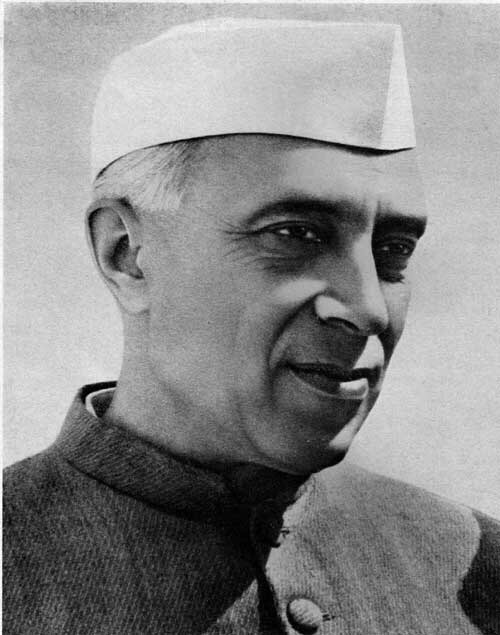
Nehru

Nehru

Hajari provides a much less sympathetic portrait of Nehru than Alex Von Tunzelman’s fine account of the same period, Indian Summer. For Hajari, Nehru failed in his responsibility as a statesman of obtaining some sort of rapprochement with Jinnah and the Muslim League, and hence undermined his vision of a secular India for all Indians. Hajari also portrays Nehru, at least in the early days of his premiership, as a man in office but not in control. His dream of a secular India uniting Hindu, Muslim and Sikh under a common citizenship bloodily undermined by the extraordinary violence of the period, which his administration seemed powerless to prevent.

Doubtless some of this was spontaneous communal violence drawing on obscure but profound local animosities and feuds. But much of it was not. Each community produced paramilitary forces, many of them highly professional as a result of the large numbers of former soldiers in their midst. These set to the butchery of their neighbours with a relish and ruthlessness that would not have been out of place in the Bloodlands of Eastern Europe a few years earlier.

This killing was frequently facilitated by the failures of Indian and Pakistani police and military to properly intervene to uphold the law. Sometimes the police and army stood idly by. Sometimes they became active participants in the slaughter.

In this regard they were echoing the equivocal leaderships of the two states: Jinnah appears to have missed the logical contradiction of wanting a secular republic for Muslims only. In India Hindus and Sikhs seemed to take their lead less from Nehru and more from Sadar Patel, the States minister in the Indian Union government. Patel regarded the ethnic cleansing of the Muslim population as a good thing, purging the state of potential fifth columnists. He also regarded the neo-fascist RSSS with considerable warmth despite their butchery of tens of thousands ordinary Indians.

Patel

Patel

With such equivocal leadership at the heart of government it is unsurprising that so many police and troops turned a blind eye to the atrocities. To his credit, when able to do little else, Nehru time and again sought out and faced down Hindu murder squads, striving to personally halt the killing which so much of his own administration was acquiescing in. Order only finally began to be restored by the intervention of Nepalese Gurkha and Southern Indian troops, who were less given to the sectarian passions of the northerners. The assassination of Gandhi by a right wing Hindu also caused some pause to the likes of Patel and the rest of the nation who perhaps only then began to glimpse the lunacy that their sectarianism was bringing.

Hajari is particularly interested in the origins of Pakistan’s current disfunction and sponsorship of terrorism, something which he shows very well. However the book also casts significant light on the current disfunctionalities of the Indian state.

Shortly before the victory for Prime Minister Modi’s BJP in the Indian general election I spoke to an Indian friend about the anticipated result. He argued that there were three strands in the Indian independence movement: the Nehruist/Ambedkarist republican tradition which has been dominant for much of Indian history; a communist/socialist strand which has enjoyed power in some of the Indian states; and finally the Hindu Nationalist tradition which Modi was now bringing to power.

However from Hajari’s account this Hindu Nationalist tradition was a very dominant one in the first Indian government, constantly undermining the visions of Nehru and Ambedkar. The caste-based apartheid, the rapes and murders of girls and young women, the enslavement of vulnerable workers that disfigure contemporary India, the world’s largest democracy, may, at least in part, be seen to derive directly from the Hindu-nationalist vision that so bloodily asserted itself in 1947 and asserts itself still to the present day.

Gandhi and Jinnah in happier days

Gandhi and Jinnah in happier days

Midnight’s Furies is a beautifully written but harrowing account of the origins of India and Pakistan. It is an important book about the origins of a contemporary Cold War, about human beings’ inhumanity to other human beings, about how magnaminty and empathy are so vital to diplomacy, and how their absence can lead to carnage.

The Last Battle, by Stephen Harding

imageOn 5 May 1945 arguably the last ground battle of World War 2 took place. It was a relatively small and very brief affair by the horrendous standards of that war, but it made up for that in terms of strangeness.

In the early hours of the morning of 5 May a force of Waffen SS attacked a castle in Austria, Schloss Itter, intent on massacring the prisoners there. The attack was resisted by a tiny ad hoc force of US tankers, Austrian resistants, anti-Nazi Wehrmacht and the prisoners themselves, who were a veritable who’s who of the French political and military elite, including Gamelin, Daladier, Reynaud, Weygand and the labour leaders Leon Jouhaux and Augusta Bruchelen.

It is the only known time in the war when Wehrmacht and Allied troops fought side by side.

imageimageThe Last Battle is a short but highly entertaining book, and very informative regarding the divisions and dissensions in French politics both before and after the fall of France. It is also a warm tribute to the American and German commanders during the battle, Jack Lee and Josef Gangl, both of whom could have ignored the threat to the prisoners in the castle but who instead risked their lives with the Austrian resistance to stop a blood bath.

Antony and Cleopatra, by Adrian Goldsworthy

IMG_0239If, before reading Goldsworthy’s magisterial biography, the Caesar of my imagination was essentially Shakespeare’s construct, Antony and Cleopatra for me have always had the faces of Sid James and Amanda Barrie.

However, not that it will surprise anyone, Goldsworthy’s joint biography of the two does rather show that they were not nearly as nice as Carry On would have us believe.

Despite remaining something of a shadowy figure with apparently little of her own direct correspondence remaining, Cleopatra is by far the more impressive of the two. She parlayed, initially, little more than her intelligence and beauty into securing the throne of Egypt for herself by seducing in succession the two most powerful men in the world. Having secured her position she acted with considerable ruthlessness killing her rivals, including her own siblings. Subsequently she poured the resources and treasure of Egypt into the military schemes and political careers of her lovers as a means to secure her own position.

Goldsworthy argues that, in spite of the legends of Cleopatra’s sexual voraciousness, she probably only had two lovers in her life, Caesar and Antony. He presents evidence that there was genuine love from both sides in these relationships in spite of the political calculations that each of the three would also have been considering.

Unfortunately for Cleopatra, Antony was an inferior model of Roman to Caesar. Antony was a talented subordinate but he was a poor general given to heavy drinking, and in later life, particularly following his military reversals in Parthia, depression. His power came to him in considerable part through luck in the turbulent aftermath of Caesar’s assassination. Cleopatra’s grip on power was only as secure as Antony’s and in the end he was no match for Octavian, who, in spite of his apparent lack of physical courage, as he got older began to display a political genius that echoed his uncle’s military variety.

IMG_0238Goldsworthy’s book is a consistently interesting account of the lives of these two, in particular in the chaotic aftermath of Caesar’s assassination and the beginning of Octavian/Augustus’ reign as the first emperor. There is no mention of baths in asses’ milk but, nevertheless, it does entertain albeit in a very different way from Sid and Amanda’s gloriously silly portrayal of the relationship.

The Rise of Islamic State, by Patrick Cockburn

imageThe Rise of Islamic State is a short book but an extremely important one. Cockburn, a veteran Middle East correspondent, lucidly describes how Islamic State has arisen as a concrete legacy of Bush and Blair’s inept and illegal invasion of Iraq. He also unpicks the political and military quagmire currently extant in that region.

Cockburn identifies Saudi Arabia as the primary source of financial support for Islamic State (DAESH) and its predecessor Al Qaeda, and the origin of its barbaric “jurisprudence”. However in the aftermath of 9/11, or indeed at any time subsequently it seems, rather than confront Saudi Arabia, or Pakistan with its murky ties to international terrorism, the Bush administration instead invaded Iraq, a country that, for all the brutality of Saddam had nothing to do with the 9/11 attacks.

George W Bush, with his pal Prince Bandar bin Sultan,

George W Bush, with his pal Prince Bandar bin Sultan, “godfather” of DAESH (Islamic State)

One can only imagine how Prince Bandar bin Sultan, the Saudi ambassador to the US, an instigator of the Iraq invasion and frequent house guest of George Bush, must have giggled to himself at how easily led the US was towards advancing Saudi Arabia’s brutal foreign policy without Saudi ever having to get its hands dirty. As head of Saudi intelligence subsequently, from 2012 to 2014, Bandar was the key individual responsible for backing DAESH against Shia and minorities in the region and so helping them become the potent military force they currently are.

Cockburn points out that while DAESH may not be loved by the Sunni population of Iraq, they are tolerated by them because the alternative, perhaps unbelievably to some, would be much worse for them. The bigoted, pro-Sunni extremism of DAESH Wahhabism is mirrored by the brutality and sectarianism of the Shia militias that the US and UK supported Iraqi government have been sponsoring.

Which brings us to the present: the Obama administration’s efforts seemed to be towards a detente with Iran as an element in not only a nuclear non-proliferation strategy but as one, along with support for the Kurds, against DAESH.

The desire of the US Congressional Republicans in collusion with Netanyahu to undermine a deal with Iran seems peculiar. However this is in keeping with the ineptitude and dysfunctionality of US Middle Eastern policy over the past 15 years, something made altogether more terrifying when the shallow but fevered imaginings of Donald Trump are brought to bear on the situation.

However one should also recognise that US policy towards the region now appears to have much in common with that of the UK. Both seem to value the possibility of profiting from the sales of arms to Saudi Arabia rather than actual regional security. In the end perhaps the US and UK will gain the same comfort as the gun store owner who at least has the satisfaction of knowing he sold the gun to the psychopath who murders him.

All too human: war and terrorism in the contemporary world

Picasso's Guernica

Picasso’s Guernica

In the aftermath of the recent spate of atrocities by Islamic fundamentalists it is probably worth focussing on a couple of points that have been obscured in the rush to condemnation.

First this sort of atrocity is nothing new in modern history. Ordinary Germans routinely massacred civilians in Eastern Poland during the Second World War. Much of the RAF bombing campaign on Germany during the same war was indiscriminate and killed thousands of old people, women and children. American troops in Vietnam regularly butchered Vietnamese civilians. Irish paramilitaries slaughtered both compatriots and British civilians alike. The last vestiges of the notion of Israeli “purity of arms” died in the slaughterhouse Prime Minister Netanyahu created in Gaza in the summer of 2014. In fact in the sweep of human history the idea of refraining from making war on civilians has been rather unpopular, and the wars emanating from, and waged in the contemporary Middle East are no exception.

The notion that Muslim atrocities are somehow qualitatively different and beyond the moral pale of what the Western world would contemplate is laughable, and must be even more laughable to those who, in recent years, have been on the receiving end of the violence of the West and its allies.

However it does seem plain that at this point in history there is a significant sub-culture within the European Muslim community which is alienated from the democratic ideals of wider European society, and within that, a smaller minority which is prepared to resort to violence and terrorism both in Europe and abroad as an expression of this alienation.

A lot of the focus in the aftermath of the most recent attacks has been on the need for European Muslim community leadership to combat this alienation. Such leadership has and will continue to have considerable potential to lead young people away from violence and towards more constructive roles for their community and wider society. But it is disingenuous to presume that the reason that young people are engaged in violence to the current extent is because of failures in the leadership of the Muslim community.

To presume this may be comforting to non-Muslims, as it implies that we have no responsibility for Muslim alienation. But it is not a response to the violence that will leave a single individual anywhere in the world any safer or more protected from random and brutal terrorism.

Goya's Shootings of the third of May

Goya’s Shootings of the third of May

Because, of course, alienation and terror on this scale never occurs in a vacuum. Just because the wider society is unaware of the narrative that is justifying that terrorism to its perpetrators does not mean that such a narrative does not exist. And just because the narrative may be filled with distortions and logical inconsistencies does not mean that it is any less compelling to its adherents.

What should be apparent to even the most myopic of observers is that the fundamentalist violence that we have witnessed in Europe over the past 10 years comes in the context of a much wider system of violence. And, as Patrick Cockburn has put it, “It is inevitable that sparks from these conflicts land in Western Europe and other parts of the world.”

For many in the West this cycle of violence started with the attacks on the World Trade Centre. However Muslim grievances predate that. For example the West’s acquiesce in an emerging system of Israeli imposed apartheid in Palestine or the horrific brutality of the wars in Algeria are both capable of providing alternative points of origin for a narrative in which 9/11 seems no less and no more justifiable than Dresden or Nagasaki. And the brutal conduct of the bloody fiasco in Iraq has sustained the flow of grievance.

European Muslims are likely to have similar reactions to injustices against Muslims in Gaza or elsewhere as Irish Americans had against British injustice in the North of Ireland. However the danger, from a contemporary point of view, is that the US wasn’t seen as being complicit in British injustice. Today Europe, in particular the UK, may be closely and ignominiously identified as being complicit in the bloody mess of Iraq and Israel’s violence against Palestinians.

In other words, distasteful as it may seem to some, the current spate of Islamic fundamentalist terror is a political problem. It is not an Islamic versus Western ‘clash of civilisations’, though some would like it to be portrayed as such: Netanyahu’s cynical elbowing to the front of a Parisian photocall with international leaders in the aftermath of the Charlie Hebdo attack was a physical assertion of this idea. He intended to convey to Europe and beyond that it has no choice but to stand alongside his militarism. Rather what we see is a set of wars of varying sizes and asymmetries that are born from fundamental human and therefore political issues of injustice, violence, alienation, cruelty and stupidity.

But if we can accept that this fundamentalist violence is the consequence of a more mundane set of political problems then we can recognise that it requires political solutions, or at least a political process, to address the causes of alienation alongside the security response necessary to attempt to fend off future attacks.

Picasso's Rape of the Sabine Women

Picasso’s Rape of the Sabine Women

The full extent of the political agenda that should be followed will be considerable and international in scope. It may necessarily include consideration of the question of reconciliation between French and Algerian peoples. It should probably include confrontation of Pakistan and in particular Saudi Arabia as countries that have been the ideological reservoirs, financiers and facilitators of much of the terror that is currently plaguing the Middle East and the world. Unquestionably one element must be the robust pursuit of a just peace between Israel and Palestine, instead of the international acceptance of the quasi-apartheid that currently pertains. This will require the Jewish community bearing a heavy burden of leadership comparably to that required of non-violent Muslim leaders: the one thing the current Israeli government and its apologists seem afraid of is ordinary Jews publicly repudiating the Israeli government’s extremist policies and racist attitudes. Such sanction carries with it a credibility that non-Jews, lacking links to the appalling tragedy of Jewish history, could never hope to attain.

An international political process that openly seeks to deal justly with grievances would provide political weight and credibility to those leaders and citizens, particularly Muslims, who wish to pursue the path of non-violence. Without it, those same advocates for peace will be rendered much less effective, twisting in the wind as the West blunders on repeating the patterns of the past 10 years with brutal and inept military responses to problems emerging from countries and societies that we barely begin to understand.

Traitor to his Class: The Privileged Life and Radical Presidency of Franklin Delano Roosevelt, by HW Brands

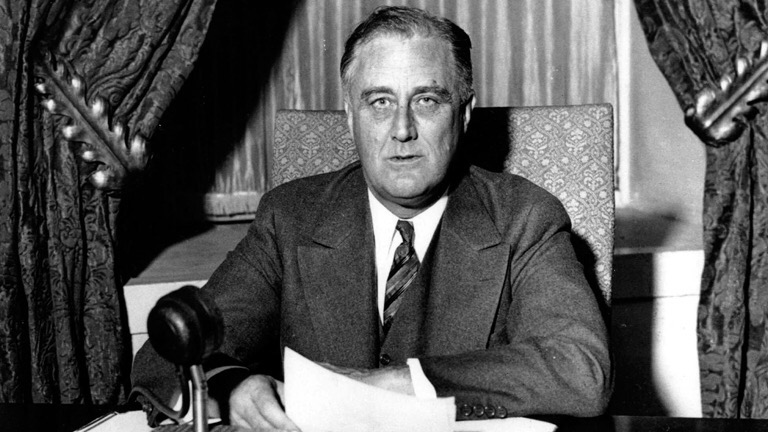
IMG_0172Franklin Roosevelt, the only US president elected more than twice, is generally viewed alongside Lincoln and Washington as the greatest of American presidents. This biography is an elegantly written survey of his life, times and accomplishments.

At the outset of his life it seemed the world was his oyster. He was born into considerable wealth and a prominent family – cousin Theodore was a Republican president. As was typical of his class much of Roosevelt’s upbringing was left to nannies and servants. Peculiarly Brands suggests that two of these servants, Helen McRorie and Elspeth McEachern, because they were from the North of Ireland, cemented his anglophilia. For those familiar with the politics of Ireland, the Catholic name of Helen McRorie would rather suggest that she may have been a significant source of his radicalism: It is more than probable that she was from the nationalist community and brought with her deeply felt memories of marginalisation and discrimination at the hands of the British and Unionist establishments in Ireland. Indeed this awareness of the nature of British colonialism may have added conviction to Roosevelt’s advocacy of Indian independence during the war.

Roosevelt’s privileged youth led him to Harvard and then a political apprenticeship in New York politics, thence to a spell, including the duration of the US involvement in the First World War, in the federal government as Under-Secretary of the Navy in the Wilson administration.
eleanor-rooseveltBut the seeming gilded path was somewhat illusory. His wife, an extraordinary person in her own right, Eleanor, was almost certainly gay, and so, as their marriage progressed it became less a loving relationship and more a political alliance of close friends. Roosevelt’s life was further cruelly marred by a bout of polio which deprived him of the use of his legs. Following a period of rehabilitation however he found his way back to electoral politics eventually becoming governor of New York and then, in 1932, president.

His accomplishments in this role were considerable: the “New Deal”, a rearrangement of the political economy of the United States, helped bring an end to the Depression, introducing banking regulation, promoting labour rights, founding social security and ending child labour in the process. His leadership of his country in the Second World War was decisive in the defeat of the Axis, and the United Nations remains one of his most enduring international legacies.

Part of Roosevelt’s success derived from his legendary charm, but beneath this there was unquestionable steel, tempered by his personal travails, but constantly under control. The strain that this placed on him was not inconsiderable: observers noted his exhaustion at Yalta from trying, perhaps a little naively, to charm Stalin away from his murderous, imperialist ways. And the pressure of the presidency through the crises of war and peace contributed to Roosevelt’s relatively early death.

Traitor to his Class is a fine introduction to one of the pivotal figures of the twentieth century and his times. Still, in spite of this, at the end Roosevelt seems a rather remote figure. It is as if the restraint and reserve he showed through life still renders him somewhat unknowable today. Nevertheless, as Eleanor noted at his death, “If at the end one can say: “This man used to the limit the powers that God granted him: he was worthy of love and respect and of the sacrifices of many people, made in order that he might achieve what he deemed to be his task,” then that life has been lived well and there are no regrets.” And in Roosevelt’s case, the liberty of western Europe emerged from his life, and those of us who live here must always remain grateful for that.

Debt to the Choctaw Nation

I remember once being asked by a journalist during the war in Angola, what had brought me there.

I said it was an effort to pay off the Irish debt to the Choctaw nation.

She thought I was joking, so I explained.

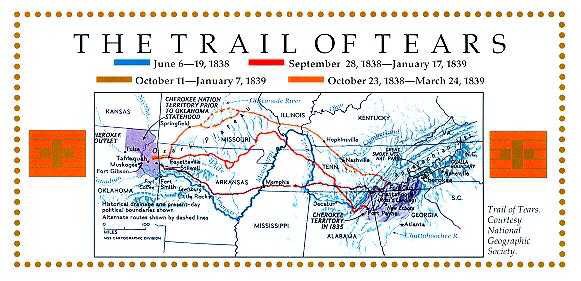
In 1831 the Choctaw Nation were forced from their ancestral lands as a result of President Andrew Jackson’s Indian removal policy, something that today we would refer to as an act of “ethnic cleansing”. The forced march of the first group from the Deep South, to Indian Territory in present day Oklahoma began on 1 November. It was described by their chief as “a trail of tears and death”: at least 2,500 children, women and men died along the way.

IMG_0049.JPG

Jackson, the seventh US president, was Irish, from Carrickfergus in County Antrim. The Choctaw Nation may or may not have been aware of this fact by 1847 when they heard news of the mass starvation of millions of Irish people brought about by a combination of racist and inept policy on the part of the British government who directly ruled Ireland at the time. They did however have a strong memory of their own recent experience of starvation and displacement as a consequence of racist and inept US government policy. Hence their reaction to the reports from Ireland was empathy and, in spite of their continued impoverishment, they gathered what cash there was amongst them to make a donation of $170 for famine relief in Ireland.

Swedish-Choctaw artist America Meredith's work on Choctaw aid to the Irish

Swedish-Choctaw artist America Meredith’s work on Choctaw aid to the Irish

Mass emigration became a feature of Irish society during and after the famine. Many of those who the Choctaw tried to save, fled to the United States in search of a better life. Some, including I have recently discovered some of my emigrant cousins, ended up as troopers in the Union army. After the Civil War many of these troopers participated in the genocidal campaigns against the Native Americans of the Plains. Few Irish, it seems, demonstrated the fraternity with oppressed Native Americans that oppressed Native Americans had shown us.

So the debt to the Choctaw nation remains. It’s a debt that, I think, requires solidarity with the oppressed where ever they may be and an effort towards practical help where possible. Frankly it’s a debt that can never be repaid. But anyone with a sense of common humanity should feel honour bound to keep trying.

Learning from History and the Present: citizens and the struggle to end slavery

Keynote speech to the 15th Annual UNESCO Chair & Institute of Comparative Human Rights International Conference, University of Connecticut

I was asked to speak a little about the broad overview of contemporary slavery and provide some historical background on the struggle So I will try to do that.

I think an important place to start relates to the question of what do we mean by slavery. I am frequently dismayed at meetings of both academics and activists when some pose questions such as “What is modern slavery?” or “Is trafficking slavery?”

The struggle against slavery is one of the oldest human rights struggles in the world, so if someone is new to this field, as some important actors are, it is important to remember that we do not have to reinvent the wheel. This path has been trodden by giants before us and we are building on the work that they have done.

So what is contemporary slavery? When we in Anti-Slavery International talk about “slavery” we use that word as an overarching term for the human rights abuses defined in international law, principally by the 1926 Slavery Convention, by the 1930 Forced Labour Convention, the 1956 Supplementary Convention on Slavery, the 2000 Palermo Protocol on trafficking, and the 2014 Forced Labour Protocol.

A good working definition of contemporary slavery comes from the 1930 Forced Labour Convention, which defines forced labour as all work or service extracted under menace of penalty, for little or no pay, for which the person in question has not offered themselves voluntarily. Trafficking is the technical process of moving people into situations of forced labour – so trafficking is indeed, by definition, slavery.
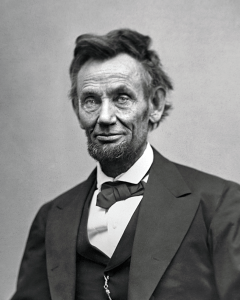
Lincoln sought a legal basis to end slavery in the United States

Lincoln sought a legal basis to end slavery in the United States

There are other important international laws related to this field, in particular on child labour and decent work, and there are important nuances within the slavery conventions I mentioned. But it is vital to note that this question of, “What is slavery?” is not a matter for social scientific contention of the sort so beloved by academics. It is something that has been established in international law as a result of considerable effort over the past 100 years to provide a robust framework for the continuing struggle against slavery. Remember how Lincoln had to struggle for a legal basis to end slavery in the United States. It is important to realise that we do not have to go back to that situation.

An Indian brick kiln

An Indian brick kiln

Part of the reason for this breadth of law in the international conventions is that contemporary slavery reflects a diversity of human experience: a life lived in bonded labour in Indian brick kilns is different in important respects from that of a Nepalese domestic worker in Lebanon, or somebody in chattel slavery in West Africa, or a “restavek” child slave in Haiti, or a forced labourer in American agriculture. Hence the responses to these problems must be nuanced and adjusted to the realities of those particular abuses in the time which they occur. The 2014 Forced Labour Protocol was adopted in recognition that the realities of forced labour have changed since the original Convention was adopted in 1930, and there will doubtless be other areas where there is a need for further extension and development of the international law, for example around the issue of child marriage.

But in spite of the spectrum of experiences of contemporary and historical slavery empirical studies conducted by Anti-Slavery International and others indicate that slavery emerges at the conjunction of three common factors: individual vulnerability, usually, but not exclusively as a result of poverty; social exclusion; and failure of rule of law.

The issue of social exclusion and discrimination is a fundamental one in slavery: when we look at historical slavery in the Americas we see that racism was both a cause and a consequence of that slavery.

Thus has it been, thus will it always be.

In Latin America today many in forced labour are indigenous people. In Western Europe most people in slavery are migrant workers. In South Asia most people in slavery are Dalits or from other scheduled castes or minority groups.

This is important for a variety of reasons, not least that it inhibits the issue from becoming a political one: if slavery is being inflicted upon groups and individuals who the wider society simply does not like, then that wider community is more likely to tolerate the abuses if they see them and not raise their voice to demand that governments do their jobs to stop the problem.

And slavery is very much a failure of governments’ most fundamental responsibility: establishing rule of law. Tom Bingham, one of the outstanding British jurists of the past 50 years argued that human rights, including, of course, an absolute prohibition on slavery, must be at the heart of any credible system of rule of law. But in a recent study we conducted of child labourers enslaved in the garment workshops of Delhi they told us how, despite plenty of good Indian law against slavery and child labour, when the workshop owners fail to pay bribes to the police, the police come, arrest the children and hold them hostage, stopping work, until the bribes are paid. In other parts of India Dalits enslaved in brick kilns or agricultural labour find it next to impossible to obtain legal remedy for the situations in which they find themselves.

In other parts of the world rule of law is much more explicitly undermined. In Qatar there is the “kafalah” system. This is a so-called sponsorship system that ties workers to their employers to such an extent that even in the most abusive employment relationships, up to and including forced labour, the workers cannot change jobs or even go home. It is this system that underpins the trafficking for forced labour of thousands of South Asian labourers for work on the infrastructure and venues for the soccer world cup in Qatar 2022.

Kafalah is a cynical system to facilitate medieval levels of exploitation up to and including slavery across the Gulf states.

It is also essentially the same system that the United Kingdom government has in place for migrant domestic workers. The UK system for domestic workers’ visas de facto legalises trafficking for forced domestic servitude. It does this by explicitly saying to migrant domestic workers that if they leave the employment of the person to whom their visa is tied, no matter how abusive that employer may be, they will be deported. That places in the hands of unscrupulous employers an enormously powerful threat to hold over the head of any vulnerable worker hoping to improve their own life and that of their family through hard work.

The refusal to apply basic protections of rule of law to some within a society is sometimes deliberate in order to obtain some aristocratic privilege over a group of people, such as was the case with the 19th Century US system of slavery, even when free labour and emancipation were more attractive economically. This remains the case with India’s caste-based apartheid today.

Sometimes the failure to provide basic rule of law protections are as a result of a mistake or oversight. Sometimes, as we are presently seeing with the British Government, it is as a result of ineptitude born of ignorance, ideology and xenophobia. In the UK, for example, if a person from the European Union presents themselves to the authorities as a potential survivor of trafficking then there is a greater than 80% chance they will be recognised as such. If they come from outside the European Union then there is less than a 20% chance they will be recognised as such. That sort of imbalance in decision making can only be the result of institutionalised discrimination, something fed by the media and political elites who should instead be sanctioning those who disgrace their offices by privileging their petty bigotries over their responsibilities under the law.

In the 21st century the issue of government response to slavery becomes much more vital as the political economy becomes increasingly globalised. With globalisation the capacity of states to regulate business, as envisioned by classical economics is increasingly limited because too few states recognise that this responsibility now requires extraterritorial legislation to ensure the legal accountability of trans-national corporations, and of individual business executives who are running those corporations. Such legislation is also a central requirement in the struggle against contemporary slavery, particularly as businesses extend their operations into countries with limited rule of law and high levels of corruption.

The history of the struggle against slavery, as with the rest of the struggle for human rights, and the rest of history, is sometimes a messy and fraught affair, filled with petty rivalries, personal jealousies and self-serving accounts. And because, given the nature of slavery, its history is quite a personal story. People are not enslaved by poverty or drugs or some impersonal force: human beings do this to other human beings.

The diversity of personal perspectives means that there is inevitably a diversity of historical narratives. This is accentuated in the history of the struggle against slavery by the fact that there is a plurality of historical slavery experiences just as there are a plurality of contemporary experiences: from the trans-Atlantic slave trade and that of the Americas, to the trafficking from East Africa to Asia, to the indigenous forms of slavery and slavery-like practices, such as serfdom, that were present in Europe and the rest of the world.

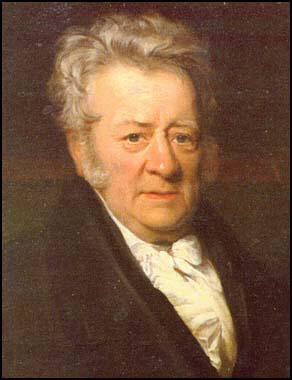
Thomas Clarkson

Thomas Clarkson

Memory can be a self-serving thing as can the official versions of history. So surveying the history of this struggle can be confusing. Alongside the immense, and immensely troubling, accounts of the experiences of people in slavery, there are also propagandistic accounts of the benefits of slavery for enslaved people. And, just considering the anti-slavery struggle, there were also inevitable clashes between the leading anti-slavery figures. This resulted in such unedifying spectacles as the efforts by the sons of William Wilberforce to try to write the monumental figures of Clarkson and Equiano out of history, or the efforts of Salmon Chase to organise a coup d’etat against Lincoln. Some historian’s even discern a dispute between Spartacus and Crixis at the height of the Gladiator War.

But, nevertheless, history and society critically interrogated can be a source of understanding and learning.

The former French Prime Minister Georges Clemenceau was once asked if anything could ever be said with certainty about the First World War given all the vast and bloody confusion that entailed. Yes, he said. “No one can ever say Belgium invaded Germany.”

Such hard facts may be rare enough in history, and indeed in any aspect of life, but it is important to try to find them because from them we can discern what worked, what didn’t work and why.

And, at least as importantly, the process of thinking critically about history, and of refusing to accept unthinkingly the propaganda of the powerful or the official versions of the winners, of considering carefully life and society, can provide a basis for developing our own citizenship and our capacity for action for justice.

I think there are a number of hard truths that than can be discerned from contemplation of the historical and contemporary struggles against slavery.

The first thing that emerges for me from consideration of the diversity of contemporary anti-slavery struggles is that there is not a single anti-slavery movement.

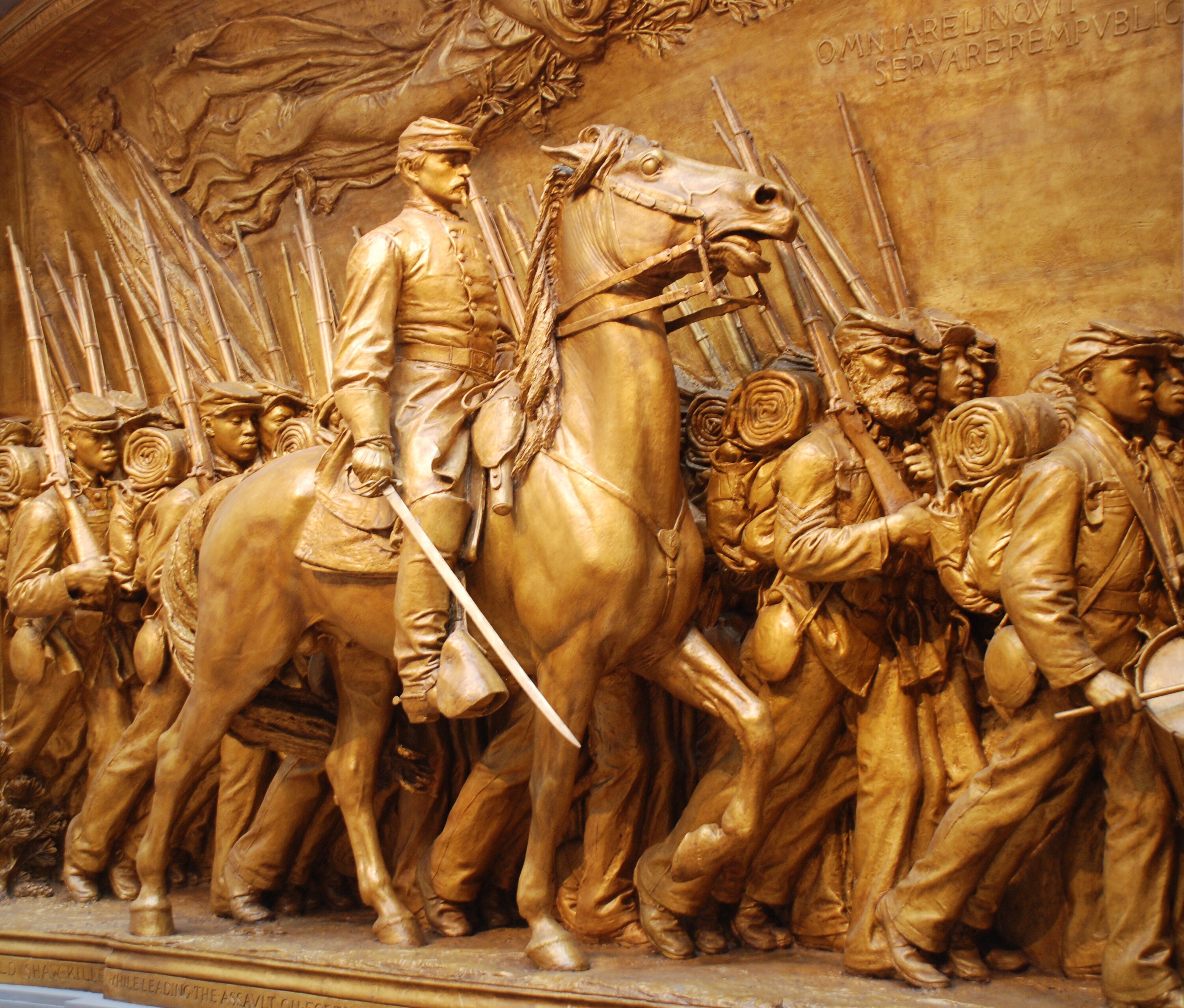
The memorial to Shaw and the 54th

The memorial to Shaw and the 54th

I was at the International Slavery Museum in Liverpool a while ago and I saw a poster there commemorating the struggle against slavery and the transatlantic slave trade: it said “Remember not that we were enslaved, but that we fought“. It’s a truth stunningly emphasised in the memorial to Robert Gould Shaw and the Massachusetts 54th on Boston Common.

And it remains the case today. However the activists who risk life and limb to end contemporary slavery across the globe know that few today beyond their own directly affected communities are remotely interested in trying to end these modern forms of slavery.

Unlike previous struggles against aspects of slavery or more recent struggles to end, for example, apartheid in South Africa, or to advance the peace process in the North of Ireland, the contemporary efforts of indigenous campaigners against slavery are very poorly supported by international efforts.

There is very limited discussion on how policy on migration, international aid, trade, or diplomacy should be shaped to support local anti-slavery activists. There is little discussion on how to reshape the international political economy away from one where unscrupulous political and business leaders are allowed to develop competitive advantage through their facilitation of, or use of, forced labour and slavery. The international silence is deafening on caste discrimination in South Asia, which imposes a system of apartheid on over 300 million people. This system not only undermines the very concepts of rule of law and democracy in South Asia but also provides the social exclusion vital to establish a population who can be enslaved with impunity.

This provides huge benefits to powerful vested interests across South Asia. But we in the Northern hemisphere also benefit. Slavery provides us cheap shrimp for the dinner plates of Europe and North America. So extensive still is the use of the forced labour of girls and young women in garment manufacture in southern India, not to mention the forced labour, including forced child labour, in cotton production in Uzbekistan and other parts of central Asia, that the probability is that every one of us in this room is wearing at least one garment that is tainted with contemporary slavery.

Just to give one illustration of what that means in human terms: In the course of a piece of research Anti-Slavery International, funded by Humanity United, conducted into the forced labour of girls and young women in the garment sector of the state of Tamil Nadu in Southern India we spoke to the mother of one young woman, 20 years old, about the same age as many of you, who worked in a cotton spinning mill there. She described visiting her daughter:

Barbed wire around the compound of a South Indian spinning mill

Barbed wire around the compound of a South Indian spinning mill

“I spoke to her in a room provided for visitors”, she said, “because visitors are not allowed to go inside the mill or hostel. My daughter told me that she was suffering with fever and vomiting often. …I met with the manager and requested him to give leave to my daughter because she was unwell. I told him that I would send my daughter back once she was better. But the manager refused saying that there was a shortage of workers therefore they cannot grant leave. He also assured me that they would take care of my daughter and asked me not to worry.”

A week later she received a call to say now she could collect her daughter. She was dead: a life over before it had barely been allowed to begin.

Just as enslaved people were worked to death on the plantations of the US South in the 19th Century so too are they today worked to death in the garment factories of Southern India, the fishing boats of Thailand, on the World Cup building sites of Qatar and the rest of the Gulf, in agricultural fields from West Africa to North America, and in the servants quarters of every major city of the world.

Thus has it always been.

A further point that emerges from consideration of historical and contemporary slavery is that there is no silver bullet to end slavery.

I think this is one of the key lessons of the history of the anti-slavery movement. When Anti-Slavery International’s antecedents in the Committee for the Abolition of the Trans-Atlantic Slave Trade was established in 1787 they believed that the ending of the slave trade would inevitably lead to the ending of slavery. It was certainly an important milestone but additional effort was necessary until chattel slavery was abolished in the British Empire. But even then slavery transmuted into different forms: bonded labour was still tolerated in British India and now in independent India and Pakistan. Indentured labour became a feature of British colonialism post-1839.

In the United States there was a similar approach to the eradication of slavery. Some believed that confining of slavery to the US South would ultimately lead to it naturally dying out there. But in the end a devastating war was necessary. And again slavery transmuted first into exploitation and then into a variety of new forms affecting vulnerable workers in the unpoliced parts of the economy.

In the present day in spite of slavery being illegal in most countries of the world there are a minimum of 21 million people in slavery and forced labour. Whatever magic bullets have been fired at the problem they have failed to stop it.

Instead we need to conceive of a much broader based approach to dealing with contemporary slavery: complex problems generally require sophisticated solutions. This is the case with slavery. It is a crime, but it needs more than a criminal justice approach to counteract. As I mentioned earlier the anti-slavery struggle, if it is to be successful, must become a centrepiece of diplomacy, and policy and practice related to migration, international aid and trade.

Such an approach must include a comprehensive programme of human, civil and economic rights for those most discriminated against and most vulnerable to slavery. This would offer a chance of peace and prosperity for them, their families and their countries rather than the continued violence of forced labour and poverty that describes their present, not to mention the risks to their futures.

The beginning of such a programme should be marked by a clear declaration by the United Nations that the eradication of slavery and child labour should be made stand-alone post-2015 sustainable development goals. This would help focus the minds of the thousands of anti-poverty and humanitarian professionals on considering how their particular expertise and professional responsibilities may contribute to the elimination of slavery. For those of you who take practical action against slavery perhaps consider writing to your president and to the Secretary General of the United Nations with this demand.

Leading on from this the struggle to end slavery should be a central feature of governmental aid programmes such as those of USAID and the other major multilateral and bilateral agencies across the world. This means establishing specific anti-slavery budget lines for countries and regions with the greatest prevalence of slavery, and mainstreaming consideration of slavery into other anti-poverty and humanitarian work. Without such consideration there is a significant risk that anti-poverty interventions either relatively or absolutely exacerbate the position of the most vulnerable groups in those communities.

For example in 2005 our colleagues in the Niger anti-slavery organisation TImidria identified that slaves were being used in some of the food for work programmes which had been set up in response to the West African famine of the time. The way this worked was that slave masters would send those they had enslaved to toil all day on the programmes and on their return they would confiscate the ration cards they had been given in payment for their work.

Now I don’t want to be glib about this. I worked in humanitarian response for many years and appreciate deeply what a difficult and vital role it is. Without exposure to the institutions of contemporary slavery I am sure I would have made a similar mistake, and indeed probably did in other parts of the world. My point is that a basic question that development and humanitarian professionals should ask is, “How can my work impact upon slavery and non-gender based discrimination in the area in which I am working?” Asking such questions can help mainstream anti-slavery practice to development and humanitarian work and lead to the sort of qualitative improvement in practice that gender mainstreaming brought two decades ago.

An appropriate international struggle against slavery should also include attention to the need for safe migration: we should not tolerate the establishment of rules on migration that facilitate the trafficking of vulnerable people. Countries that establish such rules, like Qatar, like the UK, should be treated as pariahs and the terms with which they trade with the rest of the world should be altered. There is an hypocrisy in how migrant workers are treated internationally. On one hand we, as an international community, tolerate circumstance of injustice and poverty which compel them to migrate. We will then go so far sometimes to recognise the importance of remittances from these workers towards the development of their countries and reducing the poverty of their families. But the world still fails to ensure safe migration. At the moment in Europe we are witnessing carnage off our southern shores because of a wholesale failure of political courage in addressing this issue.

Perhaps it is another hard lesson of history that when the moral courage of political leaders fails in the face of prejudice and vested interests it is the vulnerable who are usually the ones to pay in the bloody routine of violence that ensues.

200 years ago people like Equiano and Clarkson in Europe, and in the Americas, Sam Sharpe, Nat Turner, Touissant, the Maroons decided, for diverse reasons, to try to end slavery, so morally repugnant did they find it. In doing so they took on a system that the writer Adam Hochschild has compared in the equivalence of its power to the oil industry today. In ending the slave trade through force of arms and force of argument in a mere 20 years they showed what could be achieved when there is the collective will and the audacity of ambition to do so.

Olaudah Equiano

Olaudah Equiano

Clarkson, Equiano, Turner and Sharpe, the Maroons, the Quakers, and the nascent trades unions have been substantially written out of the history of that struggle, first by Wilberforce’s sons, and largely forgotten subsequently. That historiographical injustice contributes not just to the misremembering of what happened, but the misunderstanding of why it happened. The achievements of 200 years ago were a classic example, in Bobby Kennedy’s phrase, of numberless diverse acts of courage and belief shaping the history of the time. Thus has it been, thus will it always be.

Whatever our differences one thing that unites us is that we are all citizens in this world. And that brings with it not just rights but responsibilities. We have the responsibility to remember properly. We have the responsibility to think and to understand. We have the responsibility to act. “Do to others what you want them to do to you.” And remember that when we act with common purpose, in spite of all our flaws and diverse motives, that still, together, we can overcome.

Manhunt: The 12 day chase for Abraham Lincoln’s killer, by James L. Swanson

Sympathy for the Devil

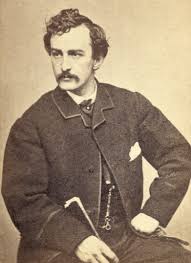
John Wilkes Booth

John Wilkes Booth

Manhunt, as the subtitle indicates, is an account of the hunt for John Wilkes Booth and the cabal of bitter, reactionary racists who murdered the United States’ greatest president, Lincoln, and tried to kill his Vice President, Andrew Johnson, and his Secretary of State, William Seward.

Swanson succeeds well in his apparent objective of writing a non-fiction thriller based on the hunt for these assassins, and appears to have developed some sympathy for his subjects, presenting in detail their considerable bravery and endurance in the aftermath of the murder. Among the conspirators was Dr Samuel Mudd, who treated Booth when he was on the run. Mudd was imprisoned as a conspirator but he and his family subsequently worked for his exoneration, saying he was only doing his duty as a doctor and had no knowledge of Booth or the conspiracy. John Ford, a Lincolnphile, even immortalised this story in one of his films, The Prisoner of Shark Island.

His name is still ...

His name is still …

Swanson argues however that Mudd was indeed part of the conspiracy and Booth’s encounter with him was no accident, but rather a rendezvous with a known sympathiser. The moral of this part of the story is that you can still say “his name is Mudd” with a clear conscience.

The book illuminates this aspect of the Civil War, often passed over or obscured in other texts by the monumental tragedy of Lincoln’s assassination. Amongst the startling details that Swanson reveals is that Booth obtained access to Lincoln’s presence merely by presenting his card: his brother was a friend of Lincoln and strong supporter of the Union so Booth was also welcomed as a friend.

Overall the book is a sobering reminder to the contemporary world that courage is not the highest of virtues but rather often facilitates some of the worst of human behaviour and can lead to some of the greatest pain and loss.

Lincoln and his Generals, by T. Harry Williams

Lincoln and his commandersThis is a fine and concise introduction to Lincoln and the course of the American Civil war. The focus, as the title indicates clearly, is on one of the major themes of the war – Lincoln’s efforts to obtain an effective commander for the Union armies, and Lincoln’s own role as chief Union strategist and Commander in Chief.

In the course of this there is some notable insight into the necessary qualities of good generals, and generalship and war-making in the context of a democratic state. Many of the wider issues of the war including the experience of slaves, emancipation, and the actual experiences of the the fighting for the ordinary soldiers are only lightly touched upon. Nevertheless this remains a fine overview of the war and a good introduction to some of its key controversies.