The Doctor and the Saint: Arundhati Roy’s introduction to B R Ambedkar’s Annihilation of Caste

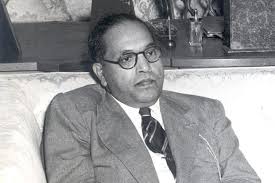
Arundathi RoyArundhati Roy’s introduction to this new edition of BR Ambedkar’s classic work has not been without controversy. For one thing it has meant that this new edition has been rendered unaffordable to most Dalits (previously called “Untouchables”) across India. Gandhi had already called it overpriced at 8 rupees when it was first published. But then Roy doesn’t have too much good to say about Gandhi either, and her analysis of his life and politics is likely to upset many particularly those who have bought into his deification. Of course Gandhi was human and as flawed as the rest of us, and Roy’s focus with this essay is on an area where Gandhi’s record is least defensible: his attitude to caste.

Roy’s stature as one of India’s finest contemporary writers has meant that her introduction to the Annihilation of Caste has brought, Ambedkar, his disputes with Gandhi, and the still bleeding wound of caste-based apartheid in India to much wider attention across the world: I have even seen the great American actor John Cusack enthusing about this introduction on twitter!

Roy is a stunningly gifted writer and a justly furious citizen. Both these traits come together brilliantly in this essay, which combines an excoriating critique of caste-based apartheid in India with biographical sketches of Ambedkar and Gandhi and a careful discussion of the contention between the two men in the struggle for Indian independence and social justice.Ambedkar

Gandhi may have had much to recommend him as a giant of the 20th Century but he does not come out of this comparison well. Roy makes a compelling case that Gandhi maintained deeply racist attitudes towards Dalits and Africans all his life: once, for example, he compared the teaching of the Christian Gospel to Dalits as like preaching to a cow. Hence Gandhi consistently sided with vested Bramhinist interests in entrenching caste prejudice in the Indian independence movement and hence in the emergent state. One contemptible tactic that Congress used that demonstrated the prevailing racist attitudes towards “low” castes was to nominate “Untouchable” candidates to the 1930 provincial elections. They did this not to promote Dalit rights but to destroy the British-sponsored elections. They knew that the nomination of “Untouchable” candidates would make sure that no “respectable” Hindus would run as independent candidates for bodies polluted by the presence of “Untouchables”. When the constitutional arrangements for the new Indian state were under discussion Congress ensured that Dalits were substantially excluded from representation by refusing to allow a separate electorate for them as had been established for the less numerous Sikhs. Gandhi had even threatened to starve himself to death at one point to ensure that no separate “Untouchable” electorate was ever established.

The attitude to caste of India’s founding generation is not an issue of mere historical curiosity. Dalits and other low caste and minority groups in India are still routinely subject to enslavement, rape, torture and murder with de facto impunity. And the impunity for these contemporary injustices was written into the modern Indian state by the errors and prejudices of those who founded the state.

Roy does not let her evident admiration of Ambedkar prevent her from giving a clear sighted portrait of him: she notes that as Gandhi was startlingly unempathetic towards Dalit liberation and empowerment so too Ambedkar had a dreadful blindspot towards the treatment of the Adivasi community of India. Roy recognises that the rationalist spirit that Ambedkar espoused demands that he is not deified but treated as the brilliant but flawed human that he was.

The Doctor and the Saint is remarkable work of advocacy, a passionate effort by a person of conscience to force the issue of caste onto India’s, and the world’s, political agenda. Given the violence and misogyny in large parts of Indian society and the looming election to the premiership of Narendra Modi, a member of the ultra-right RSS of whom she is scathing, at the time of writing, it also marks Roy out as a startlingly brave woman and an exemplary citizen.

Annihilation of Caste is a book of historical importance. Roy’s introduction does it, the cause Ambedkar espoused, and by extension all humanity, proud.

Into that Darkness: From Mercy Killing to Mass Murder; and Albert Speer: His Battle with Truth, by Gitta Sereny

Summary: Two masterpieces of Second World War history that show the terrifyingly human face of the monstrous

Gitta Sereny’s subjects in these two seminal works are the war crimes and the industrialised genocides of the Nazis. But, as the prisms through which she explores these issues are the biographies of Franz Spangl and Albert Speer, she never loses sight, or lets the reader lose sight, of one of the most troubling truths about these, and all, atrocities: that the war criminals and monsters who perpetrate them are as human as any one of us.

Albert Speer on trial in Nuremberg

Albert Speer on trial in Nuremberg

Speer was, amongst other roles, Hitler’s armaments minister and Sereny’s biography of him is rich in detail regarding the management of Germany’s wartime economy and Speer’s exceptionally effective efforts in keeping it functioning in the face of Allied bombing, Nazi in-fighting and Hitlerian fantasy. Stangl was a provincial police officer, transferred into the Nazis’ early experiments of murder with their “mercy killing” programme, and finally “promoted” to manage the death camp at Treblinka. The two biographies therefore provide chilling insights into both the highest echelons of Nazism and the horrific consequence of the decisions taken there.

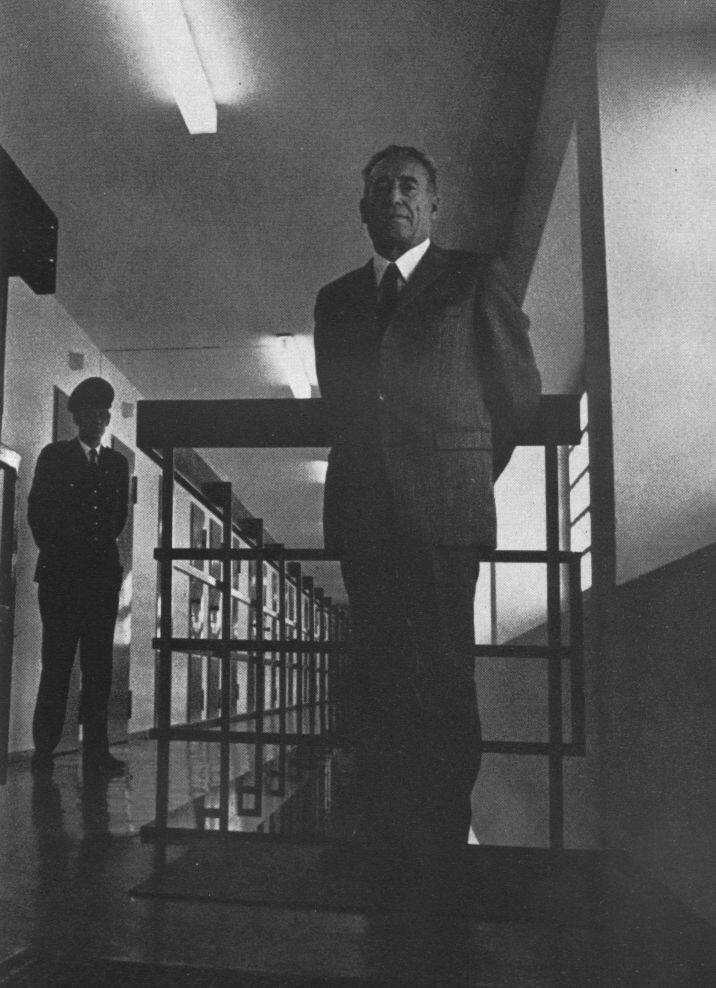
Franz Stangl in prison in Dusseldorf

Franz Stangl in prison in Dusseldorf

Sereny’s thorough research into her subjects included extensive interviews with both men. Almost of necessity she came to establish considerable sympathetic understanding with them. But she never lost sight of what they did. Her conversations in Dusseldorf prison with Stangl forced him, with devastating personal effect, to finally acknowledge what he had done. Speer, a much more intelligent man, arguably one with the potential for greatness, was altogether a more slippery character, and so much more sophisticated in evading, even to himself, similar acknowledgement of his measure of responsibility for the crimes of the Nazis. At the end of the war he had all but deluded himself into believing that the Allies would ask him to help lead in the reconstruction of a devastated Germany.

In spite of the bleakness of the books’ subjects they are not devoid of heroism: In Into That Darkness Rudy Masarek, a leader of the Treblinka uprising, stands in telling contrast to Stangl; in the case of Speer Claus von Stauffenberg, the leader of the 20 July plot against Hitler, stands in juxtaposition. Though they appear only fleetingly in the pages of these books the lives of these men, with their exceptional moral and physical courage, powerfully indict the evasions of both Stangl and Speer. These were men who came from similar backgrounds but whose moral choices were diametrically opposed to everything that Stangl and Speer came to stand for.

These are amongst the most extraordinary and important works of non-fiction of the 20th Century. They are compelling studies of the descent into evil of one ordinary man and an extraordinary one. They are powerful, elegantly written, gripping and vital for understanding how close to the abyss human beings and human society still hovers.

Thirteen Days: A memoir of the Cuban Missile Crisis, by Robert Francis Kennedy

JFK lonlinessSummary: A gripping and insightful account of leadership in the days when the world almost came to an end.

Thirteen Days is Bobby Kennedy‘s memoir of the Cuban missiles crisis. It was incomplete at the time of his assassination and yet remains an arrestingly insightful work.

Bobby played a crucial role in the Cuban missiles crisis, being one of a minority of “doves” on the “ExComm” drawn together from the highest echelons of the government and military to advise the President. It was in no small part because of Bobby’s advocacy that the “doves” on ExComm won the crucial arguments to set the US strategy in relation to the crisis.

But, while being straightforward about his role, he sought in no way to present himself as the hero of the book. Rather this role is reserved for his brother Jack, the President.

In an introduction to the book Arthur Schlesinger, Jr notes that Bobby Kennedy once commented “The 10 or 12 people who had participated in all these [ExComm] discussions were bright and energetic people. We had perhaps amongst the most able in the country and if any one of half a dozen of them were President the world would have been very likely plunged into catastrophic war.

That the world did not get plunged into such a catastrophic war is in large part a measure of the extraordinary calmness of Jack in his deliberations and, above all, his startling moral courage in being prepared to face down his military advisers who wanted to bomb Cuba and invade as first response to the discovery of the missile sites. Bobby commented on their attitude in the book, “I thought, as I listened, of the many times I had heard the military take positions which, if wrong, had the advantage that no one would be around at the end to know.” Afterwards Jack told his friend Ben Bradlee, the legendary Washington Post editor, “The first advice I’m going to give my successor is to watch the generals and to avoid the feeling that because they were military men their opinions on military matters were worth a damn”.

It’s good advice not just for a political leader dealing with the military but also for one dealing with any professional group, particularly police and security forces, and indeed for any leader dealing with those claiming “expert” knowledge. A key theme of the book is the importance of debate and disagreement in decision making, as a process of obtaining the best options to even the most horrendous challenge and avoiding the sort of “groupthink” that can lead one unquestioningly towards stupid and undesirable choices.

Reading this book as the carnage of the 2014 war in Gaza seems to have begun again, it is striking how, in spite of being faced with a genuine existential threat to their country and the world, as opposed to the substantially imaginary one posed by Hamas to Israel currently, Jack and Bobby were hugely concerned with the thought of inflicting casualties.Listening to military proposals for a sneak attack on Cuba, Bobby passed a note to his brother, “I now know how Tojo felt when he was planning Pearl Harbour.”  Both knew that bloodshed would lead to the situation spiralling out of control, and Jack and Bobby were both familiar enough with the military, and with the human consequences of war,to take this matter lightly. They knew that the lives of untold millions who had neither voted for them nor even heard of them depended on their decisions. So they weighed carefully the consequences of every choice, both immediate and long term. Jack in particular was always striving to empathise with Khrushchev’s position and to give him ways in which he also could exit the quagmire in which they found themselves. Ultimately Jack, again displaying enormous moral courage, took the considerable political risk of instructing Bobby to make a secret offer of withdrawing Nato missiles in Turkey in exchange for the Soviet withdrawal of their missiles from Cuba.

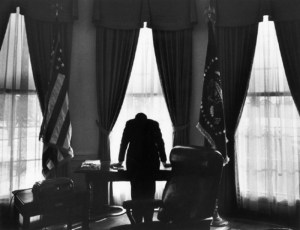
Aside from the drama of the story the book is teeming with insights on war, politics, decision making, and the moral courage that is fundamental to leadership, and filled with vivid scenes: after the crisis is passed,  Jack remains in his office is sitting at his desk writing a letter to the widow of the American pilot killed in the course of the crisis.

Arthur Schlesinger, Jr called the book a minor classic. He was right. It’s a short but extraordinary work that will bear rereading.

Ireland, 1912- 1985: Politics and Society, by Joseph J Lee

Ireland, 1912 – 1985 is a wonderfully opinionated, highly entertaining and deeply erudite history of Ireland from the beginning of the Home Rule Crisis to the Anglo-Irish Agreement.

It is certainly the best single volume history of 20th century Ireland. Each chapter contains much that is novel and insightful even for those familiar with the periods under discussion. The author’s comparisons of Ireland to other countries on the periphery of Europe which obtained independence at about the same time, such as Finland and Poland, lifts the book out of any risk of parochialism: This approach places Irish history in its European context and allows for a more clear sighted assessment of what we, as a nation, can be proud of as well as what we have failed at and where we should be ashamed. Prof Lee is scathing in his judgements of the lazy and stupid, from political leaders through academics to journalists, but is highly sympathetic to those ordinary people, particularly Northern nationalists, who have found themselves on the losing side of history.

A work of genius.

Michael Collins: The Lost Leader, by Margery Forester

Michael_CollinsMargery Forester’s “Michael Collins: The Lost Leader” was generally regarded as the definitive biography of Collins until Tim Pat Coogan’s more recent work. Where Coogan excels on the military aspects of Collins career, particularly the conduct of the intelligence war, Forester offers a more personal picture, with much of her work based on family papers. The result is a fine readable account of Collins life, with the sections from the truce to Collins’ death particularly gripping.

Forester notes how Collins mentioned to one of his colleagues during his final tour of Cork, that “Dev” – Eamon deValera, the anti-treaty political leader – was rumoured to be in the same locality. She doesn’t explore the theory that this is exactly why Collins himself was there – to explore options for peace. Unfortunately breakdown in intermediaries meant that this effort ended in the tragedy of Collins’ own death.

She also subscribes somewhat to the theory of youthful impetuosity and lack of field craft as principle factors contributing to Collins death at Beal na mBlath, wishing that he had acquiesed in Emmet Dalton’s instruction to Collins’ driver to “Drive like hell” through the ambush when the first shots hit, rather than stop and fight. Accounts elsewhere from other members of Collins’ party, state that the road was strewn with broken bottles ahead of the dray that blocked the convoy’s way. This suggests that Collins may have been more tactically astute than he has previously be given credit for, in ordering the halt rather than, in an attempt to run the ambush, risking catastrophic damage to the tires of the vehicles and rendering the entire convoy sitting ducks in the midst of hostile countryside.

Whatever the circumstances the abiding tragedy of Collins’ death is well conveyed in this book which shows his growth from impetuous youth to effective revolutionary to statesman in a few short years, and leaves the reader with the aching wonder of what might have been achieved had he lived.

The Given Day, by Dennis Lehane

This book is something of a departure for Dennis Lehane: while still set, primarily, in Boston and in a police milieu, it is an historical novel rather than a crime one: Calvin Coolidge, Jack Reed, Jim Larkin and Eugene O’Neill, amongst other historical characters have walk on parts, with Babe Ruth acting as something of a comic chorus on the real events described.

The novel follows a Boston cop, Danny Coughlin, through the Spanish ‘flu pandemic and an investigation into anarchist bombers at the end of the First World War in parallel with the efforts to establish a police union and improve working conditions for the police of the city. The irony of the police role in strike breaking during this era, while themselves being dreadfully exploited and demanding improved labour rights, is explored in some detail.

After years writing African American characters on The Wire, this is the first Lehane novel, to my recollection, with a major black protagonist: Luther Laurence. His travails over the course of the year when the book is set give some insight to the nascent civil rights struggle and throw a stark light on racist violence in the US at the beginning of the Twentieth Century: some of the descriptions of anti-black pogroms during this period foreshadow later atrocities in Eastern Europe, (such as many of those described in Timothy Snyder’s magisterial “Bloodlands”).

The novel further echoes The Wire in its multi-dimensional portrayal of a city from its ordinary black citizens, to the beat cops and their commanders, to the feuding between the mayor’s office and the governor’s mansion.

Luther, Danny and Nora, the Coughlin family housekeeper, are hugely likeable characters and their personal stories help illuminate a little known part of history, with the warmth between them softening some of the bleakness of the historical events. This is a gripping novel, beautifully written, and one of Lehane’s finest.

A story from behind the statistics – Midnight in Peking: The Murder That Haunted the Last Days of Old China, by Paul French

In 1937 the body of a young western woman, Pamela Werner, was found brutally murdered in Peking. An investigation was launched by Chinese police with British support but the murderer was never arrested and the crime was soon forgotten in the midst of the cataclysm of the second world war that engulfed China and the world thereafter.

Paul French, the author of this book, in the course of researching the case found that after the police investigation wound up, having been obstructed throughout by a combination of bureaucratic corruption, racism, sexual hypocrisy and imperial pretensions, Pamela’s father conducted his own enquiries. These uncovered significant new evidence including, almost certainly, the identity of the murderer and the circumstances of Pamela’s death. The resulting book is a gripping non-fiction procedural which gives fascinating insight into Peking, and particularly its foreign community and foreign underclass of white Russian emigres and multinational adventurers and criminals, in the last days before the Japanese take-over.

Pamela’s death was, of course, just one of millions that would occur between the invasion of Manchuria and the bombing of Nagasaki. But the author is right to single it out: in focusing on the life and horrific death of one fiesty young woman we are reminded that her story is a dreadfully ordinary one and representative of tens of thousands of others who in peacetime fall victim the way Pamela did.

To say more would be to give too much away. Suffice to say that Paul French has produced a fine narrative of a single criminal case of the sort that remains horrifically commonplace over 70 years since Pamela’s awful death on a cold Peking night.

The Finish: The Killing of Osama Bin Laden, by Mark Bowden

Summary: An account of the hunt for, and assassination of. Osama Bin Laden by the United States.

The Finish focuses on a number of individuals who had pivotal roles in this effort including Barack Obama as well as various special forces and intelligence figures.

It is a decent work of journalism detailing the evolution of American war making since the 11 Sept attack on the Twin Towers, particularly in relation to the integration of intelligence gathering and information management with special forces operations. However it is not the best work by Mark Bowden that I have read and it is not without controversy.

In Roadwork, an earlier collection of his journalism, Mark Bowden has written thoughtfully and highly critically on the issue of torture. Here he argues, with some discomfort, that a key lead in the hunt for Bin Laden emerged from a number of interrogations of different people under torture during the Bush administration. However the information gleaned from these interrogations was not recognised as important until advances in US information systems allowed for the effective analysis of the multitudinous quantities of intelligence that the US had gathered.

A practical (as opposed to moral) argument against torture has always been that the person being tortured will say anything to get the torture to stop. Hence the information they give cannot generally be relied upon. In her book Audacity to Believe Shelia Cassidy describes this very phenomenon in her account of her torture in Pinochet’s Chile. She also describes how her torturers had time to check every detail that she gave and so with repeated visits to the torture chamber were able to break her utterly. In this book Bowden suggests that advances in information systems which allow for cross checking of all sorts of information has automated the torture verification process that Cassidy’s interrogators undertook at such leisure. So such systems could become used in the future for continued justification for the use of torture.

Bowden acknowledges that his sources did not reveal to him how they actually turned the vague indication from torture interrogations into a solid lead on a real person. However Kevin Toolis, a filmmaker and writer who has made a movie, Complicit, about the use of torture in the “war on terror” argues that in the end the location of Bin Laden resulted from simply bribing a senior member of Pakistani Inter Service Intelligence to help reveal his hiding place. This corresponds with the Obama administration’s official position that torture was not used to locate Bin Laden.

This controversy over torture and a rather superficial treatment of the criticisms of the use of drones aside this is a gripping narrative and still provides a useful and thought-provoking insight into evolution of counter-insurgency and some of the moral questions associated with it.

Twentieth Century European anti-Semitism in miniature – The Hare with the Amber Eyes, by Edmund de Waal

I know I am in a minority in not being bowled over by this book which comes trailing praise and prizes by the bucketload.

20140727-212029-76829746.jpgIt is unquestionably a beautifully written work based on what seems like an awesome research effort. The conceit of the book is very clever: following the lives of the, mostly Jewish, owners of a collection of Japanese netsuke from their arrival in France in the nineteenth century through the author’s family until they end up in his possession. The form of the book is then influenced by the form of the netsuke – minature portraits of the author’s relatives in relation to each other and to some aspects of key events of the late nineteenth and twentieth century including the Dreyfuss affair, Japanese reconstruction post-Second World War, and, of course, the Holocaust.

20140727-211827-76707029.jpgI must say I struggled with the early parts of the book which related to the netsuke’s first owner, Charles, who the author discovers was an inspiration for Proust’s Swann. The author insists he came to like this character, but I am not sure he found him as engaging as some of his other relatives. I felt the book became considerably more alive when the scene shifted to Vienna, particularly his great grandmother Emmy, legendary in Vienna even today for her vast array of lovers, and his grandmother, the extraordinary, Elizabeth, who became the first woman to obtain a doctorate of law from Vienna university and, at some considerable risk to herself, returned to Austria after Anschluss, in an attempt to save her family from the Nazis.

20140727-211712-76632801.jpgThe section dealing with Anschluss and its consequences is the most powerful section of the book, but the parts dealing with the author’s beloved uncle Iggy are also deeply moving.

Aside from the difficulties I had with the Paris section I think one of the frustrations I had with the book was wanting to know more. This is probably a churlish expectation given, as the author notes, he was writing about a period where the Nazis tried to erase or “overwrite” his family from European history and some of his own relatives wished their secrets to go to the grave with them, destroying correspondence to this end.

A book that leaves one hungering for more is usually the measure of a fine work. Its a deeply impressive piece of work even if it is not everyone’s dish of tea.

The Boy in the River: A shocking true story of ritual murder and sacrifice in the heart of London, by Richard Hoskins

The Boy in the River is Richard Hoskins fine account of his involvement in the investigation of the murder of baby “Adam” – a child whose headless torso was found in the Thames, the victim of a ritual sacrifice. Hoskins knowledge of African religions provided particular insight into this case illuminating a particularly vile and little known aspect of human trafficking: that for human sacrifice.

His knowledge, honed through academic research, originated from his work as a missionary in Congo, and his memoir of this time and the tragedy he and his family suffered there is compelling. Towards the end of the book Hoskins leaves, perhaps deliberately, several loose ends in relation to this tragedy. But this is probably fair enough: the book must have been a particularly difficult one to write. As it stands it is an accessible and brave work on one of the darkest aspects of modern society.