Waltz with Bashir: a startlingly courageous Israeli exploration of that country’s involvement in the Sabra and Shatila massacre

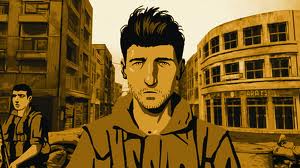
Ari Folman in Beirut, from Waltz with Bashir

Ari Folman in Beirut, from Waltz with Bashir

Twenty years after the Israeli invasion of Lebanon, of which he was a participant, the writer and director Ari Folman realized that he had little memory of his time there. This included being stationed a few hundred metres from the Palestinian refugee camps of Sabra and Shatila during the three days in which the Phalangist militia massacred the population there.

Waltz with Bashir recounts how, with the help of others who had been there, including fellow soldiers, he began to recover his memory of the events. The result is this extraordinary “animated documentary”,

Palestinians and Lebanese have no voice in this film. Nevertheless it still represents some of the best impulses in Israeli society, documenting how an ordinary Israeli faces the truth of a particularly vile episode in his nation’s history in which he himself was directly implicated.

The massacre in Sabra and Shatila has echoes through history: one Israeli journalist, Ron Ben-Yishai a distinguished war correspondent who was the first journalist to witness and report on the massacre, and personally informed the then Israeli defense minister Ariel Sharon of the massacre as it was occurring in a bid to get it stopped, recounts how the scene in the camps reminded him of the images of the Warsaw Ghetto.

There are other echoes in Middle Eastern history. One not mentioned in the film is how in 1268, on capturing the city of Antioch, the Sultan Baybars immediately locked the city gates to stop the escape of any of the town’s inhabitants as he proceeded to massacre them. Folman argues with this film that the role of the Israeli army during the massacre was the equivalent to Baybars’ locking of the gates. This allowed Israel’s Phalangist allies, Israeli-equipped and in the full knowledge of the highest Israeli military commanders, security to carry out the slaughter, safe in the knowledge that the civilians they were killing could not escape through Israeli lines. While the film may provide only a narrow perspective on the Lebanese invasion, it is a startlingly brave and humane one, showing how an ordinary individual human can take responsibility for himself and the best ideals of his country even in the face of racist atrocity and overwhelming historical events.

Making the Borgias boring: Christopher Hibbert’s The Borgias

Lucrezia Borgia

Lucrezia Borgia

This is a startlingly dull biography of one of history’s most infamous families, its limitations perhaps a product of the fact that Christopher Hibbert was working on this towards the end of his life.

There is a welcome focus in the book on the unfairly maligned Lucrezia, and the author illustrates how she was a pawn in the power-plays of her pope father, Rodrigo, and brother, Cesare. The book details her many horrific experiences, including the murder of her husband, probably by her brother Cesare, and effectively refutes the myth of her monstrousness

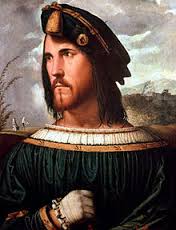
Cesare was no more dastardly than his contemporaries, and in many ways more effective, as Machevelli’s account indicates. But he was still a pretty nasty character. He was a murderer and a rapist, keeping, for example, Caterina Sforza-Riario, ruler of Imola and Forli, as a sexual slave for weeks after sacking her cities. Tiring of her after a while he consigned her to the dungeons. Hibbert treats the coarse humoured contemporary accounts of the “willingness” of Caterina at face value, rather than consider in any great depth the invidious nature of Caterina’s position, and what this says about Cesare.

Casere Borgia

Casere Borgia

Time and again Hibbert seems more interested the clothes that the Borgias wore rather than the psychology of the family and the politics, papal and secular, that drove them. On the positive side it is a short book and does provide a relatively concise overview of the careers of this family. Still considering the potential of the source material it is a disappointing book, and probably unrepresentative of the author.

A path to power paved with war crimes: Philip Dwyer’s Napoleon (1769 – 1799)

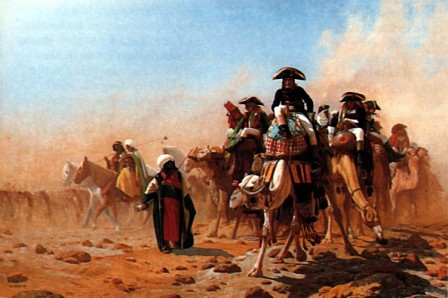
Bonaparte on the march in Egypt and Syria Bonaparte on the march in Egypt and Syria

Summary: An engrossing and chilling piece of work that charts Bonaparte’s path to power paralleled by his precipitous moral decline and the growth of his egotism.

In the course of this fine biography that charts Bonaparte’s rise from Corsica to Consul of France, one particularly distressing anecdote stands out: Following Bonaparte’s capture of Jaffa in 1799 the French troops engaged in a murderous sacking of the town, during which the soldiers kidnapped a large number of women and girls. They were “taken to the French camp and raped. Bonaparte, hearing of this, ordered that all women were to be led into the hospital courtyard by midday on pain of a severe punishment… it was believed that they would be sent back to the ruins of the town where they would find refuge. However a company of chasseurs was assembled to execute them” (p418).

This is very much a political, rather than a military biography of Bonaparte: the reader gets little sense of his tactical genius. The author’s interest is rather focused upon the exercise of power and particularly how Bonaparte parlayed his reputation for military success, often self authored and shamelessly exaggerated, into political power. But while there is little discussion of the battles there is a close consideration of Bonaparte’s role as a general-in-chief, how he organised, or failed to organise his logistics, and his policies towards conquered peoples. The disorganisation of Bonaparte’s march on Cairo pre-figures his failures in his Russian campaign, and the brutality displayed to the Arab populations of Egypt and Syria anticipates the brutality of Europe’s 19th century “scramble for Africa”, and indeed 20th and 21st century Western atrocities in the Middle East.

In considering all of this the author is at pains to emphasise that in terms of ruthlessness Bonaparte was little different from the other commanders of the era, whether British, Austrian or Russian. Yet, while this is undoubtedly true as British policy in Ireland in 1798, for example, confirms, there is something frightening about a man who could make a cold-blooded choice to slaughter those defenceless Palestinian women at Jaffa. Whatever greatness Bonaparte may ultimately have achieved it is dimmed beyond measure when one contemplates it in relation to the terror of those poor women’s last moments.

Bonaparte visits the French plague victims at Jaffa Bonaparte visits the French plague victims at Jaffa

Recovering a forgotten history and celebrating treason: Fintan O’Toole’s A Traitor’s Kiss

richard-brinsley-sheridan-1-sized

Richard Brinsley Sheridan is remembered today as one of the most brilliant dramatists of the 18th century. What Fintan O’Toole does with this book, while not ignoring Sheridan’s considerable literary achievements is show that there was more to the man than the playwright. In fact Sheridan was one of the most democratic politicians of his day, a political visionary in both Irish and British politics. His reputation as a artist, cemented, almost literally, by his burial in Poets’ Corner in Westminster Abbey, was privileged in order to obscure his much more dangerous treasonous (to Britain) and patriotic (to Ireland) political views lest they encourage others.

The book, beautifully written as is typical of O’Toole, has the pace of a political thriller set against the background of the French Revolution, the United Irish rebellion of 1798 and machinations of Westminster at the time. My one quibble with the book is that it passes over the events of the 1798 rebellion too quickly to give readers unfamiliar with that period a full sense of the trauma that it must have been for Sheridan and those who thought like him.

Nevertheless the book achieves the remarkable feat of showing the modern relevance of someone from 200 years ago who has been ignored for too long in favour of much more imperial figures.

Great stuff!

Peter Bowles and Penelope Keith (as Mrs Malaprop)in a production of Sheridan's The Rivals

Peter Bowles and Penelope Keith (as Mrs Malaprop)in a production of Sheridan’s The Rivals

Times that try men’s souls: David McCullough’s 1776

Washington Crossing the Delaware by Emanuel Gottlieb Leutze

Summary: a gripping account of the beginning of the American war of independence

This is an exceptionally gripping work of narrative history. Written as a companion to McCullough’s John Adams this book focuses on Washington from his appointment as commander of the Continental Army to his crossing of the Delaware at Christmas 1776 to mount a surprise attack on the British forces that had routed him from New York. What makes that story so remarkable is its consideration of the leadership of Washington, most particularly how he turned around his fortunes, and those of the American Revolution, from their nadir following his poor generalship in New York which led many of his closest lieutenants to lose confidence in him.

McCullough conveys in his narrative the extraordinary steeliness of Washington when faced with this crisis and which was core to his historical greatness. President Obama in his inaugural address cited Washington’s crossing of the Delaware in mid-winter as an example of the sort of courage in the face of adversity that was necessary to deal with America’s current travails, and this story can be inspirational to non-Americans (such as myself) or anyone faced with personal or professional reversals.

This is a compelling work, beautifully written, deeply exciting and a great introduction to this period of American history.

What is past is prologue: Warsaw 1920 – Lenin’s Failed Conquest of Europe, by Adam Zamoyski

Summary: a brief but clear and gripping account of one of the pivotal battles of European history

This is a fine, concise account of the war between the Soviet Union and Poland in 1920 and particularly the climatic battle of Warsaw. The book focuses primarily on Józef Pilsudski, the Polish head of state who commanded Polish forces in the war and was architect of the victory, conceiving of a manoeuvre, highly reminiscent of Hannibal’s tactics at Cannae, that led to the Soviet rout. However the author also recognizes the pivotal role played by General Wladyslaw Sikorski, Poland’s Second World War leader until his assassination by the Soviets (probably by the British traitor Guy Burgess using the agency of MI6), in the defeat of the Red Army on the Vistula.

Zamoyski argues that Stalin, who was part of the Soviet Army devastated by the Poles in 1920, developed a pathological hatred of the Poles as a result of this that culminated in his massacre of Polish prisoners of war in Katyn. Interestingly this is the motive that Putin also ascribed to Stalin when he finally publicly acknowledged Soviet responsibility for the Katyn atrocity. Hence the book reads, ultimately, as a prologue to an even greater tragedy, when many of the actors in this drama were cruelly murdered and Poland itself dismembered by the Nazi-Soviet alliance.

In spite of that this is a gripping work on a pivotal and ill remembered aspect of history.

Mandela

Office wallsHanging on the wall of my very messy office are two portraits, one of Abraham Lincoln, and the other of Nelson Mandela. This is because they both showed that even the most entrenched and hateful systems based on discrimination, violence and racism could be overcome with courage, determination and decency.

Mandela rightly pointed out that “Like slavery and apartheid, poverty is not natural. It is man-made and it can be overcome and eradicated by the actions of human beings.” But, unfortunately poverty cannot be overcome until slavery and apartheid have been eradicated: Mandela dealt with apartheid in South Africa, but it endures against Dalits and minorities in India and other parts of South Asia, and slavery endures across the world.

We need people at the top to draw inspiration from Mandela to take political action to eradicate slavery. Unfortunately, many politicians pay lip service to his achievements but lack the guts to emulate them, preferring bland platitudes to effective action on issues like slavery.

Still, even when things seem bleakest and the brutality of contemporary slavery practices most intractable I sometimes reflect on the odds which Mandela overcame in ending apartheid and re-forging a new nation in South Africa. We also must endure in the struggle and trust that decency and courage will ultimately triumph over the greed and racism that keeps 21 million people enslaved across the world.

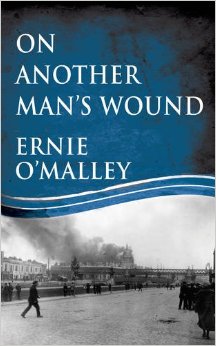
War and its consequences: Ernie O’Malley’s On Another Man’s Wound

on-another-mans-woundSummary: a masterpiece with resonances and relevance beyond its geographic and historical contexts.

“On another man’s wound” is generally regarded as the only personal account by an Irish War of Independence commander that has true literary merit. It is a beautifully written and gripping narrative of O’Malley’s experiences from 1916 to 1921. The book is packed with incident from initial observations on the 1916 rebellion to guerrilla action in the South, to his capture in Kilkenny, subsequent torture, and his participation in the only successful escape from Kilmainham gaol in Dublin. Along the way there are interesting pen portraits of many of the leading figures of the time including Erskine Childers, Liam Lynch, and, not least, Michael Collins.

At its heart the book is a remarkably honest account of the brutalising effects of war: Towards the end O’Malley describes unflinchingly his decision to murder three captured British soldiers just before the Truce. The effect is both chilling and moving: O’Malley’s literary acheivement is to show how his personal experiences are representative of all soldiers in war, which can transform idealistic youth into diminished and bloody men in a pattern that is repeated through history and across the world to this day.

As such the book retains a relevance beyond it geographic and historical contexts: It speaks a truth that should be remembered by all contemplating sending young people to kill and die on behalf of some cherished cause, particularly if the closest the decision-makers have been to war is an Oxford PPE course or a London law chambers.

Father of US government, grandfather of emancipation: Ron Chernow’s Alexander Hamilton

Alexander HamiltonA truly outstanding, elegantly written, warts and all, biography of a facinating individual. It throws light not only on Hamilton’s life and death at the hands of Aaron Burr, the US Vice President, but also on the Revolutionary war, the drafting of the US constitution, the establishment of US government and finance, and the beginnings of the fault lines that divide US politics to this day: On the one hand the Federalists with their strongly nationalist view of the US and the importance of federal government; on the other hand the Republicans with their promotion of “states rights” and nonsensical fantasies about small government and citizen farmers. Along the way we learn of the first sex scandal in US political history and the strange mores and tragic consequences of the late 18th century duelling culture.

The divisions at this period in US history were described in short-hand by the attitudes to the French Revolution. However it is interesting that while Hamilton and the Federalists were generally Anglophile and deeply distressed by the bloodshed and chaos of the French Revolution, they seem to have been little troubled by the exercise of British power, which between 1796 and 1798 massacred more people in Ireland than died in the entire three years of the French Terror – there is not a single mention of this sanguinary episode of European history in the book.

Towards the end of the book Chernow notes how many of the Republican “slave holding populists were celebrated by posterity as tribunes of the common people. Meanwhile, the self-made Hamilton, a fervent abolitionist and a staunch believer in meritocracy, was villanized in American history textbooks as an apologist of privilege and wealth”.

Countering this tendency in histography Chernow casts Jefferson as villian of the piece, even more so than the murderous Burr, for professing himself an abolitionist but, unlike Washington, never freeing his own slaves and advocating both an economy that was only sustainable through the enslavement of hundreds of thousands of human beings, and a polity that facilitated and rewarded slavery.

In contrast it is clear from Chernow’s work that, in addition to establishing US credit and effective government, a central part of Hamilton’s political project was building in the US an economic system that could not only be sustained without slavery but could also contribute its eradication. While the elimination of slavery ultimately took a civil war Hamilton’s work did provide the North the economic capacity to destroy the slave holding south 60 years after his death. For this, I would argue, that if Lincoln was the “father” of emancipation Hamilton could perhaps be regarded as its “grandfather”.

Chernow makes the argument that, with Washington, Hamilton, for all his faults, was the greatest of the Founding Fathers of the United States. Chernow describes him as the “father of US government”. On the basis of the evidence he presents it is a difficult argument to refute, and, in this time of Tea Party lunacy, his life and achievements are worth celebrating again.

Remembering properly the central event of European history: TImothy Synder’s Bloodlands

Timothy Synder strives with this book to repudiate the anonymity of the mass murders of the twentieth century, reminding the readers that each death represenented an individual human being with all the flaws and hopes of any reader.

Central to his achievement is his taking of a holistic approach to the atrocities, considering not just the policies of Hitler and Stalin separately but in interaction, and considering the Jewish, Polish, Ukranian and Belarusian tragedies in their totality rather than in isolation. This approach is perhaps best exemplified by his consideration of the Warsaw uprisings: here the distinctively Jewish character of the 1943 Ghetto uprising is recognised but not to the exclusion of its Polish character, as demonstrated by the alliance between the Ghetto fighters and the Home Army. Likewise the Jewish contribution to the 1944 Warsaw uprising is discussed: For example after the Home Army liberated the Warsaw concentration camp many of the Jewish slave labourers joined the Home Army, “fighting in their striped camp uniforms and wooden shoes, with ‘complete indifference to life or death'”. (p. 302)

This approach also draws out some uncomfortable ambiguities: Tuvia Bielski, for example, is one of the incontrovertable heroes of the book. His exploits, depicted in the film “Defiance”, saved hundreds of Jewish lives in what is now Belarus. In order to do this he established an alliance with Soviet partisans, which ultimately meant he, a former Polish soldier, was directly involved in the suppression of the Home Army by the invading Soviets in 1944(something not depicted in “Defiance”).

In consciously repudiating more simplistic narratives Snyder make a profoundly important point: horrendous as the history of this time and this place is, it is a central episode of human history. Presuming that this was the work of monsters threatens that we may blunder into perpetrating such atrocities again.

This is a hugely important book: an awesomely impressive research undertaking resulting in an exemplary work of history, beautifully written, horrific and deeply moving by turns. It should be read be everyone with an interest in humanity itself.