The Reckoning: The Murder of Christopher Marlowe by Charles Nicholl

Summary: an intriguing investigation into the squalid end of a dubious man, but brilliant writer

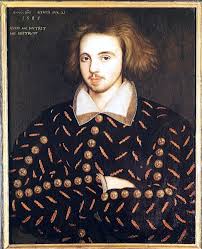
The death of the playwright Christopher Marlow, supposedly in a pub brawl over a bill (“the reckoning”) has long been a source of speculation. Marlowe, after all, had a reputation as a spy and blasphemer that could have made him powerful enemies. Also, the death blow, a dagger wound to the eye penetrating the brain, suggested execution rather that a scrap: such wounds were often the way the coup de grace was delivered to fallen enemy, particularly if armoured, such as at Agincourt.

Taking the murder of Christopher Marlowe as its starting point this book delves into the evil world of the Elizabethan police state. For me the revelation of the book was not so much the explanation of the killing of Marlowe, convincing as that was. Rather it related to the nature of the totalitarian system that Elizabeth and her ministers sought to impose, so much so that they themselves originated many of the plots that they claimed to have uncovered, their purpose entrapment of real, or more often imagined, enemies. The book would be a fine companion to Alice Hodge’s excellent study of the Jesuit mission to England “God’s Secret Agents”, which explores the same milieu from the perspective of the hunted.

Christopher MarloweMarlowe emerges from the investigation an ambiguous character – probably a nasty manipulator and betrayer of some close to him, but, something that the author does not seem to have considered, perhaps someone ultimately sympathetic to the Catholic cause and caught up like so many others in the brutal machinations of the nascent police state.

Overall an exemplary demonstration of rigorous archival research and analysis to produce a highly coherent and readable account of a complex and confusing mystery.

Finest Years: Churchill as Warlord 1940-45 by Max Hastings

Max Hastings’ Finest Years: Churchill as Warlord 1940-45 is an elegantly written, consistently gripping account of Churchill’s tenure as wartime prime minister.churchill

The author’s central purpose in the book is to demonstrate Churchill’s historical greatness. However, paradoxically, it is the clarity of this purpose that is the book’s central flaw. Mr Hastings’ effort to show the giant that was Churchill is such a dominant theme in the book that it tends to submerge some rather uncomfortable facts. For example: Churchill’s deeply ingrained racism and the degree of his culpability for the wartime Indian famine are only lightly touched upon; Hastings deals very superficially, and wholly in Churchill’s favour, with the persistent historical controversy regarding Churchill’s sacking of Auchinleck in North Africa in the immediate aftermath of the general’s successful reorganisation of the British Army into battle groups and his defeat of Rommel; he barely mentions Bill Slim and the fact that Britain’s greatest wartime general was relegated to the theatre that Churchill thought least of; and he excuses the prime minister’s flights of fancy and disasterous choices later in the war as the result, in large measure, of old age and stress.

This is not to deny the importance of Churchill as war leader: his insistence on continuing to fight after the fall of France was a demonstration of enormous moral courage; his understanding of the importance of drawing the USA into the war to have any hope of victory was more clear sighted than most of his contemporaries; his decision to sink the French fleet at Mers-el-Kebir displayed the sort of ruthlessness that was essential to winning the war; his unsucccessful efforts at establishing a democratic Poland at the end of the war show a sense of decency and honour that contrast favourably with Stalin’s monstrousness and Roosevelt’s disinterest on this issue.

Mr Hastings book would have been even more interesting if he had allowed his portrait of Churchill to emerge from this sort of evidence rather than seeking to impose such an overwhelmingly heroic impression on much more complex material.

Nevertheless, it should be said that few readers could ever feel short-changed by Hastings’ historical writing, which is as ever humane and lucid, and the breadth and depth of his research is, as always, awesome.

20 years on from Kapuscinski: Fragments of a Forgotten War by Judith Matloff

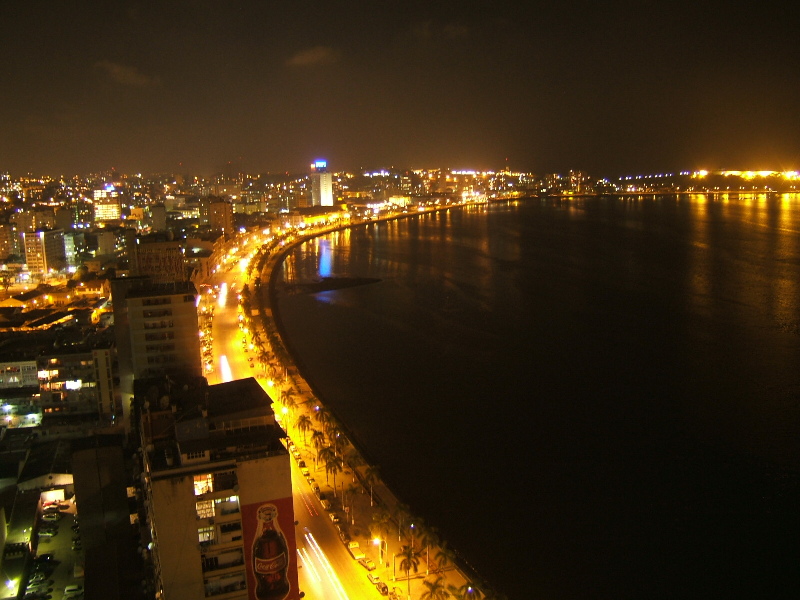
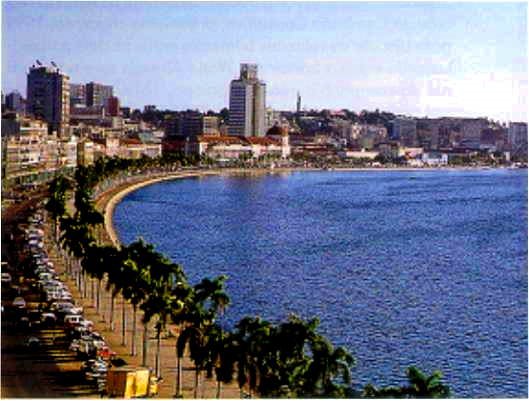
luanda-angolaTwenty years on from Kapuchinski’s exceptional account of the coming of Angolan independence, Another Day of Life, Judith Matloff, an American journalist, reported on the country. Subsequently she produced this book, one of the best English language books on modern Angolan history.

Matloff covers a period which I found particularly compelling because it was that just before the time I worked in Angola myself. She gives us a fine narrative account of these years of continuing civil war, between the governing MPLA and the rebel UNITA movement under the leadership of the psychotic Jonas Savimbi, and the stumbling, ultimately illusory efforts towards peace. Her work is rooted in attention to the history and culture of Angola with a focus on the impact the slaughter had upon the ordinary people. Matloff allows herself into the story occasionally, but with refreshing honesty about her weaknesses and mistakes, avoiding the “journalist as hero” cliche.

Matloff’s title reminds the reader how the bloodshed of Angola’s protracted war was generally ignored by the world for years on end. It is a pity that the book itself also seems to have become as forgotten in the West as the Angolan war was. This is war reportage in the finest tradition of Martha Gelhorn.

Remembering Angola: Another Day of Life, by Ryszard Kapuscinski

MarginalAnother Day of Life is one of the finest books about modern Angola and has a deserved reputation as a classic of modern war reportage. Kapuchinski was famed as the Polish Press Agency’s foreign correspondent and he travelled the world in the the 60’s and 70’s reporting on revolution and independence struggles in the Developing World. His eyewitness account of the coming of Angolan independence is one of his best works. The book, from the evacuation of the Portuguese, to the South African invasion and the beginnings of the Angolan civil war crackles with verisimilitude, and is rendered with a remarkable, almost poetic, elegance of language. ordinary life Angola

He captures beautifully the city of Luanda and the surreality of its emptying of settlers in the face of decolonisation, the terror of road convoys through bloodily contested countryside, and ordinary rhythms of life that go on in the midst of cataclysm.

It is an extraordinary work of journalism, gripping as a thriller and moving as a tragedy. Beautiful.

Robert Kennedy: A memoir, by Jack Newfield

BobbyIn his autobiography of his life as a campaigning journalist, the great Donald Woods wrote of a meeting he had with the South African prime minister in 1968, having just spent some time with Robert Kennedy and his presidential campaign. The prime minister asked: do you think Kennedy will win? Yes, said Woods, he’s too rich to be bought, too idealistic to be corrupted and the young people, the blacks and the hispanics all believe in him and he doesn’t want to let them down. The South African prime minister buried his head in his hands and said, my God. If Kennedy wins, God help South Africa!

Jack Newfield’s memoir of Bobby Kennedy and his 1968 presidential campaign catches the hope that Woods saw and communicates to the reader, even decades on, the devastating tragedy of Kennedy’s death. With it the promises of a negotiated end to the Vietnam war, concerted action against apartheid in South Africa, and renewed effort on the struggle for civil rights and poverty in the United States, were snatched away.

There are certainly more scholarly works about Bobby Kennedy, but this book conveys in a viceral way just what Kennedy meant to that generation who hoped for a better world in the 1960s. It is a powerful testament of the possibilty of politics as well as the price it sometimes exacts of those who assert principle.

An exquistely painful book.

Giving journalists a good name: Asking for Trouble by Donald Woods

Donald Woods bannedDonald Woods was that very rare sort of journalist who gives journalists a good name: a brave and principled man who fought apartheid and, following the assassination of Steve Biko, which he did much to expose to the world, was “banned”, that is put under house arrest, by the South African government for his troubles.

He wasn’t always this though and his autobiography is an honest account of his education from a prejudiced youth to freedom fighter and prisoner of conscience, though he would probably never have described himself this way: his autobiography suggests he was a man who had a lovely sense of humour about himself and the world. This, and his passionate rage against injustice illuminates his account of his life reporting apartheid South Africa, which is told in the snappy prose style of a gifted newspaperman.

The Fall of Carthage by Adrian Goldsworthy

20140707-140519-50719822.jpgThe Fall of Carthage is Adrian Goldsworthy’s account of the three wars between Rome and Carthage, the two great Mediterranean city states, from their first clashes in 265 BCE to the final destruction of Carthage in 146 BCE.

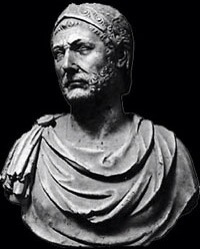
It’s a clear and compelling account, but I must say I found it less gripping that Goldsworthy’s biography of Caesar. On reflection this is not because of any lack of scholarship on the part of Goldsworthy or any less elegance in his writing. It is rather a problem of the sources which are sparser in comparison with Caesar’s era and significantly less colourful: Hannibal, for example, has left no correspondence from which to gain insight to his tactical and strategic thinking, let alone his life and loves.

In his introduction to the book Goldsworthy states that it is not his intention to seek military lessons for the contemporary world from the Punic wars. Rather he simply wants to explain those wars in the context of the third and second centuries BCE. His success at this is perhaps best demonstrated in his discussion of the battle of Cannae. Here he provides a clear account of how the heavily outnumbered Hannibal managed to encircle and defeat his Roman opponents. (The manoeuvring at Cannae has inspired many subsequent generals to try to emulate, including, I believe, Pilsudski in his brilliant rout of Soviet forces outside Warsaw in 1920.) However where many other accounts skate over the aftermath of the encirclement, which had effectively decided the outcome of the battle, Goldsworthy points out how that was not the end of the fighting. Indeed the killing went on for hours afterwards as the Carthaginian forces blunted their swords and spears in the sanguinary process of butchering almost 60,000 men,

However there remain, I think, some inescapably timeless lessons from the narrative.

In the first Punic war, which was primarily a naval contest, the Carthaginians had by far the superior navy. Naval fighting in those days focused on ships trying to ram each other and this required considerable skill amongst the ships’ crews which the Romans found they simply could not match. So instead they conceived of a tactic of grappling and boarding the Carthaginian vessels and soon rendered the skill of ships “dog-fighting” each other substantially obsolete.

The second Punic war opened with Hannibal’s extraordinary invasion of Italy from across the Alps. This was followed rapidly by his stunning successes at Lake Trasimene and Cannae, which subsequent historians have argued left the path to Rome open to him. Goldsworthy argues that Hannibal did not follow this path because by all contemporary measures he had won the war and expected a settlement. The Romans however had, unappreciated by most of their contemporaries, conceived war totally differently and indeed waged it totally as a consequence. Hence they were prepared to absorb eye watering levels of casualties sooner than admit defeat. As a result it was the tactically undefeated Hannibal who was driven out of Italy by a strategy which, certainly at the outset of his war, he could never have conceived of.

Both these examples show how a wholly new reconceptualisation of a situation can lead to previous ideals being rendered irrelevant.

Reflection on these wars also corroborates Thucydides assertion that wars tend to be fought for three principle reasons: “honour” – meaning here not integrity but rather that peculiar sense of reputation or personal worth that used to bring young men onto duelling grounds to kill each other, and still is used by some men to justify their murder of female relatives – “fear” and “profit’. In spite of much human progress since Scipio Aemilianus oversaw the final genocide at Carthage, humanity still does not seem to have found a cure for these ills.

Caesar by Adrian Goldsworthy

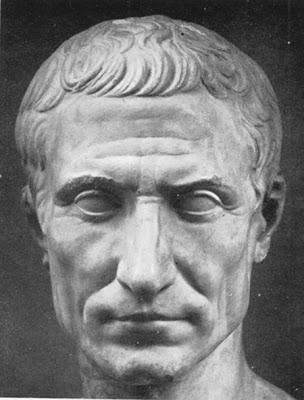
Julius_CaesarSummary: an extraordinarily gripping account of one of history’s most dramatic lives

I started reading this book because I felt I should: I realised I didn’t have a fully formed opinion of Julius Caesar, other than Shakespeare’s negative portrayal of him. I felt that this was something of a character flaw for an erudite chap of the 21st Century.

So I started reading and was quickly hooked. Certainly, as Goldsworthy points out, Caesar had a more dramatic life than almost any other human being who ever lived, from his conquest of Gaul, to his crossing of the Rubicon, to the delivery of Cleopatra to his bedchamber in a laundry basket, to his assassination in the Senate. But there was more than that: I was surprised by just how much I came to like Caesar.

One anecdote early on I found peculiarly endearing: At the height of the Catiline conspiracy crisis Cicero addressed the Senate demanding the death penalty for the conspirators. Caesar followed this by arguing for their banishment instead. Cato, a bitter opponent of Caesar, took this as indicating that Caesar was secretly in league with the conspirators and stood to denounce him in colourful terms. While this was going on a slave arrived in the Senate to deliver a message to Caesar. He read it quietly and then tucked it into his toga. Cato seeing this declared that there was proof of his collusion: see Caesar has just received a communication from the conspirators. Caesar calmly took the letter from his toga and handed it to Cato to read, whereupon Cato discovered that the suspicious letter was in fact a very passionate love letter from Caesar’s mistress, Servilia, Cato’s own sister. Enraged Cato threw the letter back at him.

I like to imagine Caesar having a chuckle at being the architect of such devilment.

Caesar was certainly, as well as being a military genius and a fine writer, a ruthless and self-interested man. But, by Goldsworthy’s account he was a considerably less gratuitously violent than most of his contemporaries, tending to use terrorism for clear political purposes rather than for its own sake or the sadistic enjoyment of it. While he made a vast fortune from the trafficking into slavery of thousands of Gallic prisoners of war, his conduct regarding the treatment of prisoners during the subsequent civil war was admirably humane by the standards of his contemporaries and indeed in comparison to many subsequent military leaders down to the present day. It is chilling to think though that his humaneness to the pirates who once held him for ransom, and who he befriended during his captivity, merely meant that he ordered their throats to be cut before their crucifixion.

The book is a exquisitely written account of his career, so gripping that it made me on several occasions miss my tube stop as I was reading it on the underground.

Masterful.

The Blood Telegram: Nixon, Kissinger and a Forgotten Genocide by Gary Bass

Summary: a fine and gripping account of the Bangladeshi struggle for independence, and the US’s chronic tendency to support genocidists

Yahya Khan

The Blood Telegram takes its title from a dissenting diplomatic communication from the staff of the US Dacca mission, protesting the conduct of US policy in relation to what was then East Pakistan. The US was at the time uncritically supporting the Pakistani dictator Yahya Khan in spite of his very bloody crackdown on the people of East Bengal who had the temerity to defeat him in a democratic election. The slaughter Khan unleashed in East Pakistan was carried out substantially with US supplied weapons and with a disproportionate focus on the Hindu minority of the region, leading the US dissenters in the Dacca consulate, amongst others, to describe it as a genocide.

Indira Gandhi, the Indian Prime Minister

From this important incident in US diplomatic history the book opens out into a wider consideration of the Bangladeshi independence struggle and its geopolitical context. The bloodshed in East Pakistan prompted a massive outflow of refugees into India and led to the beginning of a guerrilla war between Bengali nationalists, supported by India, and the West Pakistani army, supported by the US. Nixon and Kissinger justified their uncritical support for West Pakistan because that country was providing a highly secret diplomatic channel between the US and China that promised to recast the entire Cold War. But it is clear from the transcripts of their White House conversations that they also held a visceral and irrational hatred of India and Indians which shaped their policy.

map_bangladesh

There is a strong echo of Shawcross’ Sideshow (Nixon, Kissinger and the Destruction of Cambodia) in this book with its close consideration, from transcripts of White House conversations, of the role of these two’s formulation of foreign policy and bolstering the Pakistani dictatorship against the democratic will of the Pakistani people. However unlike Shawcross Bass augmented this enquiry with a careful consideration of India’s political, military and humanitarian response to the crisis and the politics of Bengali nationalism including and first hand and secondary accounts (many from Sydney Schanberg of The Killing Fields fame) of the actions of the Bengali guerrillas.

The result is a consistently gripping account of a war that is substantially forgotten in the West but which still casts a long shadow of the politics and development of South Asia.