The Republic, by Charles Townshend

Image

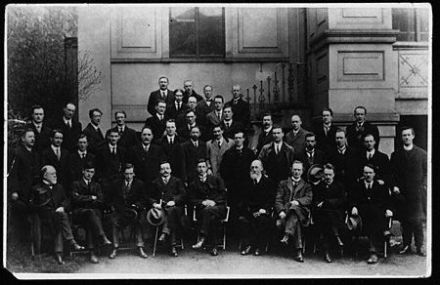
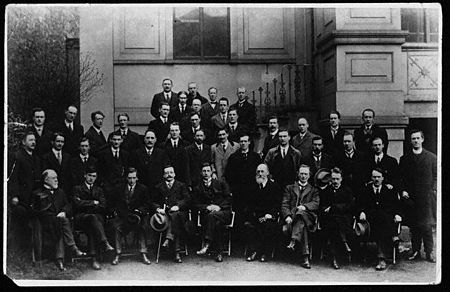
Members of the first Dail Eireann

The Republic, something of a sequel to Townshend’s earlier book on the 1916 rebellion, is a fine history of the Irish independence struggle from 1917 to 1923. It was a novel take on the period, for me, because of its close consideration of the political as well as the military aspects of the struggle.

By Townshend’s account the political aspects of the struggle were decisive in ensuring its success. By this account the refusal of Sinn Fein to take up seats in Westminster and instead establish an Irish parliament in Dublin was no mere empty gesture. Rather it was a political gambit to obtain Irish self-rule after efforts towards this end over the previous 75 years had been sabotaged by British and Unionist interests.

The efforts of Collins in particular, Cosgrave and Stack to establish the “shadow state’s” finances, local government and courts gave even more concrete expression to the idea of a republic espoused by the first Dail, particularly in those areas where Irish military activity had destroyed British institutions and so carved out considerable space for nascent Irish political institutions to function.

Mulcahy, in spite of his brutal decisions during the post-Independence Civil War, which included his support for the reprisal murder of prisoners of war, many of them former comrades from the struggle against the British, comes out of the account relatively positively as a man committed to civil authority and the establishment of democratic control of the army. Indeed, in the light of these principles those brutal decisions become much more understandable, though still repellant: at a certain level Mulcahy must have felt he was dealing with traitors to those democratic principles.

The book reminds the reader of how history repeats itself, first as tragedy, second as farce. The Provisional IRA and post 1969 Sinn Fein aped many of the initiatives of the first Dail revolutionaries but with none of the substance: their political wing were “absentionist”, refusing like the first Dail members, to take their seats in Westminster if elected, without having the popular support or intellectual capacity to establish a “Shadow State” to replace the institutions which made British rule a reality. Most farcical they continued to claim legitimacy from the second Dail, all subsequent elections being “illegitimate” because of partition. In latter years, Adams and McGuinness made regular pilgrimages to the home of Tom Maguire, the last survivor of the 2nd Dail Executive, and hence in their eyes the “legitimate” government, to receive his imprimatur on political decisions and military initiatives. In a very real sense the Provisionals claimed divine right to wage war while the first Dail strove for democratic rights.

I have a few quibbles with the book: Townshend persists with the hackneyed view that Collins had the option to run the ambush at Beal na mBlath rather than “fight into it”. Hence he concludes, unfairly I think, that Collins brought his own death on himself. (For more on this, if you’re interested, see my earlier blog, “Stop and we’ll fight them”) Elsewhere, perhaps more justifiably, he refuses to come to conclusions on key controversies of the period such as the circumstances of the final massacre at Kilmichael, or how many innocents were caught up in the killings of intelligence officers on Bloody Sunday morning. In both these instances he notes the controversies but does not come to a particular conclusion. Paradoxically though, while he is certainly familiar with it, he does not explicitly consider the material from the Bureau of Military History on the Intelligence war that underpinned Coogan’s, Dwyer’s and Foy’s assessments Bloody Sunday.

Nevertheless the book is a fine account of the period combining narrative and thematic discussions to provide a compelling account of the period.

Unpeeling the layers of a cover up: Who murdered Chaucer? by Terry Jones

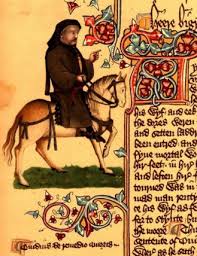
Chaucer1

The authors admit at the outset that they are not even sure if Chaucer was murdered. But they use the question to probe the political and cultural milieu of the late 14th century. In the process they convincingly destroy the myth of Henry Bollingbroke’s popular and bloodless coup against Richard II and instead show it up for the illegal, sanguinary and repressive affair that it was. In this context the authors show that it is at least plausible that Chaucer, the court poet and political follower of Richard, did not die peacefully, particularly given the emnity that he earned from his lambasting IN ENGLISH of the corruption in the Church in Canterbury Tales. They also construct a compelling circumstantial case against the likely culprit.

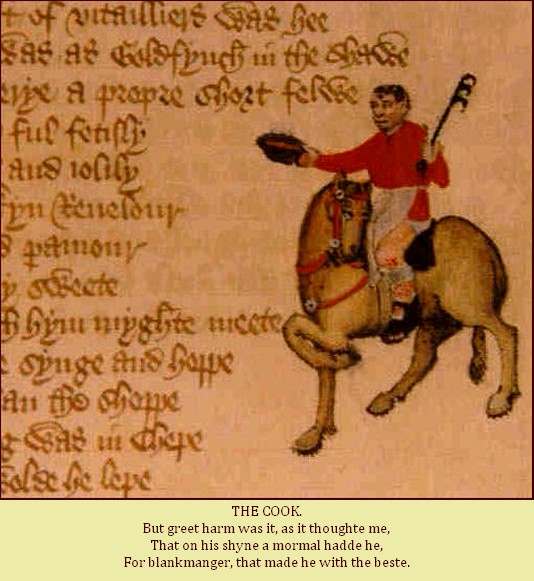
Chaucer-04-CookAlong the way the authors provide a useful introduction to the Canterbury Tales themselves and the importance of Chaucer as both a poet and a proponent of the English language.

One slightly irritating feature of the book is its peppering with Jones’ jokes. No doubt someone thought that this would be expected by readers. However this is ill judged. The book can stand on its own as a piece of historical and literary research and it doesn’t need the jokes to carry the reader forward: The argument does this on its own… And the jokes are not very good.

This quibble aside it is a fine book and a worthy companion piece to Terry Jones’ Chaucer’s Knight.

Quartered Safe Out Here by George MacDonald Fraser

Summary: gripping private’s eye view of the war against the Japanese in Burma, by the man behind Flashman

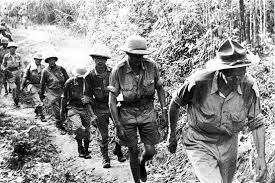
Towards the end of his life George McDonald Fraser wrote this memoir of his experiences as a very young man fighting in the last battles of the Burma campaign. He acknowledges the unreliabilityBurma of his memory – the result not of age but of being a young private (later a lance corporal) in the chaos of war. His memory of contacts with the enemy in battle is very clear, he writes, but he needed to refer to regimental histories in order to make sense of these memories in the broader narrative of the campaign – something to which he would never have been privy at the time.

The result is a remarkable book – funny, exciting and moving by turns as he recounts his life in Nine Section, a Scot in the midst of Cumbrians. He remained to the end of his life, he notes, a man of his times, a product of imperial Britain, unforgiving of the Japanese (the repeated use of the term “Jap” drives home this point) and unapologetic of these facts. His honesty about this and about how the war was fought is an important aspect of the book, fundamental to presenting a clear sighted but affectionate portrait of the sort of men who served. Paradoxically this also leads to points where he rails against aspects of the modern world – European Union, and a perceived “softness” on criminals for example – perhaps honest about what he felt but, unlike the rest of the book, little to do with considered experience.

These quibbles aside this is an exceptional book, beautifully written and a fine tribute to the men Fraser served with and the generation who defeated European fascism and Japanese militarism.

Some thoughts on leadership and moral courage

From a speech to the Management and Leadership Network (MLN) Belfast, 27th Feb 2014

There is a story from French history of a populist leader sitting in a café one afternoon and spotting a passing mob on their way to some unknown destination for some unknown purpose. So he jumps up after them shouting “There go the people. I must follow them, for I am their leader.”[1]

That story may well be apocryphal but it does paradoxically represent an aspect of leadership, but only one aspect. And if this is the only aspect of leadership displayed by someone then that person is not truly a leader. Instead they are a mere panderer to popular sentiment, something to which the most craven of politicians are prone, as we know in this part of the world to our cost.

I’d call what our French friend was at maintenance of legitimacy. This is something that all leaders have to do whether that is upward management to a superior or a board, or in the case of a political figure like this French chap, to a constituency.

But there are two other components to leadership. First there is staff development and with that the attendance to the key management functions that drive an organisation. Then there is strategic choice.leadership model
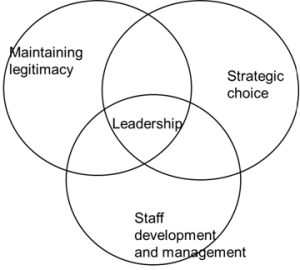
Strategy is one of those terms, a bit like leadership, which a lot of people use but meaning sometimes quite wildly different things. So just to be clear about what I mean by strategic choice it is about the allocation of resources to priorities in order to obtain immediate term survival or long-term success of an organisation.

One of the other things I’ve noticed over the years is that it is immensely difficult to do all three well over a given period. I’m not quite sure if that is a matter of personal aptitude, lack of time, or difficulty of circumstances.

When I was working in Angola at the end of the Civil War there I felt I did two of the three well. I made the right strategic choices to build the operation to provide humanitarian assistance to over a quarter of a million people and I helped mentor and train a cadre of staff who have become, in my opinion, outstanding leaders in their own right.

But I was poor at upward management in large part because of distance from head office, changing personnel there and the simple stress of working in wartime. This meant that when I left many of the achievements, particularly in relation to learning and management, which we had made were insecure and many of them eroded quite quickly afterwards.

I beat myself up a lot over that for some years but began to forgive myself a little when I read a biography of Hannibal a few years ago and found that he was pretty lousy at upward management too: a significant reason why Rome not Carthage won the Punic Wars was because Hannibal was so alienated from the Carthaginian Senate that they refused to reinforce him at a crucial moment and so his Italian campaign failed.

That brings me to another point I wanted to make:

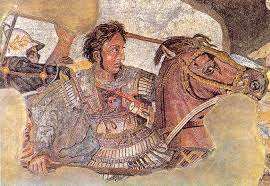
In Western Europe Alexander, the Macedonian king who conquered so much of the known world, is usually known as “the Great”. But in Iran he is known to this day as “Alexander the Accursed” because there he is remembered for devastating one of the great flowerings of Persian civilisation.

I told a Greek friend once about this dichotomy and she got very angry, shouting about how no one could say that, it wasn’t true: Alexander was the greatest of men.

I said “But why are you getting angry? He wasn’t even Greek!” and our relationship never really recovered.

Now I tend to have more sympathy for the Iranian rather than the Greek, or Macedonian, view of Alexander. But my point here is that it is intrinsic to leadership to have enemies. This is obvious when you think about political or military figures from Alexander to Theresa May. But this polarisation of opinion is also inevitable in other leadership environments. This is because strategic choice – the allocation of resources to priorities – is such a fundamental aspect of leadership. In such choices there will always be winners and losers and this will bred resentment.

Lincoln is today regarded as the greatest president in US history. But Shelby Foote, a historian of the American Civil War, told the story of how when he was writing his Magnus Opus, he contacted a descendent of the vile Nathan Bedford Forest, the most brilliant Confederate cavalry general of the Civil War, and subsequent founder of the Klu Klux Klan.

Foote told her that he regarded Lincoln and Forest as the only two authentic geniuses to emerge from the war. “Well”, she replied, “my family never cared much for Mr Lincoln”.

That sentiment was widespread in Lincoln’s lifetime. One gets a sense of this from the film Lincoln. He was vilified in Congress and by large swathes of the Northern press let alone the Southern. His treasury secretary, Salmon Chase, plotted what was in essence a coup d’état against him. Most of his cabinet colleagues thought they were much more qualified than him to be president.

In her book Doris Kearns Goodwin makes a strong argument that Lincoln’s niceness was a fundamental factor in enabling him to lead and manage though the crisis of the Civil War. I think that is important to remember when all the tales of hard-nosed management are told and management ideals are presented to us on television who are clearly selfish, self-serving and obnoxious individuals. Lincoln was able to hold together his fractious cabinet in part because of his warmth, humour and generosity of spirit, something that still echoes down the ages.

But I think there was something deeper too which was Lincoln was a person of immense moral courage. By this I mean he had that uncommon capacity to take personal responsibility for hard, sometimes terrifying, decisions, through the consideration of mature and selfless personal principles in interaction with the leadership challenge he found himself presented with. And he was open to the growth and evolution of his principles and values from experience.

Just how uncommon that capacity is is starkly indicated by consideration of one of the most shameful episodes of human history. Christopher Browning in his book Ordinary Men noted how only a relatively few members of the SS murder squads operating in eastern Poland during the Second World War relished their work. The majority disliked it intensely and went along with the protracted routine of murder, even of children and infants, for reasons of unit loyalty and belief in the legitimacy of their orders.

Only a very few, maybe 10% refused to participate in massacre. Pre-war politics was no predictor: German Social Democrats and Communists participated in slaughter along with Christian Democrats and Nazis. And some Nazis like Oscar Schindler and John Rabe were spectacularly heroic in their rescue efforts during the war.

Christopher Browning makes the chilling observation in his book that anyone who wasn’t in the same situation who says they would not have participated in the killing had they been there is simply saying one thing: that they do not know what they are talking about.

I think there is considerable truth in that assessment but I don’t agree with it entirely. Hugh Thompson Jr was an American helicopter pilot in Vietnam who intervened in the My Lai massacre because prior to ever seeing Vietnam and all through his time there he had engaged in mature reflection on what, literally, it meant to be a Christian soldier in such a war: what was acceptable and what was unacceptable. So when he saw fellow Americans involved in the butchery of unarmed civilians, much as SS troops and police had done 25 years before, he interposed is helicopter between them and the civilians and told the American troops bluntly that if they went any further he and his crew would personally kill them all. His moral courage enabled him to save the lives of 11 civilians.

You don’t have to be a Christian like Hugh Thompson to demonstrate moral courage. And even if you are a Christian, or any religion or none, it is no guarantee that you will ever have it. What you do need is ownership of your beliefs and principles.

Given the scarcity of moral courage even in the face of the most incontrovertible and horrific instances of human history this is clearly an uncommon phenomenon. And without deliberate consideration it is much less likely to be achieved in the face of, by those measures, the relatively trivial cases that so many of us more routinely face in the course of our lives as professional leaders.

Lincoln showed his profound moral courage in the most dramatic terms in preserving the Union and abolishing slavery. Collins showed it in signing the Treaty, something he knew at the time was likely to be his “own death warrant”.

It is this quality I believe more than anything else that is the most fundamental qualification for leadership: that stark moment of social isolation where you are prepared to raise your voice against the prevailing orthodoxy and vested interests to assert a different way irrespective of the personal cost.

I remember in my first or second year at Queen’s studying civil engineering one of my lecturers, Harry Ferguson, giving a lecture on professional practice. One of the things that he said which had a perhaps surprisingly profound impact on me was “A professional will always sign his or her name to their reports”. It seems like a relatively mundane thing but it is a good indicator, though not a universal rule: if you are not prepared to put your name to something, if instead you seek the anonymity of a crowd – or a mob –  you should first question your professionalism in the matter and then your moral courage in relation to your leadership.

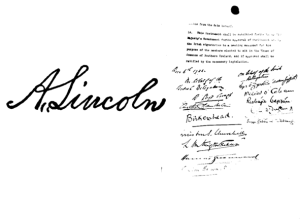
Lincoln putting his signature to the Emancipation Proclamation, Collins to the Treaty are among the starkest examples of moral courage and I am sure that each of you can think of additional examples from history, or personal or professional experience.
Signatures

Abraham Lincoln’s signature, and those of the signatories to the Anglo-Irish Treaty of 1922, including Michael Collins

The leadership challenges that we face are unlikely to cost most of us our lives. But how we respond to them is still an important measure of our conscience and soul. And the quality of life of others, and sometimes their very lives, depends upon them, sometimes more than we care to remember. Bear in mind that in this contemporary globalising economy with business’s perpetual search for cheap production and rare commodities we are often ensnared in unjust systems such as the ongoing atrocities of contemporary slavery. This makes us accomplices whether we want to be or not to things such as the enslavement of vulnerable workers in Thai fisheries, to make sure we have cheap prawns in our supermarkets, the enslavement of girls and young women in the garment factories of Southern India to provide cheap clothes for our high streets, and the child slavery used for the excavation of the minerals cobalt and coltan for our mobile phones.

It is true that these practices by business, particularly international business, are enabled by the failure of governments to act to protect vulnerable workers across the world. But they can also be a very real expression of failure of leadership by individual human beings – business executives and politicians – who may pay lip service to ideals of leadership and the memory of people like Lincoln but fail utterly to emulate even a modicum of his moral courage.

For that reason it is important for each of us to reflect on the sort of leader we want to be and the sort of moral courage and selfless principle we want to bring to the task.

It is often a thankless and generally a painful process. But it matters: very often the first step on the path to transforming the world is transforming ourselves. Then if some of us, at some time, maybe even tomorrow, find ourselves in a situation where we have the power to reform and emancipate rather than simply acquiesce in injustice, we may find we have the courage to grasp that opportunity and change a moment of history for vulnerable people across the world.


[1] Attributed to Alexandre Auguste Ledru-Rollin 1807-74

Prologue to the cataclysm: Anthony Beevor’s The Battle for Spain

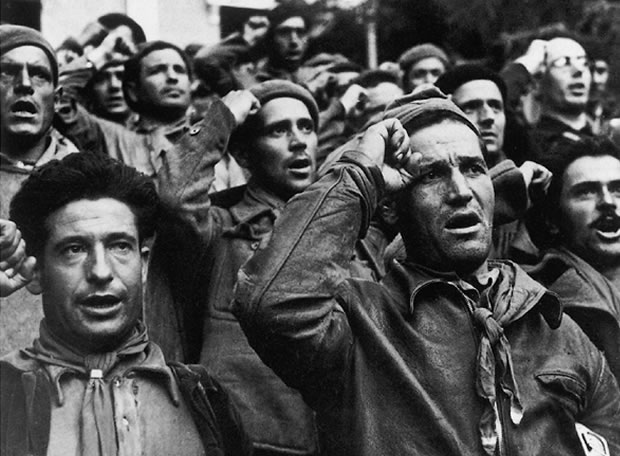
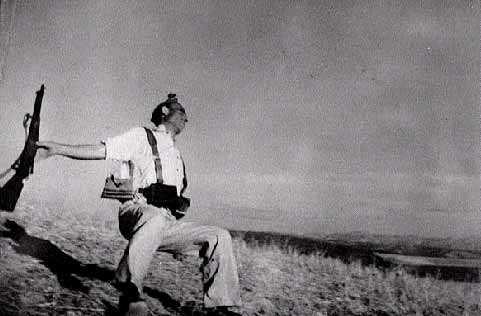
robert_capa_civil_war_3

Antony Beevor has written fine accounts of the battles of Stalingrad, Berlin and Normandy. However this book must rank as his masterpiece. It is a gripping narrative history of the Spanish Civil War, updated from an earlier account he wrote, with new material from former Soviet and other sources. At just over 450 pages (excluding references and notes) it is a substantial volume, but still only half the length of the Spanish language version of the work.

The author is clearly sympathetic to the cause of the Spanish Republic, but this does not stop him from being scathing about its failings, particularly its military ones. He is clear-sighted also about the atrocities of the Republicans but these pale in comparison with those of the Francoists, which were systematic and often chilling in their brutality. In one instance an American journalist was present when a fascist officer handed over to his troops two young girls. The officer “told him calmly that they would not survive more than four hours” (p. 92).capa_essay_01

The Spanish Civil War prefigured the cataclysmic struggle of the Second World War, both in terms of the ideological conflicts and as well as the pitiless violence. Yet it is also a conflict which is important to understand in its own terms and for its influence on contemporary Spain and Europe. This is something that Beevor manages seemingly effortlessly. It is a great work of narrative history.

Waltz with Bashir: a startlingly courageous Israeli exploration of that country’s involvement in the Sabra and Shatila massacre

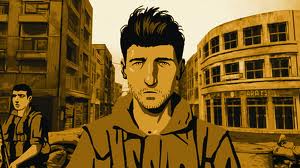
Ari Folman in Beirut, from Waltz with Bashir

Ari Folman in Beirut, from Waltz with Bashir

Twenty years after the Israeli invasion of Lebanon, of which he was a participant, the writer and director Ari Folman realized that he had little memory of his time there. This included being stationed a few hundred metres from the Palestinian refugee camps of Sabra and Shatila during the three days in which the Phalangist militia massacred the population there.

Waltz with Bashir recounts how, with the help of others who had been there, including fellow soldiers, he began to recover his memory of the events. The result is this extraordinary “animated documentary”,

Palestinians and Lebanese have no voice in this film. Nevertheless it still represents some of the best impulses in Israeli society, documenting how an ordinary Israeli faces the truth of a particularly vile episode in his nation’s history in which he himself was directly implicated.

The massacre in Sabra and Shatila has echoes through history: one Israeli journalist, Ron Ben-Yishai a distinguished war correspondent who was the first journalist to witness and report on the massacre, and personally informed the then Israeli defense minister Ariel Sharon of the massacre as it was occurring in a bid to get it stopped, recounts how the scene in the camps reminded him of the images of the Warsaw Ghetto.

There are other echoes in Middle Eastern history. One not mentioned in the film is how in 1268, on capturing the city of Antioch, the Sultan Baybars immediately locked the city gates to stop the escape of any of the town’s inhabitants as he proceeded to massacre them. Folman argues with this film that the role of the Israeli army during the massacre was the equivalent to Baybars’ locking of the gates. This allowed Israel’s Phalangist allies, Israeli-equipped and in the full knowledge of the highest Israeli military commanders, security to carry out the slaughter, safe in the knowledge that the civilians they were killing could not escape through Israeli lines. While the film may provide only a narrow perspective on the Lebanese invasion, it is a startlingly brave and humane one, showing how an ordinary individual human can take responsibility for himself and the best ideals of his country even in the face of racist atrocity and overwhelming historical events.

Making the Borgias boring: Christopher Hibbert’s The Borgias

Lucrezia Borgia

Lucrezia Borgia

This is a startlingly dull biography of one of history’s most infamous families, its limitations perhaps a product of the fact that Christopher Hibbert was working on this towards the end of his life.

There is a welcome focus in the book on the unfairly maligned Lucrezia, and the author illustrates how she was a pawn in the power-plays of her pope father, Rodrigo, and brother, Cesare. The book details her many horrific experiences, including the murder of her husband, probably by her brother Cesare, and effectively refutes the myth of her monstrousness

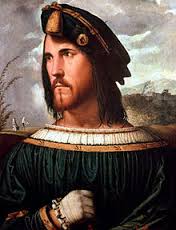
Cesare was no more dastardly than his contemporaries, and in many ways more effective, as Machevelli’s account indicates. But he was still a pretty nasty character. He was a murderer and a rapist, keeping, for example, Caterina Sforza-Riario, ruler of Imola and Forli, as a sexual slave for weeks after sacking her cities. Tiring of her after a while he consigned her to the dungeons. Hibbert treats the coarse humoured contemporary accounts of the “willingness” of Caterina at face value, rather than consider in any great depth the invidious nature of Caterina’s position, and what this says about Cesare.

Casere Borgia

Casere Borgia

Time and again Hibbert seems more interested the clothes that the Borgias wore rather than the psychology of the family and the politics, papal and secular, that drove them. On the positive side it is a short book and does provide a relatively concise overview of the careers of this family. Still considering the potential of the source material it is a disappointing book, and probably unrepresentative of the author.

A path to power paved with war crimes: Philip Dwyer’s Napoleon (1769 – 1799)

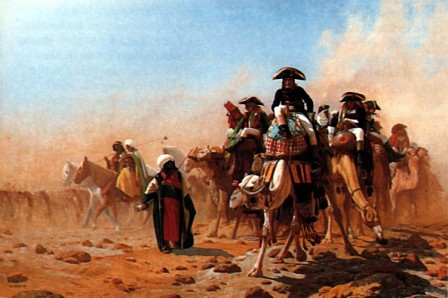
Bonaparte on the march in Egypt and Syria Bonaparte on the march in Egypt and Syria

Summary: An engrossing and chilling piece of work that charts Bonaparte’s path to power paralleled by his precipitous moral decline and the growth of his egotism.

In the course of this fine biography that charts Bonaparte’s rise from Corsica to Consul of France, one particularly distressing anecdote stands out: Following Bonaparte’s capture of Jaffa in 1799 the French troops engaged in a murderous sacking of the town, during which the soldiers kidnapped a large number of women and girls. They were “taken to the French camp and raped. Bonaparte, hearing of this, ordered that all women were to be led into the hospital courtyard by midday on pain of a severe punishment… it was believed that they would be sent back to the ruins of the town where they would find refuge. However a company of chasseurs was assembled to execute them” (p418).

This is very much a political, rather than a military biography of Bonaparte: the reader gets little sense of his tactical genius. The author’s interest is rather focused upon the exercise of power and particularly how Bonaparte parlayed his reputation for military success, often self authored and shamelessly exaggerated, into political power. But while there is little discussion of the battles there is a close consideration of Bonaparte’s role as a general-in-chief, how he organised, or failed to organise his logistics, and his policies towards conquered peoples. The disorganisation of Bonaparte’s march on Cairo pre-figures his failures in his Russian campaign, and the brutality displayed to the Arab populations of Egypt and Syria anticipates the brutality of Europe’s 19th century “scramble for Africa”, and indeed 20th and 21st century Western atrocities in the Middle East.

In considering all of this the author is at pains to emphasise that in terms of ruthlessness Bonaparte was little different from the other commanders of the era, whether British, Austrian or Russian. Yet, while this is undoubtedly true as British policy in Ireland in 1798, for example, confirms, there is something frightening about a man who could make a cold-blooded choice to slaughter those defenceless Palestinian women at Jaffa. Whatever greatness Bonaparte may ultimately have achieved it is dimmed beyond measure when one contemplates it in relation to the terror of those poor women’s last moments.

Bonaparte visits the French plague victims at Jaffa Bonaparte visits the French plague victims at Jaffa

Recovering a forgotten history and celebrating treason: Fintan O’Toole’s A Traitor’s Kiss

richard-brinsley-sheridan-1-sized

Richard Brinsley Sheridan is remembered today as one of the most brilliant dramatists of the 18th century. What Fintan O’Toole does with this book, while not ignoring Sheridan’s considerable literary achievements is show that there was more to the man than the playwright. In fact Sheridan was one of the most democratic politicians of his day, a political visionary in both Irish and British politics. His reputation as a artist, cemented, almost literally, by his burial in Poets’ Corner in Westminster Abbey, was privileged in order to obscure his much more dangerous treasonous (to Britain) and patriotic (to Ireland) political views lest they encourage others.

The book, beautifully written as is typical of O’Toole, has the pace of a political thriller set against the background of the French Revolution, the United Irish rebellion of 1798 and machinations of Westminster at the time. My one quibble with the book is that it passes over the events of the 1798 rebellion too quickly to give readers unfamiliar with that period a full sense of the trauma that it must have been for Sheridan and those who thought like him.

Nevertheless the book achieves the remarkable feat of showing the modern relevance of someone from 200 years ago who has been ignored for too long in favour of much more imperial figures.

Great stuff!

Peter Bowles and Penelope Keith (as Mrs Malaprop)in a production of Sheridan's The Rivals

Peter Bowles and Penelope Keith (as Mrs Malaprop)in a production of Sheridan’s The Rivals

Times that try men’s souls: David McCullough’s 1776

Washington Crossing the Delaware by Emanuel Gottlieb Leutze

Summary: a gripping account of the beginning of the American war of independence

This is an exceptionally gripping work of narrative history. Written as a companion to McCullough’s John Adams this book focuses on Washington from his appointment as commander of the Continental Army to his crossing of the Delaware at Christmas 1776 to mount a surprise attack on the British forces that had routed him from New York. What makes that story so remarkable is its consideration of the leadership of Washington, most particularly how he turned around his fortunes, and those of the American Revolution, from their nadir following his poor generalship in New York which led many of his closest lieutenants to lose confidence in him.

McCullough conveys in his narrative the extraordinary steeliness of Washington when faced with this crisis and which was core to his historical greatness. President Obama in his inaugural address cited Washington’s crossing of the Delaware in mid-winter as an example of the sort of courage in the face of adversity that was necessary to deal with America’s current travails, and this story can be inspirational to non-Americans (such as myself) or anyone faced with personal or professional reversals.

This is a compelling work, beautifully written, deeply exciting and a great introduction to this period of American history.