Israel’s Offensive: A Case Study in Racism and Human Rights

Summary: Netanyhu’s war is racism and should be condemned as such

Perhaps I have missed it, but I have not seen many anti-slavery organisations condemning the mounting slaughter of civilians in Gaza, and now Lebanon, over the past year.

I wonder about anti-slavery organizations more than other specialist NGOs or human rights issues because, for the past 20 years this has been my principal area of professional practice and so is a sector with which I have some familiarity.

Perhaps some anti-slavery organization feel that something like Gaza is not part of their mandate and so would be inappropriate for them to raise their voices. Perhaps others are afraid of upsetting donors by raising question about another specialist area – human rights in war – and losing funding for other important work. Maybe others are afraid of annoying the governments of the US, UK and Germany, or certain parts of the EU Commission, who may be complicit with the policies of Netanyahu’s cabal and so losing precious access and the occasional invitation to convivial cocktail parties. 

The thing is this: if we survey the realities of slavery through history right up to the present day we see very clearly that it is rooted in racism and the dehumanisation of others. Hence, anti-slavery organisations must be anti-racist if they are at all serious about tackling the causes and consequences of enslavement. If they fail in that fundamental then they are not truly anti-slavery. They are merely performative distractions. 

Consider now Benjamin Netanyahu’s reference at the start of the assault on Gaza to the Amalek, a nation that, according to the Bible, King Saul was commanded by God to kill every member of. Consider the Israeli blockades of aid to Gaza to deploy famine as a weapon of war, and Israel’s vote on 28 October 2024 to, in effect, ban the largest provider of humanitarian assistance to Palestinians, the UN relief and works agency (UNRWA). Consider how IDF soldiers can  cheerfully make videos for TikTok of their demolition of homes, schools, universities, hospitals and every other vestige of civilian infrastructure that makes Gaza habitable. Consider now Israeli Defence Minister Yoav Gallant’s description of Palestinians as “human animals” as he called for a “complete siege” on Gaza, an imposition of collective punishment that is illegal in international law. 

Gaza, after Israel has “defended itself”

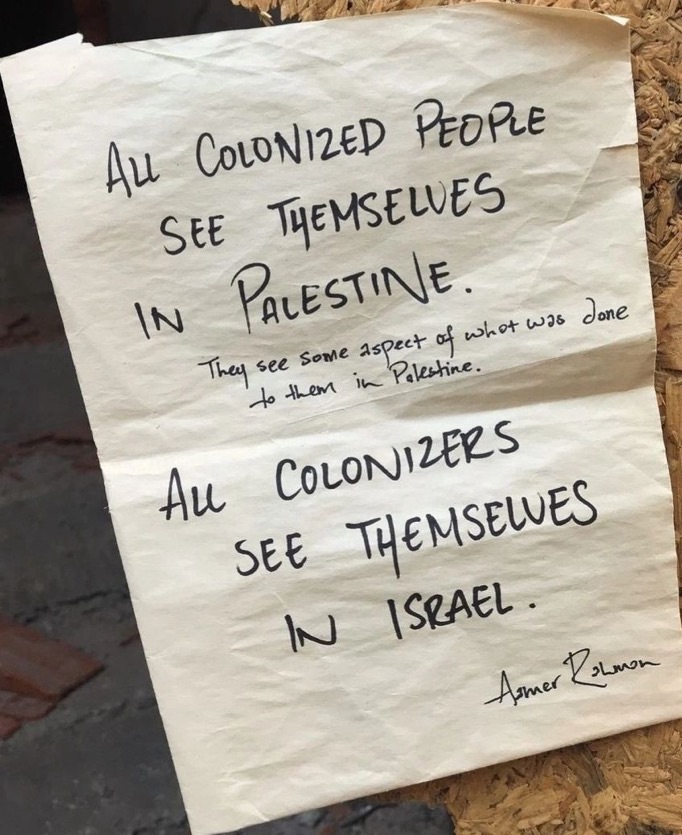
Each of these examples, and there are many more, is a naked expression of racism against a whole people. Racism is at the root of every atrocity that is committed by Netanyahu and his cronies.

The continued acquiescence of US, UK and Germany in this, up to and including the provision of money, material and intelligence to sustain the Israeli offensives, in spite of overwhelming concerns regarding both their morality and legality, has dealt a grievous blow to international rule of law. It has also done something that would have seemed unbelievable a mere 18 months ago. It has established a credible case that there is no moral difference between the foreign policies of Biden’s America, and Putin’s Russia. Both appear ready to shred law and the most basic principles of human rights when it is convenient for them.

It is upon meaningful rule of law and a common adherence to the fundamental principles of human rights that the cause of anti-racism, and anti-slavery, have been advanced. Now, however, if campaigners challenge transgressing governments that their policies are in breach of human rights many will laugh and point to Gaza and Ukraine and say that the US and the UK, Germany, Israel, and Russia have demonstrated that the only right is might.

So, every anti-racist organisation on this planet, and that includes all anti-slavery organisations that are worthy of the name, and every organisation that derives its mandate from the Universal Declaration of Human Rights, must add their voices to the international condemnation of the Netanyahu government’s racist wars. If they do not then they will seem as hypocritical as the western governments who facilitate these wars in spite of the mounting evidence that the bloodshed that Israel perpetrates is foul murder.

As the Irish anti-slavery campaigner Roger Casement put it, “we all on earth have a commission and a right to defend the weak against the strong and to protest brutality in every shape and form.” 

That commission was never more urgent than it is today as we daily bear witness to Netanyhu’s unfolding policy of genocide.

Not ethical leadership: a rocky start to Starmer’s first days in government

Summary: things can sometimes only get worse.

Keir Starmer’s government prides itself in not being idealistic. “We are not a party of protest!” they declare.

The smug, self-satisfaction that this statement implies might be better sustained if the party were conducting itself with unimpeachable professionalism now that it is in government. But its first 100 days in office have been notably rocky. A survey of this period by the Guardian was headlined, “We all hope it’s teething troubles – but worry it’s something worse.”

Well, I suspect it is something worse.

This thought will likely have occurred to many students of organisations. It will be a particular worry to those concerned, as I have been, with what is required to lead ethically: that is, the struggle to make organisational decisions that optimise life-affirming choices by seeking to protect human rights and advance environmental restoration. 

For me, there seems to be three inter-related structural problems with Starmer’s Labour party that are the root of the Labour government’s shaky start and shady future. The first of these is that Starmer’s Labour party is strikingly authoritarian. 

Everyone who has ever effectively led people in organisations will be aware that sometimes a directive approach is needed. For example, if it is necessary to evacuate a building due to an emergency, it is not appropriate to ask everyone how they feel about that first. It is necessary to point folk to the fire exits and tell them to get out. 

However, Starmer seems to privilege such an approach over more collaborative ones even when there is no compelling need. Indeed, his leadership seems to have a problem with any independence of thought and voice.

The run up to the 2024 general election was marked by accusations of a purge of left wing and pro-human rights candidates, and the parachuting into various constituencies of Starmer loyalists, some of them morally repugnant.

Starmer and his acolytes present this as “discipline” and “strong leadership”. It is a peculiar notion of strong leadership when a leader is afraid to countenance a bit of criticism or consider different perspectives on issues. 

From the longer-term view of organisational health this approach is even more problematic. Because if organisations exclude dissent, they reduce their capacity to think critically, to test ideas and winnow out the stupid or counter-productive ones. 

All leadership teams, no matter how smart, will come up with poor ideas from time to time. But truly smart leaders understand that they need processes in place to guard against such things. The restriction of dissension in Labour undermines the necessary processes.

This leads to a second structural problem which will increasingly emerge for Labour as this government proceeds. The purging of intellectual and philosophical diversity, and the fear of being seen as disloyal that is bred by leadership authoritarianism, will reduce Labour’s capacity to generate new ideas as time and events evolve. This will make it more difficult for the government, and the party as a whole, to right recent wrongs and to respond to the new challenges that will inevitably emerge. 

Both these problems, of authoritarianism and lack of intellectual diversity, are dwarfed by the most fundamental of Labour’s current structural problems: that is its moral bankruptcy. 

This was most starkly on display in the infamous interview that Starmer gave to LBC in which he endorsed collective punishment on the people of Gaza for the attacks on Israeli civilians on 7 October 2023, something that he should know as a lawyer, is a war crime under international law. Later assertions that Starmer misspoke or was taken out of context are undermined by the fact that in the weeks following this Labour front-benchers, including the crassly cynical Emily Thornberry and the craven Peter Kyle also publicly endorsed their Dear Leader’s position.

There was a softening of Labour’s Gaza position in the run up to the 2024 election, when it looked as if such an inhumane policy might cost it seats as Israel’s apparent genocidal intent became ever more explicit. However, on attaining power, it has, with a few cosmetic changes, returned to its substantially uncritical support of Netanyahu’s far-Right government. Hence Starmer is notably more reticent on the carnage inflicted on Palestinian civilians in comparison with his public anguish over Israeli casualties.

It is in the context of these three structural failures that we should consider the votes in the first 100 days of this government on maintaining the two-child limit on child benefits and cutting winter fuel payments for pensioners

Not to put too fine a point on it, these votes look more like a process for the breaking of the human spirit of backbench members of parliament rather than any cool consideration of regrettable financial necessity. 

In bringing these matters to a vote when they did, the Labour leadership sought to purge any residual dissent by demanding that, in the name of loyalty, backbenchers should betray their constituents and their consciences on the issue of the poverty of English people, until now a residual Labour moral value.

Having done this, the thoroughly compromised backbenchers have been truly initiated into the moral bankruptcy that is at the core of the British Labour party. So, all will have diminished credibility if they are ever tempted to mount a future principled challenge to the leadership’s proposals, no matter how stupid or morally repellent those proposals might be. 

Starmer’s Labour may be better than the Tories that they replaced. But there seems to me to be a rot at their heart, the stench of which may soon become overwhelming. 

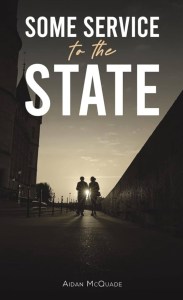
Some Service to the State

Summary: why partition in Ireland has been such an injustice.

“… sometimes it is absence itself which is the hardest thing to hide.”

I grew up in South Armagh, just a mile or so from the British-imposed border in Ireland. That border is a thing that, in many ways, has cast a long shadow over my life. It was, I sincerely believe, at the root cause of many of the problems for both parts of Ireland during the Twentieth Century, not least the squalid little war known as the Troubles during which I grew up.

With partition, the British sought, successfully, to create two sectarian states in Ireland rather than one plural one. My novel, Some Service to the State, is at heart an exploration of some of the human rights abuses that Irish people had to endure as a result of this.

Hence it is an indictment of the injustice of partition’s continuation. As the impetus takes hold for an end to partition and the establishment of a new Ireland, I hope that this book will resonate with an audience that wants to understand better why the status quo has been such a poisonous thing for ordinary people living on the island of Ireland.

But Some Service to the State is also a gripping detective story, about the repercussions of an enquiry into the fate of a girl who seems to have gone missing in that politically divided island.

Here is what other authors said about it: 
Ronan McGreevy, author of Great Hatred: the assassination of Field Marshal Sir Henry Wilson, has said of Some Service to the State that it is “a superb book with dialogue that would not be out of place on the stage of the Abbey Theatre. … [in Mick McAlinden} McQuade has created a character whose travails highlight the thwarted dreams and the tragedy of partition for so many people in post-revolutionary Ireland.” 

Rosemary Jenkinson a multi-award winning playwright and author of Marching Season, has said that the book shows a “prodigious skill in shining a spotlight on the scandal of the mother-and-baby homes and in brilliantly imbuing the past with … [a] potent blend of heart, soul and wit”

If you would like to get a copy, the book is available in the UK from Bookshop.org and in the US from Barnes and Noble. It is also available on Amazon.

I hope you will read it, and if you do, I would love to hear what you think in the comments below.

Keep safe and many thanks.

Old habits, new protests: on the politics of Israel’s allies

Summary: those who have lost their moral compass will never understand that protest is leadership

Rule of international double standards

Today, it appears that many Western political leaders apply multiple caveats to the principle of the universality of human rights. The result is that rather than rule of international law we seem increasingly to have rule of international double standards. 

This is particularly plain in relation to British, American and German policy towards Gaza. In comparison with their supportive policy towards Ukraine and their outrage at Putin’s war crimes there, in relation to Gaza there is a lack of condemnation for ceaseless attacks upon civilians. On the contrary, the British, Americans and Germans remain publicly and materially supportive of Israeli policy.

The moral black hole at the heart of Western policy towards Israel

British, American and German policy on Gaza appears to be underpinned by a view that Palestinian lives are not equal to Israeli lives and so unworthy of comparable protection. Hence those three governments seem to have decided that it is better to arm and provide diplomatic cover for the far-Right Netanyahu government rather than to uphold the most basic principles of human rights and international humanitarian law.

In the face of the considerable evidence of genocide these governments are deaf to the international protests of conscience, and to the demands of Palestinian and Israeli voices for peace. Instead, they work to maintain the murderous Israeli Defence Forces supply lines at all costs. 

I have heard some try to justify this human rights double standard in relation to Israel by responding to protests with patronising reference to the need for realism, for a “realpolitik” approach to the conflict. This is, perhaps, a notion they may imagine that the protesters do not have the sophistication to properly understand. However, many will know that “realpolitik” is a term that has considerable previous, notably in the hands of Henry Kissinger, as a euphemism for moral vacuity and acquiescence in crimes against humanity. 

Given this many will remain unconvinced that “realpolitik” really is a sufficient justification for the mounting horrors in Gaza and the West Bank. So, why are the US, the UK and Germany so steadfast in their support of a far-Right Israeli government pursuing such a horrendous campaign of violence?

It is worth remembering that Germany was genocidal in Namibia well before the Nazis ever came to power. While relatively democratic, Britain and the United States were also genocidal in the 19th and 20th centuries in relation to, amongst others, Native Americans, Ireland and South Asia. It was democratically elected governments in the US that launched the invasion of Vietnam and the destruction of Cambodia. It was democratically elected governments in the US and UK that unlawfully invaded Iraq. Today it is democratically elected governments in the US, UK and Germany that have facilitated the far-Right in Israel in their indiscriminate slaughter of Gazan civilians

So, if we take even a medium-term historical view on these countries, it seems that there is a strain of thinking in those nations’ political cultures stretching from Left to Right that still view war crimes and genocide not as appalling and even unforgivable aberrations, but as legitimate policy options when it is convenient for them or those, however unsavoury, that they deem allies. 

Protest as leadership

It is in this context that the leaderships of the US, the UK and Germany display such an extraordinary arrogance toward those protesting their disgust at their policies. In the UK, along with their gleeful grasping at graft, their contempt towards protesters is a measure of government ministers’ extraordinary sense of entitlement.

But it is the protests of which they are so contemptuous that so often change cultures and countries in the ways in which corrupt politicians can only dream. This is because protest is moral leadership that seeks to make the world a better place by demanding that it become so. 

It is because of protesters that women have the vote, that apartheid has been ended in South Africa, that civil rights have been advanced in the US and the North of Ireland. When many governments have sought to merely manage the status quo – the “realpolitik” – protesters have asserted that this is not good enough and demanded better.

Today protesters understand, as the Irish patriot and human rights activist Roger Casement once put it, that “… we all on earth have a commission and a right to defend the weak against the strong, and to protest against brutality in any shape or form”.

So, at the end of the day, as Israel’s allies become ever more deeply mired in the murder of children, it is the protesters they disdain who will perhaps contribute most substantially to an end to apartheid in Israel/Palestine and thereby save the souls of their own countries.

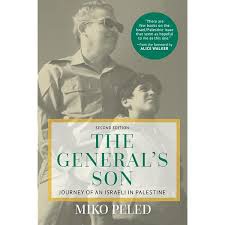
The General’s Son, by Miko Peled; and The Ethnic Cleansing of Palestine, by Ilan Pappe

Summary: on the original sins of Zionism

 In 1967 General Mattityahu Peled, who, as head of logistics of the Israeli Defense Forces, was one of the architects of the Israeli victory in the Six Day War, investigated an atrocity.

Peled had heard from a Palestinian prisoner how IDF soldiers in Gaza had massacred over 30 unarmed civilians, including a 13 year old boy and an 86 year old man. After they were shot the IDF drove a bulldozer back and forth over the bodies until they were unrecognizable. 

Peled, an Arabic speaker, went personally to Gaza to find out what happened and met the families of the victims. Afterwards he wrote a report to the Israeli government warning them about the moral degradation that the illegal occupation of Palestinian territories would bring and how atrocity would become a commonplace if it was allowed to continue. 

Peled’s son, Miko, reckons now that this was probably the decisive moment in his father’s life that transformed him from soldier to committed peace activist, something he remained for the rest of his life, a mantle taken up, in spite of incredible suffering, by both Miko and his sister, Nurit. 

But perhaps Matti Peled should not have wasted his breathe with his warning to the Israeli government. Because as Israeli historian Ilan Pappe explains in depressing detail in his book, The Ethnic Cleansing of Palestine, atrocities of the sort Matti Peled uncovered in Gaza – atrocities of the sort that Israel continues to perpetrate year in, year out, including in its genocidal post October 7th operations in Gaza – were part of the DNA of Zionism from when Israel was but a glimmer in David Ben Gurion’s eye. 

Prior to the founding of the state of Israel Ben Gurion and the cadre of Zionists that he gathered around him to be his closest political and military advisors, drew up detailed plans for the expulsions of the indigenous people of Palestine so they could realise their sectarian dreams of a Jewish state. They recognized from the outset that mass murder and terrorism would be intrinsic to this project. 

With the UN vote to partition Palestine they put their plans into bloody action. Deir Yassin was the pattern, not an aberration. 

On visiting the aftermath of one ethnic cleansing operation by the Haganah, the forerunner of the IDF, Golda Meir was reminded of the Eastern European pogroms that had terrorized her own family from their home. But, aside from this momentary lapse, she otherwise remained comfortable with her role as a war criminal.  But Pappe wonders how a mere three years after the Holocaust its survivors could inflict such barbarity on fellow human beings.

Pappe’s forensic analysis of the war crimes of Israel and the fundamental racism of Zionism has, of course, drawn criticism from other Israelis – the sort who benefit from apartheid in Israel and the West Bank and who celebrate the genocide in Gaza.

But, like Miko Peled, Pappe is on the right side of history. As the world increasingly sees Israel for the rogue terrorist state that it is, Peled and Pappe explain why it is as it is, and plot a path towards the inevitable end to apartheid there.

Both Pappe and Peled represent the enduring voice of conscience in the midst of atrocity. They are advocates of a common humanity in the face of prejudice and sectarianism. In the end it is this humanity that will always triumph over apartheid.

Letter to British Prime Minister Rishi Sunak

Summary: on returning a honorary OBE

16 April 2024

Dear Prime Minister

In 2017 I was awarded an honorary OBE in recognition of my services to the eradication of slavery. I am now returning this as it is something which I can no longer, in good conscience, keep.

On 15 April 2024, your government refused to provide protections for the victims of modern slavery from your unconscionable “Rwanda scheme”. Over the past months you, as Prime Minister, have acquiesced in attacks on the European Convention on Human Rights by members of your parliamentary party. These, along with the UK’s bipartisan position on Gaza, have put into sharp focus how British policy now distinguishes between people whose lives it values, and those whose lives it disdains. 

These represent a fundamental repudiation by the UK of the principles of the Universal Declaration of Human Rights. They are a rejection also of an enduring British human rights tradition stretching back to Thomas Clarkson, William Wilberforce, and Mary Wollstonecraft, and a longer tradition of rule of law that stretches back to Magna Carta. 

As such they send to the whole world a message that the UK rejects the core bases of human rights and rule of law upon which progress in human dignity, including anti-slavery action has been based for hundreds of years. This can only impede the anti-slavery struggle and embolden other governments who seek to systematically abuse the rights of their subjects and citizens, including  by the facilitation of their enslavement. 

I hope that you will yet find it in your heart to alter course and embrace and defend these British traditions of human rights and rule of law rather than sacrifice them to some ill-judged populist crusade.

Yours faithfully

Dr Aidan McQuade 

Dirty Linen: The Troubles in my home place, by Martin Doyle

Summary: An outstanding portrait of the pity of war

Margaret Yeaman has never seen her grandchildren. She lost her sight on 15 March 1982 when a no-warning car bomb exploded close to her workplace in Banbridge, County Down, causing splintering glass to lacerate her face. 

Margaret’s story, of being in the “wrong place at the wrong time” is just one amongst many that Martin Doyle explores in his book, Dirty Linen. The book also takes exception to that “wrong place, wrong time,” line. So many of the people whose stories Doyle recounts were just doing their jobs, providing for family and community, or just trying to have a bit of craic. It was the paramilitaries who were in the wrong place at the wrong time for these ordinary people.

Some will still argue that atrocities such as the ones recounted in this book were necessary to advance justice in the North of Ireland. But as Margaret and people like her tell their stories of how their families were devastated by violence, these should bring shame to that notion: as if the British government was ever going to be moved to change policy by Paddies butchering Paddies on the country roads of Ireland. It’s why they introduced “Ulsterisation” to begin with.

Dirty Linen is, in part a memoir, and Doyle gives an honest accounting of his experiences coming of age amidst such carnage, including the miserable abuse he sometimes suffered as a young Catholic in that religiously mixed part of County Down. 

This book could also act as something of an introduction to the art of the North of Ireland. As literary editor of the Irish Times, Doyle is able to draw upon the work of so many writers and artists, from Seamus Heaney to F E McWilliams and Colin Davidson, to help him give voice to the depth of the human tragedy that the Troubles represented.

But, as a result of Doyle’s sensitive interviews with Margaret and people like her, his book is also an exemplary work of journalism and a deeply important contribution to understanding the history of the Troubles. It offers an unflinching portrait of the pity of war by exploring the trauma and courage of the victims of both loyalist and “republican” paramilitaries. 

Some of those victims whose stories Doyle explores also became perpetrators, or at least sympathetic to the idea of revenge. But so many more refused to become as twisted as those who mutilated them and their families. Instead. they often begged for no retaliation and strove for forgiveness, or at least toleration. Theirs are stories that are so much more heroic than anything that could ever be written about the paramilitaries who pressed the triggers or planted the bombs.  

If this was all that Doyle did, then the book would be a marvel. But his painstaking accumulation of detail across the book also builds a picture of the pervasiveness of collusion between British state forces and the loyalist Glenanne gang. Perhaps other writers and researchers have done similar work. But I have not read such a convincing indictment of the breadth of British collusion anywhere else. So, if you want to understand why the British government is so keen to stop Troubles era criminal investigations, read this book.

At a time when the Troubles seem to be giving rise to some exemplary non-fiction, Doyle’s book could well stand out as a classic. 


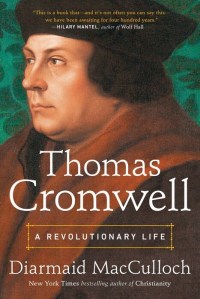
Thomas Cromwell: a revolutionary life, by Diarmaid MacCulloch

Summary: sure what are a few dead human beings when you consider cultural influence?

Undoubtedly the greatest of Peter Seller’s Inspector Clouseau films is A Shot in the Dark. In it Clouseau falls in love with a murder suspect, housemaid Maria Gambrelli, played by the luminous Elke Sommer. Even when apprehended holding a set of bloody hedge clippers that have been used to kill yet another victim, Maria drifts through the film with an ethereal innocence, somehow untouched by the squalidness and violence that surrounds her. 

Perhaps bizarrely, it was Maria Gambrelli that I was most reminded of by Diarmaid MacCulloch’s portrait of Thomas Cromwell, such is the sympathy and indulgence that MacCulloch affords him. Maria, of course, was not a murderer, whereas Cromwell was. But for MacCulloch, this is not the most important thing about him.

Rather it was Cromwell’s role in the establishment of Anglicanism that for MacCulloch is the most significant thing about his career. For this, he almost forgives the occasional burning of a Protestant heretic or the public dismemberment of a Catholic, and such killings are skated over with considerable blink-and-you’ll-miss-them rapidity.

MacCulloch argues that Cromwell’s Protestant convictions were genuine. Hence his role in the dissolution of the monasteries, a vast act of cultural vandalism amongst other things, was not just the legalised theft of their property for the crown. It was also an effort to advance the reform of religion in which he truly believed. In this vein, for MacCulloch Cromwell’s greatest lasting achievement was obtaining an authorised translation of the bible into English. 

MacCulloch makes a case that Cromwell was a complex figure, and that the depth of this complexity is obscured by an absence of sources: many of his papers were likely destroyed by his servants when he was arrested.  So, Cromwell was not wholly the monster that some of his actions might suggest. Government in Tudor times, for which Cromwell had a prodigious flair, was, after all, a bloody business and, Cromwell’s sainted Catholic antagonist, Thomas More, did not have clean hands either.

But there is a danger of whataboutery here. Just because everyone else was doing it, we should not casually excuse the horror in which a person was implicated. Amongst other atrocities, Cromwell played a pivotal role in the judicial murder of Anne Boleyn and those falsely accused of being her lovers. 

Dozens of other Catholics and “heretics” – Protestants who Henry VIII and Cromwell regarded as too extreme – followed. MacCulloch reckons that Cromwell’s introduction of parish registers to record baptisms, deaths and marriages was a way of identifying Anabaptist “extremists”. This was part of a broader intelligence system in which the theocratic government of which Cromwell was a central part, monitored and condemned people for crimes of conscience alone. 

Cromwell’s bloody trail continued right up to his own judicial murder. This was engineered by high officials jealous of his influence. They were empowered to act against him by the king’s fury at his role in arranging Henry’s fourth marriage to Anne of Cleves. For some reason, the diseased and festering Henry found that he could not manage to have sex with her. So, fortunately for Anne the marriage was never consummated, and a quiet annulment was arranged.

Taken in their totality, when considering Cromwell’s achievements in government and religion he must be seen as a major figure in British history. But there is a saying in the Talmud: “He who saves one life, saves the world entire.” In recognising the scale of his influence, for good and ill, in the making of the modern world, it is remiss to downplay the countless little domestic worlds that Cromwell helped condemn to the fires of fanaticism in the course of Henry’s monstrous reign. 

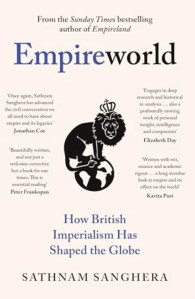
Empireworld, by Sathnam Sanghera

Summary: an elegantly written exploration of the contemporary impact of the British Empire on the world.

Empireworld, Sathnam Sanghera’s follow up to his brilliant, Empireland, expands on the theme of that earlier work, exploring the impact of the British Empire beyond Britain’s shores. 

Sanghera does not cover everything. If he did he would still be writing. But also, as he acknowledges, there are some subjects which have been so comprehensively dealt with that he feels he has little new to add.

The history he does recount here is a mixture of the thematic – for example, the role of botany in Empire, and the imperial and anti-imperial history of British NGOs – and geographic – for example, Nigeria and Mauritius. His discussion of anti-slavery is a mixture of the two, with a principle focus on Barbados and the West Indies.

The result is engrossing, illuminating, and on occasion engagingly contentious: For example, is the anti-slavery image “Am I not a man/woman and a brother/sister?” so clearly a patronising and racist one as he seems to conclude? The anti-racist sports people who have adopted the pose in recent years have shown it can be now, as many interpreted it at the end of the 18th Century, a sign of fraternity rather than subservience.

Across the book Sanghera shows how every idea carries with it the seed of its own opposite: racism and slavery generated anti-slavery and anti-racism; imperialism gave rise to anti-imperialism. This leads to a very complex history, allowing the discernment in some places of many positive legacies of Empire – rule of law, parliamentary democracy, tea – alongside many negatives – partition, civil war, corruption, impoverishment. 

This complexity leads Sanghera to be careful in his conclusions, seeking with this book to promote nuance, understanding, and dialogue, rather than judgement. 

This is a hugely laudable objective, particularly for a country that needs to recognise, as Sanghera rightly notes, that other peoples’ – foreigners! – perspectives on Empire are vital for a proper understanding. 

One such foreign perspective that Empireworld put me in mind of, was the 1916 speech from the dock by the great Irish anti-slavery activist and anti-imperialist, Roger Casement, who observed, “For [the English Establishment], there is only “England”; there is no Ireland; there is only the law of England, no right of Ireland; the liberty of Ireland and of an Irishman is to be judged by the power of England.

For Ireland, one could substitute the name of any country of Empire. Empire was positive for subject peoples if it was in England’s interest. If it was not, then, as Sanghera describes, they could be starved, enslaved, shot with dum-dum bullets or subject to any other expedient or abuse that the British government chose to mete out.

This principle remains true to this day, it seems to me, for Scotland and the North of Ireland, the last vestiges of Empire.

Sanghera does not discuss Ireland, or Scotland, much in this book. But he does not have to. There are plenty of others who have and continue to do so. Instead, Empireworld is another superb study of frequently unacknowledged and unexplored history. A visit to Kew is never going to be the same again. 

Empireland, by Sathnam Sanghera

Summary: a gripping and elegantly written survey of the bloody British empire and its echoes in the present day

Between 1845 and 1854 the population of Ireland was halved through starvation – over a million people died – and forced emigration. The English like to refer to this horrendous period as the “Irish Potato Famine”. This suggests the blame for the cataclysm lies with Irish people’s bizarre and somewhat comical taste for spuds, rather than upon callous government policy that thought the death of hundreds of thousands of Irish people a price worth paying for British profits in the agricultural free market.

Paradoxically Sathnam Sanghera sticks with this nomenclature in his exceptional book Empireland. This book both elucidates many of the other atrocities upon which the British Empire was built, and explores the imprint that sustained bloody exercise in pillage still leaves upon contemporary British society. The term “potato famine” is part of that imprint.

There is an echo in this book of Tom Holland’s Dominion, which explores how Christian thought – such as the ideas of human rights and secularism – has so fundamentally shaped European civilisation that the origins are now generally unknown and almost unnoticed.

The British empire brought nothing so positive as human rights to the UK let alone the rest of the world. Rather it became, for much of the world a byword for bloodshed and impoverishment. But the British – in marked contrast to those societies that were on the receiving end of their colonial project – are startlingly ignorant of what Empire entailed or of its repercussions through time. Few British people now have heard of the murderous British suppression of the Sepoy rebellion of 1857, let alone of the sacking of Tibet in 1903 – even though some of the extremely valuable loot once showed up the BBC’s Flog It while Sanghera was writing this book.

And yet the consequences of all that bloodshed is with us at every turn. The British Museum is stuffed with art treasures, such as the Benin bronzes, stolen in the name of Empire. London’s position as a major financial centre is a consequence of the preferential trade terms and punitive tax regimes that the Empire imposed on subject peoples. British xenophobia towards migrants is a contemporary manifestation of the racism of Empire. The presumption of the British ruling class that the rules – whether relating to human rights, trade or public health lockdowns – that apply to others should not apply to them are also echoes of the political economy of the Empire.

Indeed, Brexit may be regarded as the inevitable consequence of the racist logic that underpinned the British Empire: having no more colonies to pillage, the British Establishment instead decided to loot the UK.

Sanghera’s book is a superb and important introduction to this inglorious period of British history and its reverberations into the present. It is elegantly written, accessible, and vital for anyone who wants to understand better why Britain finds itself in its current morass.

I just which he would quit it with his talk of “potato famines”.