Bloody routine of a war in the shadows: The Squad, by T Ryle Dwyer

Image

The Squad is an account of the intelligence war waged principally in Dublin, by Michael Collins and the IRA from January 1919 to the Truce in 1921. It is based on a series of interviews given by participants to the Irish Bureau of Military History on the proviso, for many, that they would only be released after the interviewee’s death.

The author does not spend much time contextualising the violence in the politics of the time clearly having decided that, as there are many other books which provide such context, he has little additional to offer. This means that one is pitched almost straight away into the minuatae of intelligence operations with a bewildering array of characters.

However patience with this approach pays dividends: the book conveys the mammoth scale of the intelligence operation Collins undertook and hence the centrality of this in undermining Britain’s capacity to hold Ireland. The book also provides insight into how the ruthlessness and secrecy of the operations led to the moral erosion of some of the Squad members whose subsequent military and democratic conduct was far short of the ideals initially outlined by Collins for them.

Collins insisted that revenge was never to be part of the conduct of the Squad, leading many of the shooters to presume that killings such as that of Lee-Wilson, who had maltreated Tom Clarke after the 1916 Rising, was principally an act of military necessity, rather than an act of revenge. However as generally the shooters were simply given orders to kill not the reasons for the killings there is little substantive illumination on the reasons for some of Collins’ more controversial killings.

Certainly as the war wore on into late 1920 and early 1921 there is a sense that the routinisation of killing led to a toleration of revenge and reprisal comparable to that shown by Lloyd George and his Cabinet in their conduct of the war: Todd Andrews, later a distinguished Irish public servant, who participated in a support role to the Squad in the Bloody Sunday operation in late 1920, noted how the behaviour of some of his comrades resembled that of the Black and Tans.

And, however justifiable was this campaign, the author does not allow the reader to lose sight of the fact that it resulted in the killing, often brutal, of other human beings: in the Squad’s first assasination, of a political detective Patrick Smyth, they used .38 calibre weapons, which they discovered could not dependably put a man down – Smyth struggled on in pain and fear for a long while after the first bullets hit; the assasination of 22 year old District Inspector Phillip O’Sullivan in front of his fiancee, clearly bothered his killers so much in later life that they could not bring themselves to speak of it.

Nevertheless, in spite of the sense of excess towards the end of the war, the book does confirm a general tendency of restraint and growing democratic sensibility by Collins that compares favourably with many of his contemporaries in British or American politics. The experience of the pity of war seems to have been a major factor in Collins’ own growth as a statesman. His loss continues to cast a long shadow on twentieth century Irish history.
The risks and rewards of meglomania: The 12 Caesars by Mathew Dennison

Image

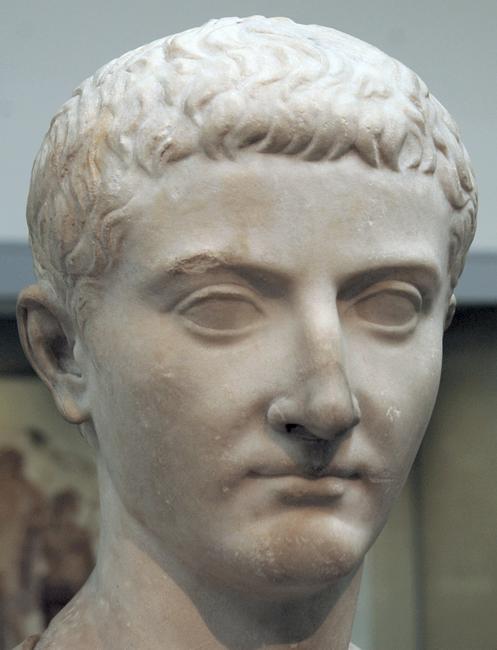
Tiberius (the “T” in “James T. Kirk”!)

This is a very enjoyable account of Roman history through the prism of the careers of the first 12 Caesars. These were not nice people. Even the “good” emperors were bloody men slaughtering guilty and innocent alike: Titus, for example, celebrated his father’s and brother’s birthdays by putting to death thousands of prisoners from the Jewish Revolt. The bad ones, like Caligula and Nero, were even more murderous lunatics.

The book takes as its starting point Suetonius account of the lives but develops its own themes and opinions based on other primary and secondary sources. It does seem to presume significant background knowledge of the lives but I found it entertaining and informative even with limited knowledge of many of the lives.

Let My People Go: Exodus the Movie!

Image

Otto Preminger (in straw hat) talking to Eva Marie Saint and Paul Newman during the filming of Exodus

There is a story that one Jewish critic stumbled out of the premier of this movie and pointing to the audience demanded of Preminger, the director, “Let my people go!”

Having watched Exodus its easy to understand his reaction to being stuck in a cinema with little option but to endure watching this to the end. This is a film that takes its worthiness seriously and the result is a desperately boring affair. This is not helped by what seems to have been an artistic decision to keep almost all the action off screen. This helps from a propaganda perspective of not depicting the civilian carnage, as well as British military deaths, wrought by the Israeli Irgun bombing of the King David Hotel. But it doesn’t add to the entertainment value of the film. Only the prison break sequence does much to get the pulse racing.

The disputes on methods between Hagannah and Irgun are touched upon, but then skated over: the Irgun are portrayed as serene and thoroughly humane despite their adherence to terrorism. Strangely though the character based on Menachem Begin is shown as wholly untroubled by the King David bombing, which he ordered, while accounts suggest that Begin was in fact deeply affected by the unintended civilian casulties. Though this does not appear to have dimmed his ruthlessness in the course of his subsequent career it does indicate a deeper human conflict that would have been artistically interesting to explore.

Politically the film makes some interesting points, expressing hope for a sharing of the land amongst Jews and Arabs, though the reasons why this hasn’t happened are barely touched upon.

The acting in the film is a mixed bag: Paul Newman, Eva Marie Saint and Lee J Cobb are of course consummate professionals. Sal Mineo and Jill Haworth as young refugees and lovers are pretty woeful, not helped by the fact that their characters are stereotypes. The cinematography is exquisite. The score is justifiably legendary and promises something much more than the director managed to deliver. In fact it is the score rather than the director that gives the film any emotion it has.

A film to watch perhaps from an interest in cinema history, perhaps from an interest in the portrayal of Israel in contemporary cinema, perhaps for an understanding of how Americans understand Israel. Not something to watch, I think, if you want to be entertained or moved.

An international perspective on an American tragedy: Amanda Foreman’s A World on Fire

A World on Fire is a remarkable achievement. It is a history of the American Civil War taken from the novel perspective of the relationship between Britain and the US during the war. Hence the principal characters are Lord Lyons, the British representative to the US, Charles Francis Adams, the US minister to London, and Seward the US Secretary of State with a host of other political and diplomatic figures in support.

This approach illuminates aspects of the war little touched upon by more conventional US histories, notably the real risk to Union victory posed by recognition of the South by the European powers, and the closeness to war between the US and Britain on a number of occasions. Consequently this book provides a more critical portrayal of Seward than, say, Doris Kearns Goodwin’s masterful biography of Lincoln, Team of Rivals.

css_alabama_vs_hatteras_ptgby Patrick O'brienThis diplomatic history of the war is told within the framework of a more conventional political and military narrative of the course of the war. Here a perspective on the fighting is offered by, principally, the letters and memoirs of the British and Irish volunteers who fought for both North and South.

At times it is difficult to keep up with the astonishing cast of characters that Foreman has assembled, but it is well worth the effort for the startlingly fresh perspective that this book puts on the American Civil War.

Heroism, resistance and its consequences: HHhH by Laurent Binet

HHhH is the story of Operation Anthropoid: the plot to assassinate the truly vile Reinhard Heydrich, the architect of the genocide of the Jews and Roma, by the Czechoslovak government in exile in collaboration with the in-country resistance.

In spite of being very familiar with the story from other books and movies, I found this one of the most exciting books that I have read in a long time: truly gripping, action packed and ultimately a story of devastating tragedy.

In homage to this Czechoslovakian epic the French author, Laurent Binet, has

Memorial to Czech parachutists, Including Gabcik and Kubis, killed in battle with SS

Memorial to Czech parachutists, Including Gabcik and Kubis, killed in battle with SS

adopted a very “Kunderian” style, weaving in and out of the story himself, as the Czech writer Milan Kundera often does, with his personal reflections upon it and concerns on how he can do the story and his heroes, Kubis and Gabcik (along with the hordes of other resistants and Czech civilians who made the operation possible and paid with their lives), justice.

Many readers may find this approach irritating and something of a turn-off (I didn’t, finding it engaging and interesting in and of itself), but the substance of the story is still compelling. Binet calls this the story of the single greatest act of resistance in the course of the Second World War. It is hard to argue with that and this book is a fine tribute.

A Road to Damascus during a very Dirty War: my review of Paul Vallely’s Untying the Knots

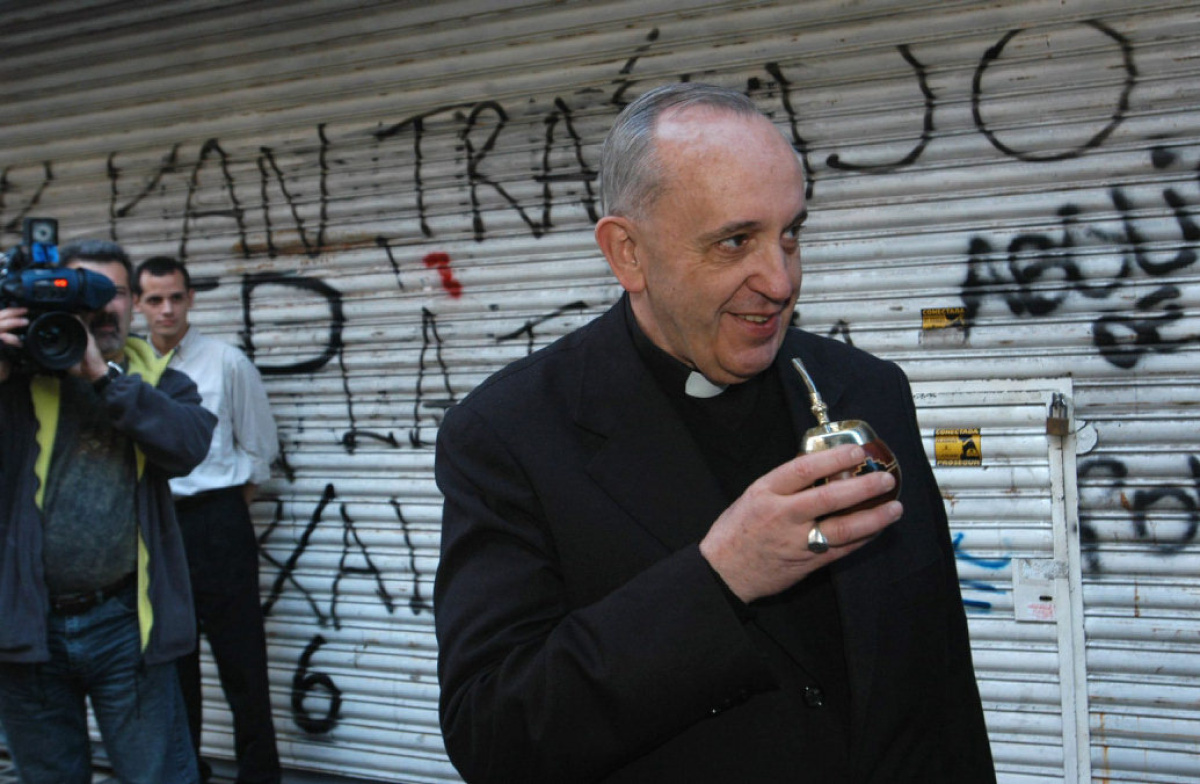
Jorge BergoglioUntying the Knots is an exemplary work of biography and journalism. Shortly after Jorge Mario Bergoglio’s election as pope Paul Vallely, the author, spent some time travelling to Rome and Buenos Aires to meet friends and enemies of the new pope. The result of this research is this book.

Despite being relatively short it is teeming with detail, including sketches of Argentinian politics, the origins and conduct of the “Dirty War”, and the machinations of two papal elections, as well as the origins and career of the new pope, Francis.

The central issues of the book relate to Bergoglio’s personal conduct during the Dirty War and what sort of a pope he will be. In relation to the first question Vallely explores in some depth the key question relating to Bergoglio’s role in the kidnapping and torture of two Jesuit priests by the military junta when he was Provincial of that order.

The answer to that first question is fundamental in Vallely’s assessment of the second. In the end Vallely paints a convincing picture of a man who was politically conservative and personally authoritarian in his youth, making some dreadful mistakes as a result of which some innocent people were killed, imprisoned and tortured. But while remaining quite conservative Bergoglio appears to be someone who, as a result of deep shame at past misconduct and misjudgement, has grown into a generous and courageous figure.

It will be interesting to see the sort of pope that Bergoglio becomes as Francis but Vallely presents considerable evidence to suggest a hopeful prospect based on his radical conduct in the first months of his pontificate.

A nice man, who was also a great man: Lincoln the movie

Aidan and AbeLincoln traces the last few months of the 16th president’s life, focusing on his effort to pass the 13th Amendment to the Constitution ending slavery once and for all.

Many reviewers have already noted that this is a movie about the US political process rather than the Civil War – so anyone who liked The West Wing, or the political sections of The Wire, will almost certainly enjoy this. But the few brief scenes dealing directly with the fighting – muddy hand to hand combat between black Federal troops and Confederates, Lincoln and his son’s visit to an army hospital, and the aftermath of a battle outside Richmond – give a powerful sense of the horror of the fighting in that war and the weight that it bore on Lincoln’s conscience.

The cast of the movie is outstanding and it is difficult to fault a single performance: Tommy Lee-Jones and James Spader deliver scene stealing turns. Jared Harris and David Strathairn less showy performances but no less well judged. And Sally Field brings a great level of sympathy to the role of the often unfairly maligned, though undoubtedly difficult, Mary Lincoln.

The centrepiece in this movie is, of course, Daniel Day-Lewis’ stunning performance as Lincoln. It is all the more powerful because it is so human: indeed part of Lincoln’s greatness arose from his profound humanity and capacity to relate on that level to some of his most intractable rivals. It is a lovely detail of this movie that one of Lincoln’s favorite approaches to relating to people, his witty anecdotes, are found, at times so infuriating by those closest to him: at one point Stanton, his War Secretary, storms off as Lincoln tries to defuse the tension as they wait for the results of a battle with his favorite story about Revolutionary War general Ethan Allan.

Of course, in spite of Lincoln’s efforts, slavery remains a huge problem in the contemporary world. The International Labour Organization estimates that a minimum of 21 million people are in forced labour in every region of the world today. I hope that movie ‘Lincoln’ inspires this generation of politicians to emulate just a modicum of Lincoln’s political and moral courage when they are doing their jobs, and to take positive steps to end slavery once and for all in our lifetimes.