The UK’s relationship with Israel: a study in sophistry

Summary: Is high office worth the price of a soul?

In the Guardian profile of David Lammy on Saturday 2 August 2025 I was struck by one sentence: “On Radio 4’s Today, he [Lammy] energetically rebutts the suggestion that he hasn’t blocked all arms exports to Israel.

This led me to check again what Lammy had said when announcing the suspension of some arms licences to Israel in September 2024. Then he said, “There are a number of export licences that we have assessed are not for military use in the current conflict and therefore do not require suspension. They include items that are not being used by the Israel Defence Forces in the current conflict, such as trainer aircraft or other naval equipment. They also include export licences for civilian use, covering a range of products such as food-testing chemicals, telecoms, and data equipment.

That passage begs many questions. For example, is it possible to train pilots to drop 2,000 pound bombs on defenceless women and children without the use of British supplied trainer aircraft? Or how would the Israeli policy of banning Gazans from fishing in the Mediterranean be impeded if it did not have British supplied naval equipment? Those who have paid any attention to advances in the use of information systems in intelligence analysis for military operations will also wonder what role British supplied telecoms and data equipment have played in the Israeli identification and assassination of journalists, health and aid workers across Gaza. 

Sophistry – the use of clever sounding arguments to deceive – is, of course, stock in trade of politicians. There is the stench of such sophistry in Lammy’s pronouncements on Israel, which remains a valued ally of the UK in spite of the extraordinary genocide that it has wrought on Gaza in plain view of the world.


In September 2024 Lammy asserted that, “There is no equivalence between Hamas terrorists… and Israel’s democratic Government”.  To which one can only conclude that Lammy, desperate for high office, has, in the words of Orwell, submitted to the Party’s final most essential command: that he reject the evidence of his own eyes and ears. 

On 2 August, the Guardian reported that Lammy “calls shooting civilians waiting for aid ‘grotesque’, ‘sick’; demands ‘accountability’ from the Israeli side. He says things are ‘desperate for people on the ground, desperate for the hostages in Gaza’, that the world is ‘desperate for a ceasefire, for the suffering to come to an end’”.

And yet, Lammy participates in a government that has continued the Tory’s policy of providing direct military support to Israel. As late as August 2025 the Jerusalem Post reported that the UK flies surveillance over Gaza to “locate hostages”. It should be remembered that that on encountering Israeli hostages, stripped to their underpants and begging for help in Hebrew, the Israeli Defence Forces shot them. So it seems unlikely that the Israeli government  is interested in hostages as anything other than an excuse for more violence. In this context the UK’s “search for hostages” is likely a mere pretext for more general intelligence sharing.

It is possible that Lammy and the rest of the British government may finally be becoming squeamish at the level of killing in Gaza. But that does not absolve them of past complicity. Netanyahu and the rest of those that they have allied with have not changed. As a lawyer Lammy “ought to have known” that his allies were just going to do exactly what they said they were going to do at the start of the butchery

Given the weakness of international institutions that the British and other Western Governments have contributed to through their complicity in Israel’s war crimes, Lammy and his colleagues in policy may yet avoid a criminal reckoning. But they will always have to answer to their consciences on whether the perks of high office were actually worth the price of their souls. 

The Classical World: An Epic History of Greece and Rome, by Robin Lane Fox

Summary: a survey of Greece and the Roman Empire from Homer to Hadrian

Robin Lane Fox may, for want of space, skim over some important subjects, such as the Peloponnesian War or the Year of the Four Emperors (69 AD BTW). But The Classical World is still a lucid and engaging narrative, and an excellent introduction to the sweep of that whole period of history.

It’s depressing to think that after some 2,500 years of history humanity has little changed: the abject supplication that the UK displays towards the US shows what empires expect of their vassals is little changed in millennia; today privileged poshos still think as little of committing genocide on foreigns as did democratic Athens or autocratic Rome.

But, as Lane Fox notes, some of the ideas from this time notably those of Socrates and particularly Jesus, offer a more hopeful ideal for humanity.

Given the depths to which western civilisation has sunk at this point in time, Jesus’ imperative to love our neighbours as ourselves still has a lot of heavy lifting to do.

The Benefactors, by Wendy Erskine

Summary: A powerful and timely novel of violence and its apologists.

Wendy Erskine developed her deserved literary reputation with her mastery of the short story form. In those she showed a remarkable ability to help the reader understand even the most unpleasant-seeming of her characters, and an eerie talent for convincingly rendering those diverse voices

It is a delight to see that those traits are all still present and correct in The Benefactors, Erskine’s first novel, an exploration of four families in Belfast drawn together by an act of violence. 

To say too much more would be, I feel, unfair to the book, which allows its compelling plot to emerge from the cacophonous voices of its characters as they reflect on their seemingly ordinary, imperfect lives. But it is a dreadfully timely work coming, as it does, in the midst of what seems like a pandemic of violence against women and girls in the North of Ireland. 

Like her earlier short stories, Erskine shows a deep appreciation of Belfast’s pitch black humour. She also shows a considerable generosity of spirit in trying to understand rather than judge her characters, as they themselves struggle to understand their own lives in which the banal has been shattered by the hideous.

Paradoxically perhaps, in telling her story in the way she choses, Erskine confronts the reader all the more powerfully with an insight on how the toleration of grotesquely unacceptable behaviour in the name of love and family, allows the poison to spread.

The Benefactors is an important book, exquisitely written. It should be recommended reading in all the schools of Ireland.

Camino de Santiago

Summary: while hiking 100k you don’t necessarily take your best shots when gasping for water.

Manny in the mist
But I did
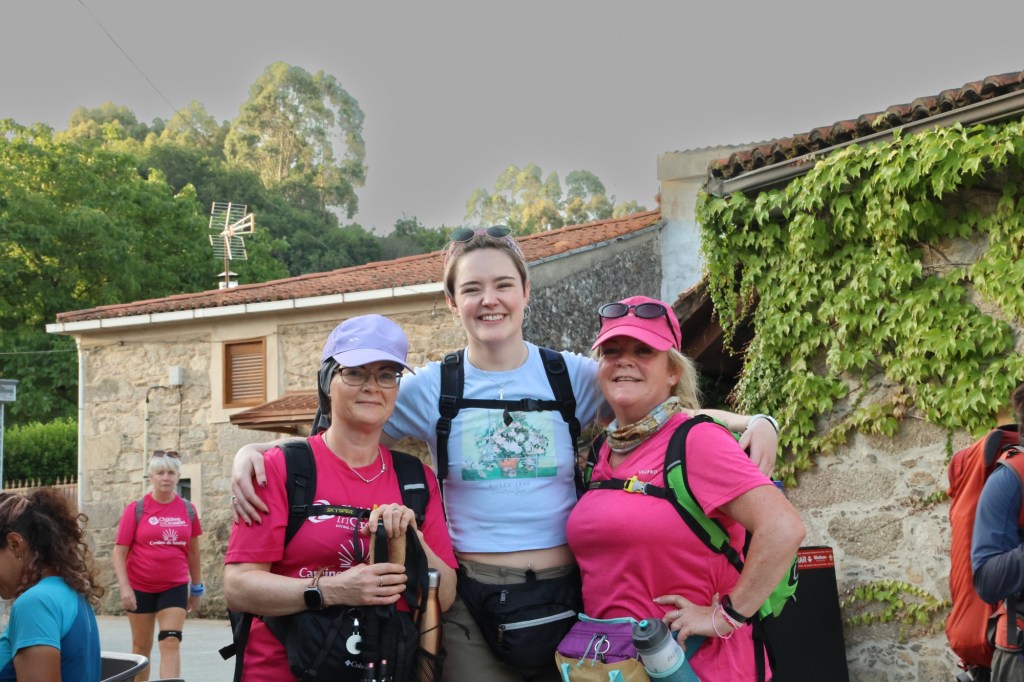
The three amigas
On the road
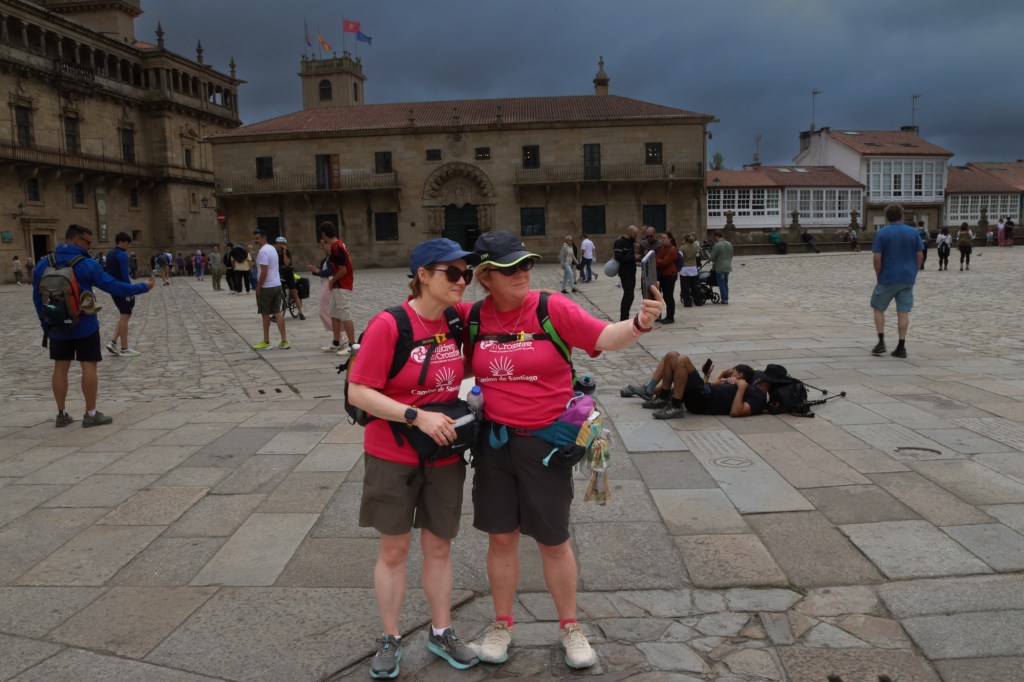
Approaching the end
Some Irish already there
Conscience
Sean ahead of the pack
Jacqueline and Bridgeen plotting shenanigans
Ronan, Catriona, and some shoes with their own story
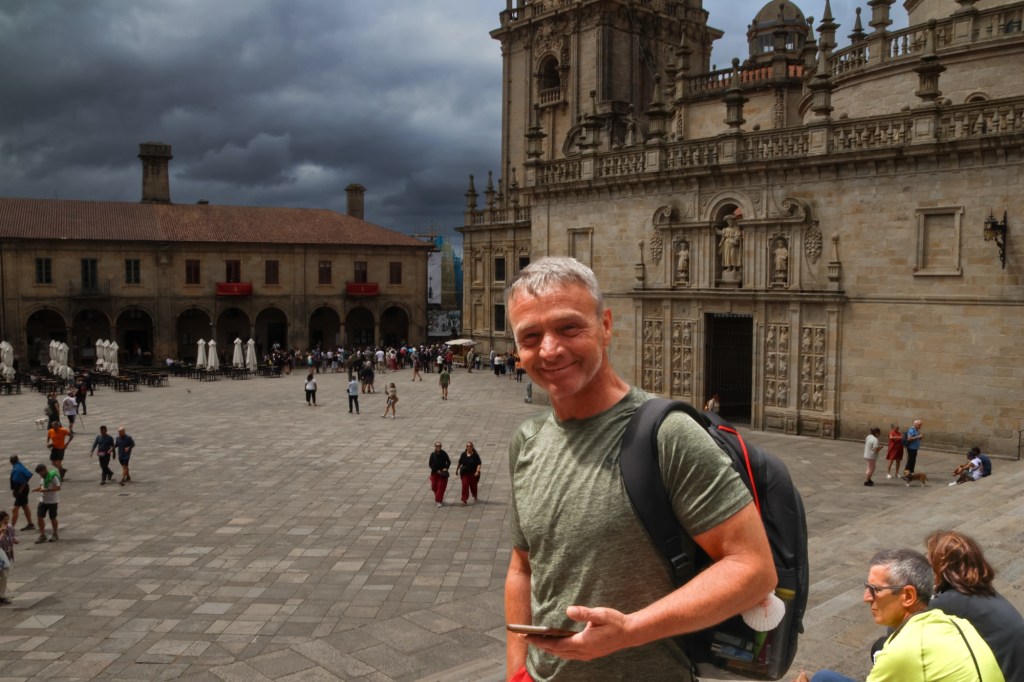
The high altar, Santiago Cathedral
A candle for JK and Mike

Remembering Mike McDonagh

Summary: the sudden death of Mike McDonagh on 21 June 2025, brought an end to a life that was larger than most.

Mike was a legend in humanitarian response having worked across the globe as a country director for the Irish non-governmental organization Concern for more than 20 years. This included time in Laos, Cambodia, Somalia, Angola, Rwanda, Sierra Leone, Liberia, North Korea, Honduras, Albania and Zimbabwe.

Invariably you heard the stories of Mike before you met him. When I arrived in Angola in the middle of the 1990s people were still talking about Mike’s recent time in the country when he set up Concern’s response to the brutal civil war there.

Even for a humanitarian response to a war this was a testing operation. At one point Dublin headquarters began nagging Mike because his financial reports were late. He let them know that he was somewhat inconvenienced at the time – the office in Luanda had just been blown up and they had lost everything.

One long-term Angola development specialist, Dr Mary Daly, remembers how Mike broke the blockade on the besieged city of Malanje in the Angolan central highlands during this phase of the war. Against all advice, Mike brought in planes with supplies and had them fly into Malange. This forced other agencies to join in the effort.

There was always something of the buccaneer to Mike. He never doubted for a moment that he was the most charming rogue anyone had ever met. For most people he was probably correct. He was also a living example of the truth that you do not have to be a saint to be a hero.

Mark Evans, a water engineer, who survived the artillery bombardment of the city of Kuito during that time, remembers being surprised by the tenderness that Mike showed him when he was eventually evacuated from that massacre. As a witness to multiple war zones and the worst of humanity, Mike understood the toll that mitigation of such violence took on those who sought to respond. Marcus Oxley, a long-time Concern colleague of Mike’s described him as “a very relational person, with a genuine compassion and respect for people in need and a belief in “life with dignity” as the core of humanitarianism.”  

I got to know Mike on his second stint in Angola, another bloody phase of that brutal civil war. It takes a certain amount of courage to endure that sort of environment once. It takes quite another quality of courage to return to it. But it was a quality of courage that Mike had in abundance, underpinned with an unshakeable good humour and a generosity of spirit for anyone who was genuinely trying to make the world a better place.

After Concern Mike joined the UN’s Office for the Coordination of Humanitarian Affairs (OCHA) in 2004, working in Darfur where he drew international attention to the attacks on humanitarian workers there, and the impact these had on aid for the civilian population.

As in Angola Mike developed a reputation. Jonathan Lingham, formerly of the UK’s Department for International Development, described him as “an absolute professional. His knowledge, advice, and wisdom was eagerly seized upon by new arrivals in Khartoum, especially by younger members of the NGO community, many of whom looked up to him as a sort of father figure. It was a difficult place to work. Mike was always available, kind, giving.”

It was in Sudan that Mike met Sarah, with whom, after years of bachelorhood, he started a family. No one was surprised when he turned out to be such a devoted husband, and doting father to Saoirse and Molly.

After Sudan, he worked with OCHA in Ethiopia, Iraq and Libya.

On news of his death the OCHA Chief of Staff in a message to all OCHA personnel said, “Mike was a force of nature, a humanitarian with grit, and was not one to ever let ‘the perfect be the enemy of the good’. He was famed for his no-nonsense approach, his one-word email replies, and for finding “creative” ways to get things done. He was a legend with many of us re-telling any one of his numerous escapades to inventively overcome challenges to get assistance to people in need.”

If anyone had ever said to Mike that he was a representative of what EM Forster called the “aristocracy of the sensitive, the considerate and the plucky… [who] are to be found in all nations and classes and throughout the ages” and who represent human decency in the face of the worst inhumanities, he would probably have said “Ach, away with ye!”

But he was. As Paul Heslop, the veteran demining engineer put it, “Even those of us who knew Mike sometimes have difficulty grasping what a giant he was in the humanitarian sector.”

In recent years, Mike was furiously vocal about Israel’s genocide in Gaza and Western leaders’ complicity with Netanyahu’s atrocities. How could he have been otherwise? Mike had seen so much violence he knew war crimes when he saw them. His very life was an indictment of those who assert that Israel has every right to defend apartheid and supply them with the diplomatic cover and weapons to do that and worse.

The world is a sadder, poorer, less just place without Mike. But he died holding Sarah’s hand. That is as great a way to go as Mike could ever have hoped for on any of those battlefields where he spent his life trying to staunch the bleeding of the innocent.

Denmark (and a bit of Sweden)

Summary: the colours of the rainbow, so pretty in the sky, are also on the faces of the places you go by…

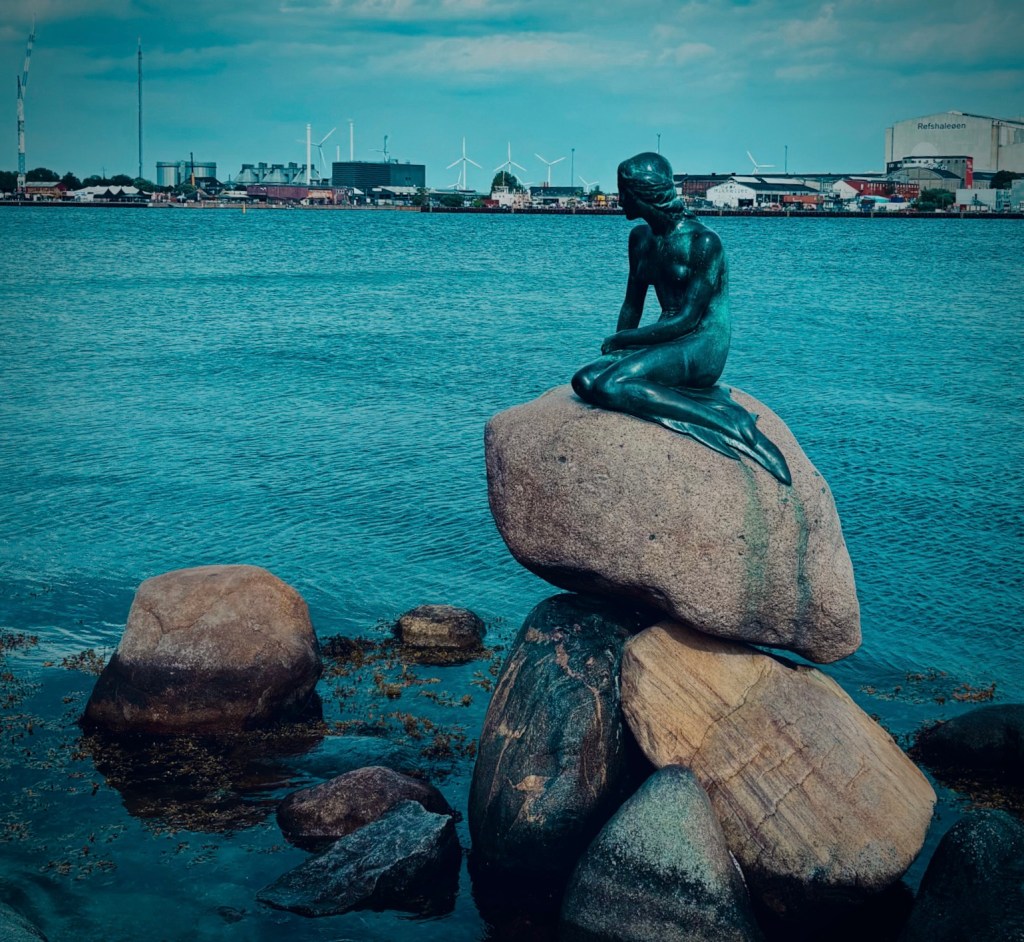
The Little Mermaid, Copenhagen harbour
Holger Danske, in the casemates of Kronborg castle (Elsinore)
The old library of Copenhagen university
Mr Jon Batiste in Copenhagen
Baltic
Lighthouse at Ystad
“Come away human child to the waters and the wild…”
Not Monet
Midsummer
And farewell

Original Sin: President Biden’s decline, its cover-up, and his disastrous choice to run again, by Jake Tapper and Alex Thompson

Summary: American Hastings Banda

On a human level, this book is a very sad one. Across it, informants repeatedly refer to how their encounters with Joe Biden in the later stages of his presidency reminded them of their own impaired elderly relatives. Indeed, the descriptions of Biden’s deterioration within this book reminded me more than once of my father’s decline.

Of course, devastating as that was, I can be confident that no matter how afflicted my father became, unlike Biden, he would never have added his support to a genocide. 

I counted four references to the violence in Palestine across this book, starting with a brief mention of the Hamas atrocity on 7 October 2023, and ending with another brief mention that Biden’s Gaza policy was the area of most substantial disagreement, in private, between Biden and his Vice President Kamala Harris. 

This lack of discussion of one of the great moral issues of our day is, perhaps, unsurprising. Tapper and Thompson’s interests, like those of most Americans, are wholly US-centric. For them American preoccupations are paramount. And so they focus on the threat to American democracy posed by Biden’s cogitative decline and the opportunities that this gave to a resurgent Trump. They are uninterested in consequences of the moral collapse in international affairs of Biden and the swathes of the US political establishment that were their sources for this book. That doesn’t directly affect Americans.

This is somewhat disingenuous. There are occasional references through the book to Biden’s loss of support amongst young people. This is attributed solely to Biden’s age. Tapper and Thompson do not consider the possibility that abject disgust at Biden’s support for a racist and genocidal government in Israel could have deprived Harris of the small margins she needed in key battleground states to keep the presidency out of Trump’s hands.

In many respects Original Sin is a fine work of investigative reporting, and it does give important insight into the nature of power in the United States: Biden’s presidency gave power to a small cadre of advisers around him known, behind their backs at least, as the Politbureau. It was in this group’s selfish interest to deny to the world the fact that Biden was no longer physically or mentally fit to be president. To have done otherwise would have been a surrender of the power that they craved.

But the authors’ disinterest in the most murderous of Biden’s policies is reflective of one of the two original sins of the United States: that it was built on genocide and that many in the highest echelons of government still seem to regard this as a legitimate policy option. As a republic it has never quite grasped that human rights are meant to be universal. 

Given this, it is difficult sometimes not to feel that in some grand Karmic way the United States deserves Trump: they reap now for themselves what they sowed so long for others.

The Tainted, by Cauvery Madhavan

Summary: an elegant exploration of Hiberno-Indian relations over the decades

While anti-colonialism is now deeply culturally embedded in contemporary Ireland, our history on the matter, as Cauvery Madhavan gently reminds us with this book, is rather more complicated. 

The Tainted takes as its starting point a fictionalized story of a 1920 mutiny by Irish troops in India. (In the book the “Kildare” rather than the Connaught Rangers are the mutineers).

Because, superficially, the British and Irish are white, the British expect the Irish to collaborate with them in treating the Indians in the way that the British treat the Irish at home.

By and large the Irish are happy to comply. But when news of the depredations of the Black and Tans percolates through to the Irish barracks the centre cannot hold, and the colonial authorities are murderously provoked when Irish soldiers down arms in protest.

The second two-thirds of the book explore the repercussions from this incident down the years, not least for Rose, a young “Anglo-Indian” woman – daughter of an Irish father and an Indian mother. 

Cleverly Madhavan does not allow her narrative to rest with any single character for too long.  Instead she shifts the psychological perspective of the novel across a range of characters into the first decades of Indian independence. By doing this she gives insight into the attitudes and prejudices of different communities, and shows how these pose needless challenges to the appreciation of each other’s common humanity. 

Madhavan’s novel is an engaging and illuminating exploration of identity, cultures and history, elegantly written and ultimately hopeful. After all, whatever our skin, our blood is the same colour. 

Humanitarian response for slow learners: lessons urgently needed for Gaza

Summary: calls for humanitarian aid are being used by pusillanimous politicians to distract from their failures to directly address the causes of humanitarian crisis in Gaza, most specifically Israel’s genocidal assault.

For over five years in the late 1990s I worked, mostly for Oxfam GB, organizing assistance, including water supply and sanitation, for the civilian victims of the civil war in Angola. 

So, humanitarian response is a subject area I know a little about. As students of management and leadership will be aware, a problem with a bit of expertise is that you can presume that everyone understands the fundamentals as well as you do. This is called taken-for-grantedness in the literature. 

I have been taking-for-granted that David Lammy and Keir Starmer – human rights lawyers after all, as they like to tell us, and therefore smarter than everyone else, as they like to imply – would understand the fundamentals of humanitarianism. After all, they have been pontificating on it since the start of Israel’s murderous assault on Gaza in 2023. 

But maybe they don’t. Maybe it is possible that they are not the craven accomplices to war crimes that their ongoing military and diplomatic support of Israel suggests. Perhaps they are just pig ignorant of the vitally important stuff that successful humanitarian response requires. 

So, here are a couple of the most basic lessons of humanitarianism for their edification.

1. The solution to a humanitarian crisis caused by war is not aid. It is an end to war. At the early stages of Israel’s latest assault on Gaza, Starmer and others attempted to deflect from their monstrous acquiesce in Netanyahu’s war crimes by rejecting the calls for  an immediate ceasefire and instead calling for pauses in the violence to allow for the delivery of more aid

The technical term for this position in relation to humanitarian response is “Oxford Union debating horseshite”. It is part of an approach to politics that values a plausible sounding point to win an immediate argument over the concrete measures necessary to resolve the actual causes of the crisis that the argument is about. Food assistance, vital as it is, does not protect from the other forms of collective punishment, such as the cutting of power and water that Keir Starmer advocated Israel doing, let alone the mass burning alive of children that Israel has routinised in Gaza since the outset of its violence.

2. If a belligerent nation is using famine as a weapon of war, then they are not going to permit humanitarian assistance unless put under robust pressure to do so. Robust pressure, not expressions of sadness or concern: Boycotts. Divestments. Sanctions. Criminal accounting.

3. If an assaulting army deliberately massacres humanitarian workers delivering food aid to hungry people, they are probably using famine as a weapon of war. Humanitarian workers not party to that war crime will therefore be made a target.

4. If an assaulting army on encountering their own nationals, stripped to their underpants and begging for help in their own language, shoots them, then that army is not on a rescue mission. Imagine what fate awaits those who cannot speak the attackers language. But you don’t have to because it has been documented by those the Israelis would seek to make victims. Indeed, the Israelis themselves have even videoed their own war crimes to show the world, so proud are they of what they inflict.

5. If an assaulting army is enslaving the civilian population they are attacking, then they are certainly not interested in any aspect of the humanitarian well-being of those civilians. In March 2025 the Israeli newspaper Haaertz reported that, ‘In Gaza, Almost Every IDF [Israeli Defence Forces] Platoon Keeps a Human Shield, a Sub-army of Palestinian Slaves.

The British government used to like to depict itself as a world leader against slavery. But there has been a deafening silence from that government, and indeed much of the anti-slavery community, on this matter. 

6. If you have soldiers in place to machine gun aid recipients, then the purpose of an aid distribution is not humanitarian. It is war crimes. 

7. If you are materially supporting a political regime that has publicly stated its war aims are ethnic cleansing, then no amount of humanitarian assistance will mitigate that. You too are practicing genocide, even if you are also offering the doomed their meagre last meals. 

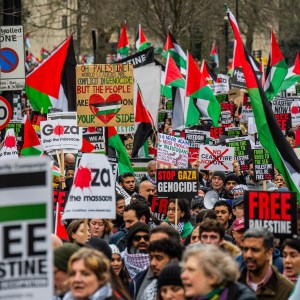
Maybe these ideas are new to Starmer, Lammy and the rest of their government. But they are not hard. Indeed, tens of thousands of ordinary British people demonstrate that they grasp these most fundamental points already as, month in, month out, they gather in protests across the country to indict their own government for its abject moral collapse.

Four Shots in the Night, by Henry Hemming; and Stakeknife’s Dirty War, by Richard O’Rawe

Summary: two books plumbing the depths of the intelligence war during the Troubles

The morally vile, but tactically brilliant, American Confederate general, Nathan Bedford Forrest had a philosophy when giving battle: Get there first with the most.

This philosophy seems to have been taken up with some degree of alacrity by a raft of English politicians and writers who want to capture the history books to rewrite the Irish peace process as a benevolent English achievement. 

Central amongst these has been Peter Taylor whose focus for some years has been on the role of British intelligence in the peace process, particularly the “Back Channel” between MI6 and the IRA. This, as far as he seems to be concerned, was the only strand of the peace process that mattered. Forget the Hume-Adams talks; forget Irish diplomacy and the Downing Street Declaration; forget George Mitchell; forget the European Union; forget Mo Mowlem. Instead, the peace process was something gifted to the quarrelsome Irish by perspicacious spooks, selflessly concerned with Paddy well-being. 

Hemmings’ book gives a nod to diplomacy with mention of the Anglo-Irish Agreement of 1985 – also portrayed as a British initiative. But, like Taylor he is also principally interested in intelligence operations, albeit with a broader perspective. At its core his book explores three parallel but occasionally overlapping British intelligence operations: In addition to MI6 and the Back Channel, Hemmings describes MI5’s efforts to boost Sinn Fein’s electoral fortunes with a view to weaning them away from violence, and the army’s efforts to disrupt the IRA’s military operations through the activities of, in particular, Freddie Scappaticci – Stakeknife. 

Scappaticci was the army’s most important agent in the IRA. A senior figure he was the head of the IRA’s internal security – the Nutting Squad. He was personally involved in the interrogation, torture and murder of dozens of suspected IRA informers. Many of these were, of course, also British agents, like Scappaticci himself. 

The term “British agent” can be a misleading one. It can lead one to think of James Bond, who was an intelligence officer NOT an agent. The agents are the vulnerable people who through blackmail and bribery are recruited by officers to turn traitor on former friends and neighbours. 

The pathetic plight of these desperate people is a central concern of Richard O’Rawe.  O’Rawe, a former IRA man himself, knew Scappaticci. But given the sociopathology that he documents, he records that he is thankful that he did not know him well. 

Scappaticci was an army intelligence operation. But O’Rawe shows, there was an essential unity between the IRA’s Nutting Squad and the “Tasking and Co-ordinating Group”, the senior officials from all British intelligence agencies who oversaw their diverse operations. So much so that it was they, ultimately, who decided who would live and who would die, and gave orders accordingly for favoured British agents like Scappaticci to kill other less valued ones. 

O’Rawe’s past IRA involvement gives him access to other IRA volunteers and his interviews with them provides a broader perspective on the Troubles to Hemmings whose book is more dominated by British sources. O’Rawe also has an altogether more morally clear-sighted view of that squalid war than Hemmings. He is not afraid to use the term “war crime” in his assessment of the savagery of both IRA and British actions. 

Aside from the desperately sad human stories that these books recount, and the important ethical questions relating to the conduct of insurgency and counter-insurgency that they raise, these books also offer valuable insights into some broader historical questions. 

First, the whispered accusation that Martin McGuinness was a tout is effectively discounted. Given the efforts that MI5 was putting in over decades to coaxing the republican movement onto a more constitutional path, compromising McGuinness like that would have risked wholly undermining their efforts. But while he may never have been a tout, the callousness which McGuinness showed towards human life, particularly in diverse killings of suspected informers, means that while he may be an important figure in Ireland’s history, he should never be thought of as a hero. 

Second, the idea that the IRA was beaten is disabused. Even though British intelligence had compromised major parts of the IRA, its rural organization in South Armagh, Tyrone and Fermanagh were still capable of sustaining the killing, even if there was never any hope of military victory. 

This leads us to the third point, that of the importance of the political processes that were running parallel to these intelligence ones. Without those, offering a constitutional framework that, if not giving the IRA all that they wanted, at least gave them some, there would have been nowhere for the Back Channel to go. The British might like to now remember the peace process as a British led affair, one of the great achievements of New Labour as that morally bankrupt party likes to chauvinistically put it. However, without the thread of Irish leadership showing the way, they would still be entangled in the labyrinth of killing typified by their Stakeknife operation.

Both O’Rawe and Hemmings describe with some admiration the efforts of Jon Boutcher’s Kenova enquiry to get to the bottom of the moral morass of the Troubles intelligence operations. Boutcher, who was involved in the police killing of Jean Charles de Menezes may have been expected to do the decent thing by the British Establishment and cover up embarrassing information. Instead, he recommended prosecutions in 28 cases involving both former IRA and senior British personnel. 

The Public Prosecution Service declined to undertake these prosecutions, which seems a travesty. But in that it is hardly surprising. The Stakeknife operation is but one among many war crimes that the British state was involved in: Aside from Ballymurphy and Bloody Sunday there was also extensive collusion with Loyalist death squads across the North. So, this makes it more understandable why past British governments have scrambled to introduce blanket amnesties for all Troubles era killings. It also gives insight into why the current British government of “human rights lawyer” Keir Starmer still strives to prevent a public inquiry into the killing of Sean Brown

Both Hemmings’ and O’Rawe’s books may require some revision – in the details but most probably not in the substance – in the light of Boutcher’s final Kenova report. But they are still fine work, grappling with difficult subjects. O’Rawe’s in particular, while more narrowly focussed than Hemmings, is an elegantly written work, marked by a burning sense of indignation at the scale of the depravity that he describes