How to fight inequality (and why that fight needs you), by Ben Phillips

Summary: You’ve got to search for the hero inside yourself!

In 2014, a study partly funded by NASA found that the competition for resources and the stratification of society into “elites” and “masses” were key factors in the collapse of civilisations. Essentially, by the time the existential threat to a civilisation began to encroach upon the day-to-day lives of the “elites” to such an extent that they were inclined to do something about it, it was already too late.

Put another way, inequality in itself poses an existential threat to civilisation.

But it’s unquestionably nice for the elites while it lasts. All them private jets and champagne, and cocaine quaffed from the bum cracks of super models. Who would ever want to give that up for the mere prospect of human rights for poor people and sustained life for future generations. Better to keep venial charlatans like Boris Johnson and Donald Trump in power than risk paying more equitable rates of tax or submit to more effective environmental legislation.

Ben Phillips suggests, however, that we should not go meekly into the dark night that the super rich would like for us. Indeed, he points out that if the moral arc of the history has bent towards justice, it is because millions of ordinary people have twisted it in that direction in “numberless diverse acts of courage and belief”, as Bobby Kennedy observed.

His book then is a manifesto for the “uppity”, the people who don’t know their place, the people who, like Angela Davis, have had enough with accepting the things they cannot change and have gotten down to changing the things they cannot accept.

It is a vital book, not least for one critical point that Phillips makes repeatedly: if you seek change but do not risk causing the displeasure of the powerful, then you are unlikely to ever obtain the change you seek. Change is achieved by unsettling the status quo and making life uncomfortable for those in charge. Indeed, even the most progressive of politicians need this sort of upward pressure to obtain for them political space for manoeuvre and the impetus to compel them in the right direction. Lincoln, for example, would not have achieved what he did without the agitation of the anti-slavery societies and the courage of the black regiments of the Union army.

This is a point that has been forgotten by many working in movements mandated for social change. Some church leaders, for example, forget that Jesus said, “I bring not peace but the sword,” as they hobnob over sherry with the very government ministers whose policies lead to the enslavement of their own congregants. Some charities so want the favour of government that they formally collaborate with them on the systematic abuse of the human rights of vulnerable people.

If the only thing Phillips did with this book was to elucidate the fundamental importance of the courage to be unpopular in obtaining social change, then this book would be worthwhile. But “How to Fight Inequality” is richer still, with examples on how social change has been achieved, how it has been undermined, and the importance of organisation and patience in achieving change. As a leadership mentor of my own once said to me, “You must always be able to show that your intent to endure exceeds their capacity to resist.”

“How to Fight Inequality” is a mighty book. It is, in itself, an act against inequality and injustice and one that will hopefully inspire and aid numberless, diverse others to endure in their fight for justice as they themselves inspire others and unsettle the greedy and complacent who threaten the very future of our planet.
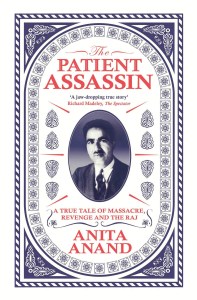
The Patient Assassin, by Anita Anand

Summary: A fine account of the Jallianwalla Bagh Massacre and its aftermath

On 13 April 1919 British armed forces under the command of General Reginald Dyer opened fire on a crowd of unarmed Indian protesters in Amritsar. The official figure for the dead is 379. The Indian National Congress estimated, perhaps more realistically, over 1,000.

Legend has it that one survivor of the massacre, Udham Singh, swore vengeance that day on the blood soaked earth. And, just over 20 years later, in 1940, this vow was fulfilled when Singh shot and killed Sir Michael O’Dwyer.

O’Dwyer had been lieutenant governor of the Punjab when the massacre occurred. While not involved in giving the order he was a long-standing apologist for Dyer’s murderousness. He was also an instigator of a few massacres of his own around the same time, as part of the British Empire’s bloody efforts to deny Indian self-determination.

The Patient Assassin is something of a triple biography, of Singh, O’Dwyer and Dyer. Particularly in piecing together Singh’s clandestine life, Anand has done an impressive job. Given this, it is almost churlish to complain that she makes some glaring mistakes elsewhere. For example, in her discussion of O’Dwyer’s background, failing to recognise that Daniel O’Connell was an Irish nationalist, indeed the most prominent one of the first half of the 19th Century.

By 1940, Dyer was dead. But O’Dwyer was crass as ever in his justification of the slaughter. It is ironic that a Catholic Irishman like O’Dwyer should have been such a advocate of empire given the depredations of violence and famine that the British had inflicted on his own people. But, there is a class of person, think Spiked’s Brendan O’Neill, or UK Home Secretary Priti Patel, who so desperately want acceptance by the Establishment that they seek to feverishly outdo them in the vileness of their racism, often against people from their own backgrounds. O’Dwyer was one such.

There is actually no evidence, Anand notes, that Singh had been at Amritsar. But whether he was or not the scale of the Amritsar outrage would doubtless have been enough to stir a visceral desire for revenge in him and millions of others across the entire sub-continent. A much smaller massacre by the British in Derry in 1972 was enough to exacerbate murderous insurrection across the North of Ireland.

Nevertheless it is unlikely that assassination was Singh’s primary purpose when he left India and started travelling the world. But the memory of massacre was doubtless an impetuous in his involvement in various expatriate revolutionary organisations. Eventually Singh’s wanderings brought him to London and the opportunity to settle some scores.

The Patient Assassin is a fine and important work of an aspect of Empire history that few British have the first clue about, but which reverberates still in India, where Singh is now hailed as a national hero, and amongst it’s diaspora. Perhaps if this story were more widely known it might go some way to dissipating the misty nostalgia for Empire that still afflicts so many of the English.

Dominion, by Tom Holland

Summary: An absorbing and convincing account of the influence of Christianity on contemporary Western society.

Dominion is essentially a history of thought, specifically how Christian thought, and its offshoots, have shaped Western civilisation over two millennia.

Because it has been with us so long it is easy to lose sight of just what a revolutionary philosophy Christianity was when it first arose in Roman Palestine and then swept across the empire.

The central symbol of Christianity, the cross, is a reminder that Christianity was the antithesis of the prevailing religions and sects which dominated the Mediterranean basin at the time which, often literally, deified prestige and power. The cross was a means to humiliate and torture political prisoners to death, and hence terrorise Roman subjects into obedience to the empire. It was the means of execution of Jesus, a young rabbi whose teachings of love and forgiveness had so unsettled the leaderships of both the Jewish and Roman administrations in Palestine.

Having initially been a supporter of the persecutions of Christians, Paul, on the road to Damascus of course, changed his mind and became one of the new religion’s most powerful advocates. As a Roman citizen he was able to travel the empire and so ensure the spread of this new religion that so radically emphasised the importance of loving each other and good works.

The refusal of Christians to participate in the sacrifices to the Roman gods, including the emperor, marked them apart as subversive to the order of the empire and so a handy scapegoat as the occasion demanded,

Things changed when the murderously psychotic Emperor Constantine converted to Christianity and began to transform Christianity into a state religion. This process was briefly interrupted by his successor, Julian, who having grown up watching his family being murdered on the orders of Constantine, a threat that he lived under himself for many years, repudiated Christianity and tried to reinstall the old gods. But even this was irrevocably tainted by Christian thought as Julian insisted that the pagan temples must display charity to the poor, a wholly Christian idea hitherto unknown in paganism.

Holland traces the evolutions in Christian thinking, and the schisms, wars and Reformations that resulted over the subsequent two millennia. Certainly this includes many tales of hypocrisy, intolerance and bloodshed. But alongside these, there are also stories of courage and redemption, such as the ending of Apartheid in South Africa, which show what may be achieved when flawed people endeavour to hold to the ideals that Jesus was assassinated for.

If many in secular Europe with its assertion of universal human rights feel that much of what Christianity had to offer is no longer relevant it is worth bearing in mind that secularism is itself a specifically Christian concept, and human rights, as Holland points out, originally a Catholic idea.

Dominion is a fine, gripping book that helps to understand the origins of Western society and how these origins still reverberate, often unacknowledged, in so much contemporary Western thought.

These Honored Dead; and Perish from the Earth (Lincoln and Speed 1&2), by Jonathan F Putnam

Summary: Abe and Joshua thwart crime in pre-Civil War Illinois

In March 1837 newly qualified lawyer Abraham Lincoln, just arrived in Springfield, enquired at the general store if the manager, Joshua Speed, knew of any accommodation he could rent. Speed did and immediately sub-let half of his own double bed above the store to Lincoln. So began perhaps the closest friendship of both men’s lives.

Me and Abe

All that is in the history books. What is not in the history books is that subsequently Abe and Joshua established a formidable crime fighting partnership – incorporating Speed’s younger sister, Martha, when she arrived in town – to combat evil doers across the state of Illinois. Something in the spirit of the classic John Ford movie Young Mr Lincoln, this is the conceit of Jonathan Putnam’s series of books which begin with These Honored Dead, and Perish from the Earth. (Both titles come from Lincoln’s Gettysburg Address.)

The books are narrated by Speed, who over the course of the first two, becomes something of an unofficial investigator for Lincoln as he tries to defend his clients from accusations of murder.

The books are wonderful on multiple levels. They are a fine introduction to aspects of the politics and culture of pre-Civil War Illinois, exploring how these impacted on Lincoln’s own evolving political thinking. They are an elegantly written portrait of a burgeoning friendship between two young men who are, at the beginning at least, on opposite sides of the issue of slavery. Both Speed and Lincoln were migrants to Illinois from Kentucky. But while Speed came from a wealthy slave-holding family, Lincoln was from a background so poor that, as a child, his own father ended his schooling and sold him to a neighbour to pay off a debt. These life experiences manifest in different attitudes to the murderous “peculiar institution” when it intrudes into these stories.

The books take details of this historical period, and the biographies of real people who rarely are granted more than a sentence in a history book and breathe life into them. This elegantly illuminates aspects of history which many may feel they know, but cannot easily empathise with. Added to this is Lincoln’s own warm laconic humour and some twisty plotting and the result is something pretty close to irresistible.

V2, by Robert Harris

Summary: a fine cat-and-mouse style thriller set in the final bloody days of a European civil war

Towards the end of the Second World War the Germans launched a rocket assault on the UK. First with V1 “doodlebugs”, a sub-sonic flying bomb, lethal but possible to be brought down by fighters or anti-aircraft guns. The subsequent V2 rocket however was a different beastie altogether. A supersonic rocket carrying a one tonne warhead, the V2 was impossible to intercept once launched and would strike London without warning and at random. While not as murderous as the RAF’s civilian bombing campaign on Germany, they still had the capacity to wreak a particular brand of lethal terror on a war weary population.

As with his recent book, Munich, Harris takes this historical background and foregrounds it with his own fictional creations: on the British side, a young Women’s Auxilary Air Force (WAAF) officer, part of a team trying to locate the launch sites of the V2 rockets in the Low Countries; on the German side, a rocket engineer, dreaming of space flight but trying to survive the war by causing the needless death of hundreds, an atrocity he finds increasingly troubling. Sympathetic as these characters are, the war means that their allotted roles are to spend its last days trying to kill each other.

V2 is a fine war-time thriller that also offers a melancholic exploration of this most horrific of European civil wars. Nevertheless, unlike the bleak, bleak vista of his last book, The Second Sleep, V2 does carry a glimmer of hope at the end.

What I talk about when I talk about running, by Haruki Murakami

Summary: what I humblebrag about when I humblebrag about running

Haruki Murakami has written 11 novels. I have written one. Haruki Murakami runs a marathon every year. I have run one. Haruki Murakami has run an ultra marathon and is talked about as a potential winner of the Nobel Prize for Literature. I once won a lottery in a pub in Andorra for a pair of skis.

So, in spite of all the envy, I don’t mean it to be sour grapes when I say that this book seemed to me an extended humblebrag rather than anything approaching worthwhile literature.

The book is something of a memoir, Murakami reflecting on his life and work and running through the prism of his running. Structure, such as it is in this book, relates to his preparations for a New York marathon. But I didn’t find much in it in the way of profound philosophical insight or poignant reflections. Talent is the most important thing for a writer! Who’d have guessed? Staying fit may help you remain more artistically productive for longer! Amazing. He has become a slower runner as he has got older! Join the club.

The most compelling section of the book was, I found, an almost purely descriptive one, recounting his participation in an ultra-marathon. Most of his reflections I found quite banal.

His athleticism clearly matters to Murakami. But it is difficult to see how his almost elite level of competitiveness has much to say about the general human condition. I’m not sure it even has much to say about the general condition of runners.

Indeed, if the greatest tragedy in your life is only managing a 4 hour time in the New York Marathon, perhaps it really is time to check your privilege.

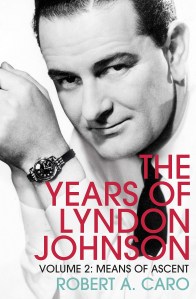
Lyndon Johnson, volume 2: Means of Ascent, by Robert A Caro

Summary: A detailed guide on how to appear a war hero and steal a Texas election

Robert Caro describes there being two threads running through Lyndon Johnson’s life: a bright one of commitment to public service that he displayed as a young teacher of poor Hispanic Texan students, or as a young congressman driving rural electrification for poor Texas communities; and a dark, selfish one, concerned with his self-promotion and personal enrichment without the least care as to who he hurt to achieve this.

In this volume of his biography of Johnson, covering the years from his war service to his election to the US Senate, Caro notes that only the dark thread is visible.

Even Johnson’s military service is problematic. Despite his commission as a Lieutenant Commander in the US Navy Reserves Johnson gave little impression that he was really interested in active duty as he had promised in various speeches. Eventually though concerns about future electoral credibility compelled him to participate in a mission to the South Pacific as an observer. In this role he participated, again as an observer, in a single, terrifying combat mission, for which he was awarded the Silver Star. While he did display a certain coolness under fire, it was notable, Caro observes, that the actual aircrew he was flying with, who risked their lives in dozens more missions, were not considered for bravery awards. As is still the case, who you know matters more than anything else. So, as a congressman on the naval affairs committee, Johnson knew General McArthur who recommended him for the award, no doubt thinking that Johnson might be a useful ally on Capitol Hill.

A considerable portion of the book focusses on Johnson’s senatorial election. This was a revolutionary campaign. It was the first in which a candidate used a helicopter. This Johnson used to ferry him from town to remote Texan town, brandishing his Silver Star while he told the crowds gathering to see this strange new flying machine exaggerated stories of his war. The quantity of Johnson’s usage of radio as a campaigning medium was also unprecedented.

Johnson had already shown himself to be a superb organiser of elections from his management of the national Democratic congressional effort in 1940. However when all the electoral innovations that he brought to bear on this election still came up short, Caro argues convincingly that Johnson resorted to the old-fashioned expedient of stealing the election from the former governor Coke Stevenson, an ultra-conservative Democrat.

Caro clearly has a soft spot for Stevenson, undoubtedly an extraordinary individual, which has perhaps led to him skating somewhat over his reactionary views. Not that Johnson was a progressive champion. His liberality was always only skin deep, something worth appearing when Roosevelt was president, but shed quickly when campaign financiers demanded he dance to a different tune. Perhaps Johnson felt justified in stealing this election having had his previous effort to become a US Senator stolen from him by another former Texas governor, Pappy O’Daniel.

With Volume 2 of his biography of Johnson, Caro again provides a compelling portrait of Johnson, his times, and his place, with fascinating insights into Texas politics and history. I’m already looking forward to reading volume 3.

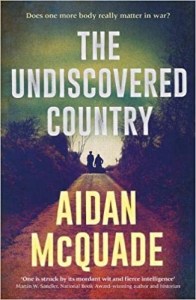
The Undiscovered Country

“The tree was in the river and the kid was in the tree… The kid couldn’t have been more than ten or eleven. He looked like a ragdoll caught in the branches.”

So begins my novel, The Undiscovered Country, which, after a long road to publication, is finally out in time for Second Lockdown/ Christmas. The Irish Times has called it, “‘A smart and pacy debut that details a historical period that deserves further exploration.”

For Hamlet, the “undiscovered country” was death. That lurks within these pages alongside reflections on Dutch people’s relationship with beer and cheese, the origins of the idea of the rule of law, and the true meaning of red-headed women in Renaissance paintings. These ruminations are my protagonists’ equivalent of whistling in the dark as they try to get to the truth about a murder that they stumble upon in the midst of a war for another “undiscovered country”, the emergent Irish republic in 1920.

Try it, you might like it. 🙏

It’s available on Hive https://www.hive.co.uk/Product/Aidan-McQuade/The-Undiscovered-Country/24931562

and on Amazon, https://www.amazon.co.uk/dp/1783528079/ref=cm_sw_r_cp_api_i_rSTAFbSQ8WKS0

House of Weeds, by Amy Charlotte Kean

Summary: what weeds teach us about the human condition

I don’t read as much poetry as I used to, but I loved this book.

As its title suggests it takes its starting point from things we may often overlook or take for granted, but in these things Amy Charlotte Kean finds insights to the human condition, and indeed the universe, that “glitter like C-beams in the dark”.

Reflecting on the White Deadnettle, for example, Kean observes, “They/ sting/ because/ like an evil stepmother/ they flourish/ thru the elaborate dismantling of/ innocence.” Or her ruminations on life prompted by the Stag’s Horn Sumach: “The secret is to worship the poets/ Quote the philosophers, thank the men/ And don’t dare, even once, act normal.”

The book is beautifully illustrated by Jack Wallington, but it is Kean’s poetry that unsettles and stirs the soul.

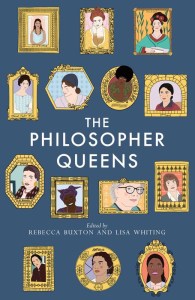
The Philosopher Queens, edited by Rebecca Buxton and Lisa Whiting

Summary: An exquisite introduction to important, hitherto often suppressed, strands of philosophy from across history and the planet

The first thing to strike you about the book, The Philosopher Queens, is its startling beauty. It is an exquisitely illustrated book that simply lifts the heart just to look at.

More importantly the substance of the book is vital: the editors and authors have picked up the history of philosophy and shaken it “until the hidden women appear in plain sight,” to borrow a line from Natalie Haynes’ wonderful retelling of the tales of Troy, A Thousand Ships.

Starting with Zoi Aliozi’s fascinating essay on Diotima – a character in one of Plato’s dialogues from around 400 BCE who, according to Socrates, taught him “his” method and her philosophy of love – the book progresses across 20 essays via Sandrine Berges’ fine portrait of the great 18th century women’s rights and anti-slavery campaigner Mary Wollstonecraft, to Nima Dahir’s reflections on Aziza Y al-Hibri, a Lebanese-American professor of human rights and Islamic jurisprudence.

As al-Hibri’s inclusion suggests the book avoids a northern hemisphere bias including important philosophers from Asia and Africa as well. These include Shalini Sinha on Lalla, “one of the most influential figures in the religious history of Kashmir”, and Minna Salami on Sophie Bosede Oluwole, “the erudite and provocative shaper of contemporary Yoruba classical philosophy”. In keeping with the book’s revolutionary approach to its subject, there is also a chapter by Anita L Allen on the American activist and political philosopher, Angela Davis. I was disappointed that there were no chapters on Rosa Luxemburg, Martha Nussbaum or Margaret Archer – but books are finite things and such omissions merely demonstrate that there is a need for at least one sequel to this volume.

Each of the essays provides a biographical sketch of its subject and their historical context as well as introducing some of their key ideas. However, these are not hagiographic. The essay on Hannah Arendt, for example, introduces her important work on totalitarianism, and her reflections on the “banality of evil” from Eichmann’s trial in Jerusalem. But it does not shy away from also acknowledging her repulsive racism, and her “inconsistent treatment of Jewish oppression and African-American marginalisation in the US.” In raising this deeply troubling matter, the essay author, and co-editor of the book with Lisa Whiting, Rebecca Buxton makes the vital point that “no thinker should be idolised above criticism”.

The Philosopher Queens is a book that breaks the mould in more ways than one. It is both a fine introduction to the thinkers that it portrays, and an introduction to important though often neglected strands in “western” and “non-western” philosophy alike.

This book should become a compulsory textbook for students of philosophy. But it should also be more widely read to remind people that the world is a richer and more complex place than some folk may like us to think.