A Legacy of Spies; and Agent Running In The Field, by John le Carre

Summary: two fine, late career works by le Carre assert that Europe is indeed something worth fighting for

It’s no secret that David Cornwall (aka John le Carre) was a MI6 officer before the extraordinary success of his novel The Spy Who Came In From The Cold. His subsequent Cold War thrillers, many of them featuring George Smiley and his various colleagues, depicted an amoral conflict fought by cynical people for questionable gain but considerable pain. Indeed The Spy Who Came In From The Cold set something of a template for these subsequent works with its gripping portrayal of a British Intelligence plot to kill a senior East German spymaster.

A Legacy of Spies revisits that very plot, exploring it from the perspective of Peter Guillam, another of Le Carre’s recurrent characters, a fellow MI6 officer and friend of Alec Leamas, the eponymous Spy Who Came In From The Cold. It fleshes out some background, ties up some loose ends and answers some nagging questions about that earlier great work.

Agent Running In The Field is a more contemporary story set in the aftermath of the UK’s bizarre decision to leave the EU and bet its future on the whims of the profoundly flaky Trump-Putin axis. Nat, an MI6 officer coming to the end of his career, stumbles across an operation to betray British secrets to the Russians. As he digs into it he finds, with the shifting alliances of the post-Brexit world, and with the corruption of the upper echelons of British society by Russian kleptocrats, that the operation comes closer to home than he could have imagined. (The title is a cheeky nod to Theresa May’s response when asked, “What is the naughtiest thing you’ve ever done?”)

Of the two books Agent Running in the Field is perhaps the more satisfying, peopled with believable and likeable characters trying to come to grips with the lunacy of our contemporary world.

But together the two books perhaps represent a reassessment by le Carre of his own life as an intelligence officer. For all the moral ambiguities and unethical activities in intelligence operations, le Carre seems to now conclude that the battles he himself helped fight were indeed important ones, aimed at preserving liberal democracy in Europe from all foes, domestic and foreign. “Everything I did,” Smiley says in A Legacy of Spies, “I did for Europe”.

As the UK falls under the sway of the increasingly authoritarian cabal around Boris Johnson, Michael Gove and Dominic Cummings it is sobering to contemplate what can happen when the UK’s intelligence agencies do not fulfil their most basic functions of protecting national democracy. Johnson and co have, of course, already taken steps to ensure that their links with Putin are never explored by either MI5 or MI6. Whatever they do next is unlikely to even be in England’s interests, let alone Europe’s.

The Children of Jocasta, by Natalie Haynes

Summary: The story of Oedipus is more complex than you might think

The Irish playwright Frank McGuinness has described Sophocles’ play, Oedipus the King, as the first police procedural, focussing on Oedipus’ hunt for the culprit responsible for the plague on Thebes. So powerful a vision did Sophocles present that Natalie Haynes herself has argued in her spectacularly entertaining radio series, Stand Up For The Classics, that it has reverberated ever since in the personae of every brooding murder detective to have gotten their own TV show … apart maybe from Miss Marple.

Undaunted by the weight of this literary heritage, Haynes has imagined her own version of the tragedy of Oedipus and his family. Focussing particularly on two of the characters that Sophocles left rather silent, Jocasta and her daughter Ismene, Haynes has managed to craft something of a multi-generational political thriller that put me in mind of Seamus Deane’s masterpiece, Reading in the Dark.

Like Deane’s book, The Children of Jocasta follows the efforts of a young person, Ismene in this case, to unearth the truth of their family’s history. This has been kept from her and her siblings because it represents some rather awkward truths for the powers that be in her present-day Thebes. While there are a few differences between ancient Thebes and 20th Century Derry, human nature remains the same. And like Deane, like Sophocles, Haynes story is filled with compelling and believable characters confronted with some horrible dilemmas.

Haynes has thrown in a few sexy analogies to apricots – something she has pointed out elsewhere would not have been available in Greece for another thousand years – but the rest of her context is resolutely realistic. There are no “deus ex machina”, peculiar riddles, or flying monsters. Swords may glitter beautifully, but they also make horrible messes of human bodies, and power represents a prize that some may sacrifice even the closest bonds of family for.

As with her wonderful account of the Trojan War, A Thousand Ships, The Children of Jocasta brings new, predominantly female, perspectives on stories that many of us may feel we already know inside out. In doing so, she again finds the power to surprise and delight her readers with an exquisite piece of writing.

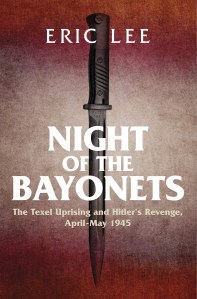
Night of the Bayonets, by Eric Lee

Summary: Georgian-Soviet tensions coming to a bloody reckoning in the last European battle of the Second World War

In their various books both Timothy Synder and Max Hastings have endeavoured to demonstrate how the good versus evil myth so beloved of British Second World War nostalgists, rings very hollow for the peoples of central and eastern Europe. For countries like Poland and Ukraine, for example, the experience was rather to be caught between the monstrous regimes of two of the Twentieth century’s greatest murderers: Stalin and Hitler.

With Night of the Bayonets, Eric Lee focuses in on one small but hugely illuminating example of this bleak reality. 

In the early hours of 5 April 1945, Georgian soldiers serving with the Wehrmacht on the Dutch island of Texel rose up against their German comrades, butchering many of them with knives and bayonets as they slept. 

As Eric Lee explains, the Georgians may not have been enthusiastic Soviets, Georgian independence and democracy having been strangled in the cradle by the Bolsheviks. However, they were unlikely to have been enthusiastic Nazis either. Politics was probably less a factor in them turning their coats than survival. Having been captured by the Germans earlier in the war, donning the German uniform seemed one of their few chances of survival, the alternative being death by a swift bullet or by starvation and disease in a prison camp. 

With the approaching end of war however, the Georgians were pitched onto the horns of another dilemma: how would they be received back in Stalin’s USSR having served in German uniforms. Stalin had already declared surrendering Red Army solders to be traitors. The Georgians must have been aware that if they returned to the Soviet Union they would likely end up liquidated or in a Gulag. 

So, insurrection must have seemed a reasonable gamble, demonstrating their continued loyalty to the Allied cause, and by allying themselves with Dutch communists, with the cause of the Soviet Union. 

It was only after battle was joined that the Georgians found out what other resistance fighters, from Warsaw to Prague to rural France, also discovered: that they were expendable as far as the Allied high commands were concerned. As in Warsaw the Germans also realised this, and so they decided to take their time in exacting revenge on Georgian fighters and Dutch civilians alike. It was not until late May, long after VE day, that Canadian forces landed on Texel, ending the battle.

Other books – most famously Cornelius Ryan’s description of the fall of Berlin, or Stephen Harding’s account of the extraordinary action at the Schloss Itter in Austria – have claimed to be accounts of the “last” battle of the Second World War in Europe. However, Lee’s account of this “last battle” is important not as a historical curiosity, but because it also illuminates so much of contemporary Europe, not least in explaining something of the origins of the ongoing tensions between Georgia and Russia.

Night of the Bayonets is an elegantly written and important work of history, In providing a non-Anglo-American perspective on the Second World War in Europe, it may usefully punctures some of the contemporary myths of the Second World War that still pervade attitudes in the UK. For this, and for much else, it deserves a wide readership.

Catch 22, by Joseph Heller

Summary: Yossarian’s sanity almost drives him mad.

I once had a boss who had to vacate his office in favour of his superior because the said superior had discovered that his own office was two square feet smaller than that of my boss.

Anyone familiar with the world of work will have similar stories to tell about the petty jealousies and mindless bureaucracies that can blight this aspect of our lives. But such stupidities rarely threaten our lives – unless of course you are a health care worker depending on Boris Johnson for PPE during a global pandemic.

Mindless bureaucracy and petty jealousies are rarely the central themes of fictional portrayals of war, even though they are a frequent discussion in military history: Grant and Lee’s arguments over protocol at Cold Harbour, for example, that cost the lives of so many wounded. Or General Mark Clark’s career of incompetence during the Second World War’s Italian campaign.

Catch 22 sought to remedy that however. Bureaucracy, pointless protocol, military etiquette, get rich quick schemes dominate the narrative because it is these that dominate the priorities of those who don’t have to risk their lives.

However for the novel’s anti-hero, John Yossarian, none of these things matter. He just wants to survive. Unlike his superiors, Yossarian knows what flack can do to a human body. He just wants the unrelenting terror of operations to end and to go home. However Yossarian discovers no matter how often he braves the guns of the Herman Goering division, he still has to fly. His superior’s dreams of martial glory leads him to keep pushing up the mission count in the hope that this will help him to become a general. Yossarian, like his pal the Chaplin, does not have the comfort of insanity or selfishness to cushion him from the pity of war, and so hovers perpetually on the edge of breakdown.

Catch 22 is a sprawling book, hopping amongst characters and their diverse but interconnected misadventures. Such is its complexity that George Clooney’s exceptionally fine television version of the story required robust editing of the narrative elements.

It is often described as a satire, and it certainly is rich with black comedy. But Joesph Heller was himself a veteran of 60 combat missions, like Yossarian, as a bombardier in the Italian campaign. So the horror of that experience is never far from the surface, and is something that moves centre-stage in the final chapters of the book.

Some years after Catch 22 was published a reporter put it to Heller that he had not written anything as good since. “No,” said Heller. “Neither has anyone else.”

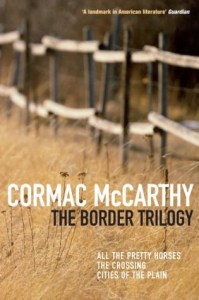
The Border Trilogy (All the Pretty Horses; The Crossing; Cities of the Plain), by Cormac McCarthy

Summary: Cowboy Homer, Homeric cowboys

The last line of the Iliad is, “Thus they busied themselves with the burial of Hector, tamer of horses.” John Grady Cole is a tamer of horses too. A gifted trainer in love with the cowboying life, something as doomed as Troy by drought and modernity.

We first meet him just after the Second World War when he and his friend Lacey Rawlins leave their homes in the US and cross into Mexico looking for work as cowboys. Their adventures and misadventures on that trip are recounted in All the Pretty Horses. That odyssey echoes another journey undertaken by Billy Parham and his brother before the war, the subject of The Crossing. 

At the beginning of Cities of the Plain Billy and John Grady are friends, working together on a ranch in New Mexico. One night in a whorehouse across the border in Mexico John Grady sees a young girl, sold into slavery there to pay someone else’s gambling debt. Her long black hair reminds the reader, as perhaps it does John Grady, of Alejandra, the girl he fell in love with in All the Pretty Horses. 

Each novel of the Border Trilogy is a self-contained work, but collectively they chronicle the lives of John Grady and Billy and their dying lifestyles. They are exquisitely rich with the intricacies of ranching life while shot through with the tension and violence of the most accomplished thriller. 

Love, whether for a woman or for a brother, in these books tends to be a source of trouble. Alongside it, honour, courage and integrity are no more a guarantor of justice for Billy and John Grady than they were for Hector before the gates of Troy.

Perhaps the United States is too large and diverse to have a single National Epic like the Iliad for Greece or the Táin for Ireland. But with the Border Trilogy maybe the American South-West has a work of literature that captures the lost essence and ideals of that mythic cowboying community that John Grady and Billy represent.

East West Street: on the origins of genocide and crimes against humanity, by Philippe Sands

Summary: an lucid and important exploration of the personal consequences of atrocity, and the origins of international human rights law.

East West Street is something of a hybrid of a book. It is part family memoir: Sands’ maternal grandparents were survivors of the Holocaust, but never spoke about their experiences. And while loving people, they never smiled much, something that becomes more understandable as their biographies are painstakingly revealed.

In part the book is a history of the philosophy of international law. The book is also a joint biography of the originators of key concepts of human rights: Rafael Lemkin postulated the idea of “genocide” – the destruction of groups of people based on their identity; Hersch Lauterpacht formulated the idea of “crimes against humanity” – atrocities against individual civilians, often by their own governments.

What binds all this into a remarkable whole is the strange coincidence that, like Sands’ grandfather, Lemkin and Lauterpacht had deep ties with the city of Lviv, currently in Ukraine, previously known as Lemberg when it was in the Hapsburg empire. It was there that Lemkin and Lauterpacht originally studied law, and may well have come to know each other, though they do not seem ever to have become friends. Lemkin was a solitary and spiky soul. Lauterpacht had deep concerns that the concept of genocide would drive human beings deeper into their group identities and hence perpetuate the roots of genocide, if not its actual manifestation.

Nevertheless, both “genocide” and “crimes against humanity” are now important concepts in international human rights law. However, it was a struggle to get them accepted at Nuremberg. The US and the UK did not like the idea of genocide having been formidable practitioners of it themselves in the past. The Soviets, whose own campaign in the East had been marked with atrocity, including mass rape during the conquest of Berlin, did not like the concept of “crimes against humanity.” Nevertheless, Lemkin and Lauterpacht’s advocacy, and the interventions of Robert Jackson the chief US prosecutor, and Hartley Shawcross, the British Attorney General, eventually got them included.

The book builds considerable momentum towards its climax at the Nuremberg trials of Nazi war criminals. Here the personal, political and legal strands of the book are drawn together into what must be the most important courtroom drama in history. Sands focusses particularly on the case of Hans Frank in this trial. Himself a lawyer, as Governor General of Nazi occupied territories in Poland, Frank was ultimately responsible for the murders of many of Lemkin’s and Lauterpacht’s families, as well as members of Sands’ own family. 

In the course of writing this lucid and important book Sands became friends with Frank’s son, Niklas. Together in the courtroom where his father was sentenced to death, Niklas described it as a “happy place.” Later Niklas explained further that he was against the death penalty, but not for his own father. 

East West Street is a mighty book.

A Thousand Ships, by Natalie Haynes

Summary: a gripping, exquisitely written retelling of the tales of Troy and the aftermaths of war

Conceptually A Thousand Ships is similar to Pat Barker’s stunning retelling of the Iliad, The Silence of the Girls. Both focus on the Trojan war from female points of view and consequently give radical new perspectives on these ancient tales and on the pity of war itself. But whereas Barker focuses on one woman, Briseis, Natalie Haynes ranges much more widely across time and dramatis personae.

Parts of the book are very funny – notably Penelope’s letters to the absent Odysseus, and the shenanigans of the gods for whom, like contemporary geo-political strategists, humans are mere playthings. Parts of the book, such as the stories of Iphigenia and Polyxena, are particularly bleak. But in giving voice to Hecuba, Andromache, Cassandra, and the others Haynes reminds the readers of how war reverberates across geographies and generations, and that its casualties are not confined to the battlefields.

Haynes describes the book as a novel and it certainly has the unity of purpose and vision that one would expect of a novel. But the shifting focus and tone as it moves between the various narrators and protagonists also put me in mind of Tim O’Brien’s superb collection of inter-related short stories of the war in Vietnam, The Things They Carried. 

However one wishes to classify the book’s structure, the result is extraordinary. It may not carry the same ultimate emotional punch as The Silence of the Girls, which comes from spending so long with one person, but the tragedies of Polyxena, Cassandra, Andromache, Iphigenia and the rest are still hauntingly portrayed. And at the bottom of the carnage some hope glimmers still.

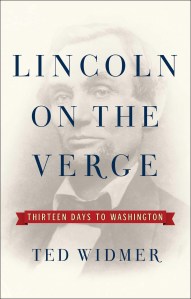
Lincoln on the Verge, by Ted Widmer

Summary: One for the specialists… particularly if you like trains

If you like Great Railway Journeys of the World, you will probably like this account of the 13-day journey Abraham Lincoln took as President Elect from his home in Springfield Illinois to Washington DC. Indeed Michael “Choo-choo” Portillo is probably already in the process of pitching it to the BBC as a new series idea.

It has much interesting material, including a social portrait of the United States, or at least those states that Lincoln visited on this journey, on the eve of Civil War, and details of the “Baltimore Plot” to assassinate Lincoln as he passed through Maryland before he even took up the burden of the presidency. 

Lincoln was one of the greatest public speakers of the 19th Century, indeed of world history, So I find it reassuring that even he could occasionally deliver a poor speech, as he did on this journey. But then he had to deliver hundreds of speeches during these 13 days. In these he strove to articulate his vision for a country where all are equal before the law just as the racists of the Confederacy were seeking to create a new country founded on the “principle” of inequality to allow them to continue inflicting dehumanising violence on millions of human beings through the system of slavery.

It’s an elegantly written and illustrated book, but I am not sure I would describe it as compelling. It is probably one for more specialist readers rather than for someone looking for a general introduction to Lincoln or to the Civil War… but it would make a great Great Railway journey.

Shadow State, by Luke Harding

Summary: Treason doth never prosper. What’s the reason? When it prosper none dare call it treason.

Since 2010, Russia under Vladimir Putin has launched a stunningly successful and sustained assault on liberal democracy. Timothy Synder’s book The Road to Unfreedom chartered the roots of this offensive including its initial forays into Ukraine, up to 2016. In Shadow State Luke Harding continues the story into 2020, detailing the depth of Russia’s penetration into the ruling cliques of both the UK and the US, identifying those involved and explaining how Russian espionage helped deliver both Trump’s election and Brexit.

Harding recounts that on returning home, Alexander Yakovenko, Russia’s ambassador to the UK from 2011 to 2019 was made a member of the Order of Alexander Nevsky and president of the Diplomatic Academy by Putin as a reward for “smashing the Brits to the ground. ‘It will be a long time before they rise again.’” 

The depth of contempt that Russia now holds for the UK was shown in 2018 when Putin launched a lethal chemical weapons attack in Salisbury in an attempt to kill the former Russian military officer Sergei Skripal. In doing this Putin aimed not only to deter other Russian intelligence officers from defecting, but he wanted to say to the UK, ”Fuck you”, as Harding notes. With his boy Trump in Washington and with the UK, at Moscow’s behest, isolating itself from its European allies with Brexit, Putin knew that there was little that the UK could do to hurt him in retaliation. Indeed, he could have killed half a dozen more British citizens in Salisbury and Boris Johnson would still think nothing of going hobnobbing with Russian intelligence officers and assets.

Johnson and Trump can afford to be sanguine about Russian assaults on their national democracies: they have been the beneficiaries of it. And even if they are in knowing collusion with the Russians, as opposed to mere useful idiots, their respective parties appear much too pusillanimous to do anything about it. Both know that they can count on future Russia support for any electoral contests and, particularly in the case of the US, considerable hacking and corruption of the electoral system. It is indeed a golden time to be a Quisling.

Shadow State is a fine, elegantly written work of investigative journalism. While it may be in the traditions of All the President’s Men, there is, at least at the moment, no justice in sight.

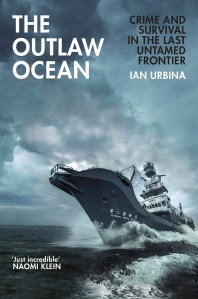
The Outlaw Ocean, by Ian Urbina

Summary: an impressive work of investigative journalism detailing the vast scale of human rights abuses and environmental damage in the world’s oceans.

The Outlaw Ocean is based on a celebrated series of articles that Ian Urbina wrote for the New York Times on the struggles for human rights and environmental standards in the vast lawless expanses of the world’s seas.

It is an impressive achievement, but also a deeply depressing one. As well as the continuing butchery of the planet’s whales, Urbina catalogues the environmental devastation of bottom trawling, the damage caused by the oil and gas industries, the risks arising from the destruction, “bleaching”, of the world’s corals, and the routine and brutal enslavement of seafarers, particularly fishermen, on the world’s ships and boats.

There are some heartening descriptions of the work of activists, such as those of Stella Maris or Sea Shepherd, who strive to bring some measure of humanity to this brutal realm, and there are exciting descriptions of some of their operations. But, appositely enough, all these seem like drops in the ocean such is the scale of the both environmental and human rights challenges.

Urbina shows how the abuses at sea are perhaps the most extreme example in history of the “tragedy of the commons” – the idea that when, in effect, everyone is responsible for something then no one actually takes responsibility. International maritime law, such as it exists, empowers states with its enforcement. This means that on the high seas – beyond territorial waters – a vessel flagged to a particular country can only be boarded by a war ship of that country. So the vast majority of the ships are simply never inspected at all. A land locked country like Mongolia, to which many ships are registered under flags of convenience, does not even have a navy.

Much maritime law, such as the 2006 international convention, does not apply to fishing vessels anyway which can do so much environmental damage through overfishing and other devastating fishing practices. Consequently slavery is also endemic on these vessels, most notoriously on the high seas of South East Asia. But I have also encountered it in the territorial waters of Myanmar and Ireland due to poor regulation and inadequate inspection.

Those who are enslaved are generally migrants, so desperately poor that they are driven to seek work from unscrupulous labour brokers. Urbina describes how sharp practices amongst labour brokers lead to seafarers becoming debt bonded, a form of slavery recognised in international law. Once this has happened the boat captains who receive them as crew routinely use physical violence, including murder, to keep discipline.

Urbina’s impressive work shows how the roots of enslavement on the sea lie on land in the indebtedness of the families and communities from which seafarers originate. This is something I also found in 2019 when researching the enslavement of raft fishermen in Myanmar’s Gulf of Motama. Hence it is a logical extension of Urbina’s research that prevention of slavery requires focussed attention on eliminating the debt that is the key mechanism for so much contemporary slavery.

Such is the scale of “modern” slavery, currently estimated as affecting over 40 million people globally, that meaningful action to reduce these numbers would require a response of comparable imaginative and actual scale to the Marshall Plan. Such a plan should focus on creation in slavery vulnerable communities of decent work, and direct cash transfers to secure early child development and school attendance. A crackdown on usurious money lenders and unscrupulous labour brokers would also be a welcome thing.

Until that happens Urbina’s work will stand as an appalling indictment of the human rights and environmental carnage at sea that the world is collectively turning a blind eye to.