
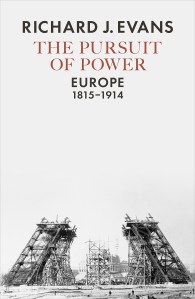
 Summary: the origins of our common European identity
In The Pursuit of Power, Richard Evans, a distinguished historian of the Twentieth Century, traces the history of Europe from 1814 to 1914. It is an astonishingly erudite work, alternating chapters on the political history of Europe with ones its social and economic development during these years.
Liberal Europe tried to be born in the 19th Century but was bloodily suppressed across the continent by the forces of reaction in 1848 – militarily in most places but by famine stoked by racist English misgovernment in Ireland.
Nevertheless, the 19th Century did transform Europe in crucial ways: serfdom was abolished; the industrial revolution took place and the continent became more urban; literacy expanded; and from Ireland to Poland subject peoples demanded their rights, respect and freedom.
But just as the seeds of a progressive social democracy were taking root in Europe, the imperial elites had their last piratical fling with their colonialist project, including their Scramble for Africa. This brought 57% of the world’s population under often brutal European and American rule on the eve of the First World War.
Aside from a few points of irritation – the wife of the great Irish leader Charles Stewart Parnell was called Katey NOT Kitty, a moniker both Parnell and his wife loathed – The Pursuit of Power is an extraordinary work. In spite of its vastness of scale it is an elegant and remarkably disciplined piece of writing. The grand sweep of the narrative is frequently illuminated with the voices of ordinary people from across the continent. So, Evans ensures this history retains its human faces. And it demonstrates that, as well as its national sub-plots, an interplay of social, economic and political factors shaped the whole continent and its emergent European identity. Even if that identity’s common values of democracy, human rights and the rule of law did not gain its full expression until after the bloodbath of the Second World War, and even though these values are again under threat, particularly in the UK and Hungary, Evans’ work shows how deep the roots run.
As Sam Bourne (Jonathan Freedland) noted in his recent thriller, To Kill the Truth, some things have a future because they have a past. Europe is one of those things.

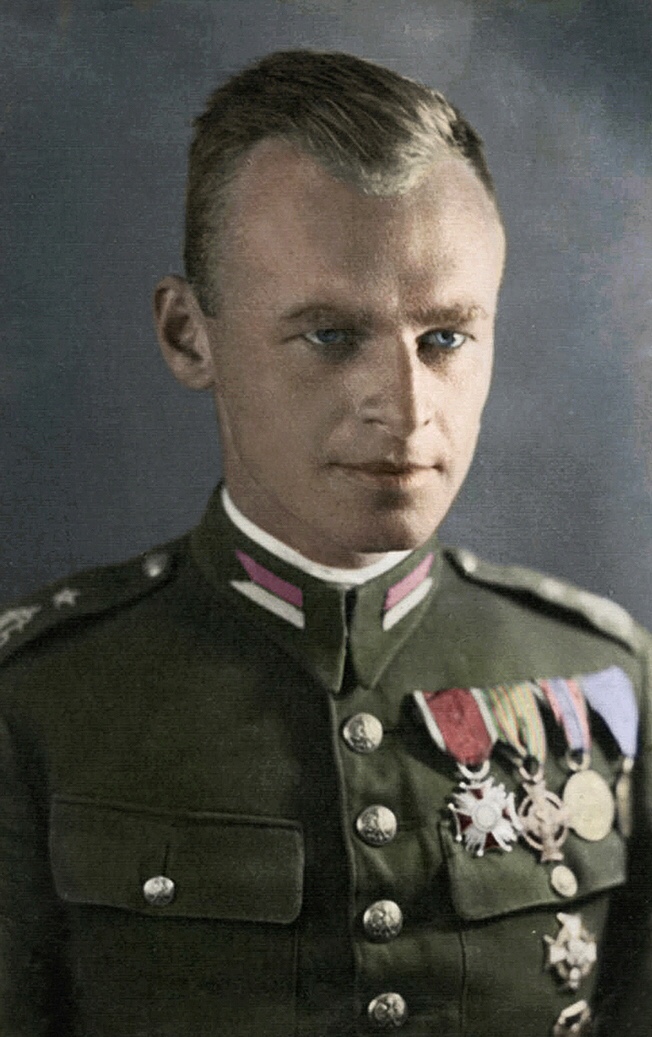
 Witold eventually escaped to make a direct appeal to the Home Army for military support to an uprising in Auschwitz. But by this stage they too were preoccupied with other things, most particularly their plans for an uprising in Warsaw to reassert Polish independence at war’s end. So the courageous resistance network that Witold had built up in Auschwitz was left hanging, eventually to be liquidated by the SS.
 The Path to Power is volume one of Robert Caro’s celebrated, multi-volume biography of
 In the Greek Myths, Robert Graves provides a sprawling and comprehensive survey of these stories from creation to the return of Odysseus to Ithaca. The approach is mostly “chronological” though some portions, such as Agamemnon’s return and the vengeance of Orestes, are placed in the narrative before temporally subsequent ones, such as the sack of Troy.
 The History of Money covers similiar territory to
  aidanjmcquade