Boycotts in the history of human rights struggles

The growing calls for boycotts of Israel and Israeli goods led me to reflect over the past couple of days on the role of boycotts in the struggle for human rights. 

I reckon Anti-Slavery International can (just about) claim credit for the idea of the boycott: in the 1790s: our predecessors in the Committee for the Abolition of the Trans-Atlantic Slave Trade advocated boycotting slave-produced sugar as part of the campaign to end slavery.

image

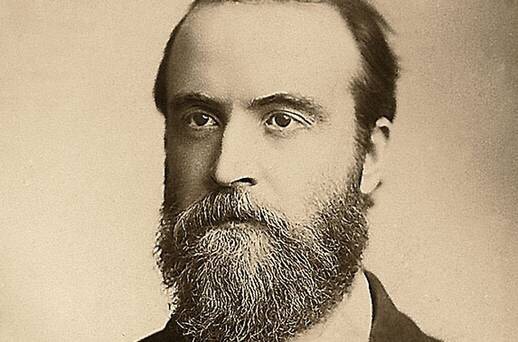
The boycott was later introduced to Ireland by one of the greatest of all Irish leaders, Charles Stewart Parnell, in the midst of the agitation for land reform in the late 19th Century. He was desperate to obtain an effective means of non-violent resistance that would harness the energies of his movement and head off potential for violence as the conflict intensified. Shortly after proposing the idea it was put into impressive effect against the eponymous Captain Boycott in Mayo and his name has stuck to the tactic.


Charles Stewart Parnell

Charles Stewart Parnell

When delivered effectively boycotts can still be potent weapons. But they are also often blunt instruments: They can and do cause hurt to those they are launched in sympathy with as well as their oppressors. During the struggle against apartheid in South Africa activists were clear that boycotts of South African goods would also harm black South Africans alongside the racist clique running the country. However they judged that the level of harm would be marginal compared to what they were already suffering and the damage to white economic interests would be disproportionately higher.

Given the risks of harm to intended beneficiaries the boycott, as a weapon in the struggle for human rights, must be one of last resort. Anti-Slavery, in consultation with colleagues in Uzbekistan, judges that the state-sponsored child slavery practices in the cotton sector there warrant a boycott. There have also been suggestions of a boycott of the Qatar 2022 World Cup because of the routine use of forced labour by that country in the construction of the venues and infrastructure for that event. However the ideal would be that international pressure on the Qatari authorities would lead to increased opportunities for decent work for the tens of thousands of South Asian workers who have sought employment there as a potential route out of poverty.

image

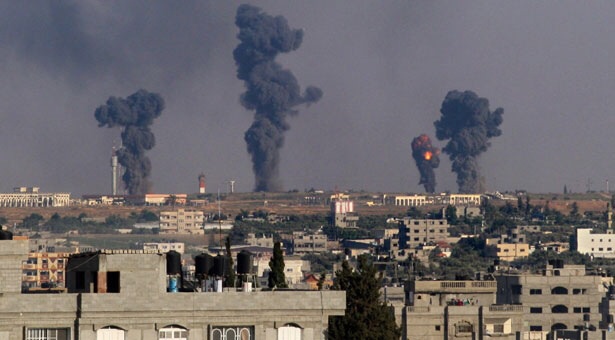
The conflict in Israel/Palestine arguably dwarfs these examples in terms of complexity. But if Israeli policy in the Occupied Territories continues to convince the world that that government has chosen the path of apartheid rather than peace, as former US President Jimmy Carter feared, then many may feel that the conditions necessary to justify a boycott have been met. Perhaps this prospect may eventually open the minds of the Israeli government to alternative policy responses to their illegal occupation of Palestinian lands and their siege of Gaza, imageaway from their current predominantly narrow, military ones. As the Palestinians pose little military threat to Israel there is little chance of a just peace deal being formed to resolve the military conflict. But the moral revulsion that Israel’s disproportionate assault on Gaza has provoked in much of the world, and their continued flouting of international law, may ultimately bring about a comprehensive boycott of the country and with that an increasing economic threat. Ultimately that may demand more just resolution of the conflict with the Palestinian people before international opprobrium becomes intolerable.

A Man Without Breath, by Phillip Kerr

Bernie Gunther reckons that his life should be marginally easier now that Czech and Slovak patriots have done him, and humanity, the great favour of assassinating his erstwhile boss, Reinhard Heydrich, a recurrent source of his prior misadventures.

However in the forests of Katyn on the Eastern Front the German Army has stumbled upon a set of mass graves. Remarkably these don’t appear to be the work of the Nazis, but rather might answer the vexing question of what has become of all the Polish officers captured by the Nazi’s former Soviet allies when they dismembered Poland between them in 1939.

So Goebbels, intent on pinning these murders on Stalin and showing the world that it is not just Germany that has the programme of war crimes and genocide, needs a detective to help sort out the evidence and make sure that the bodies they are digging up are indeed the right ones. Hence Bernie is shipped out to the German army halted for winter in Belarus while it awaits an oncoming Soviet offensive in springtime.

Things are complicated further by Bernie stumbling into the machination of some anti-Nazi officers in the German Army trying to put an end to Hitler, and person or persons unknown trying to put an end to Bernie.

Gunther would be a compelling character in any novel but the effect is considerably enhanced in the context of the German State and Army in the midst of the Second World War: much as Bernie would like to be a decent man it becomes increasingly difficult in the bloody lunacy of war and the evil bureaucracy of the state. The series reinforces the point, chillingly detailed by Timothy Synder in his history of the Bloodlands where this story occurs, that atrocities, then as now, are committed by ordinary human beings abandoning their consciences, the constraints of law, and ordinary human decency, to supposed higher ideals. This philosophical seriousness combined with the nightmarish setting, a twisty plot and the wry observations of Bernie make the book a delight from start to finish.

All Hell Let Loose: The World at War 1939-1945, by Max Hastings

Max Hastings presents the world with two personae. There is the curmudgeonly right-wing journalist, scion of the Establishment and apologist for the British military. Then there is the historian, who comes across as a wholly different sort of beast, his historical work pervaded with a great sense of humanity and of the pity of war. 

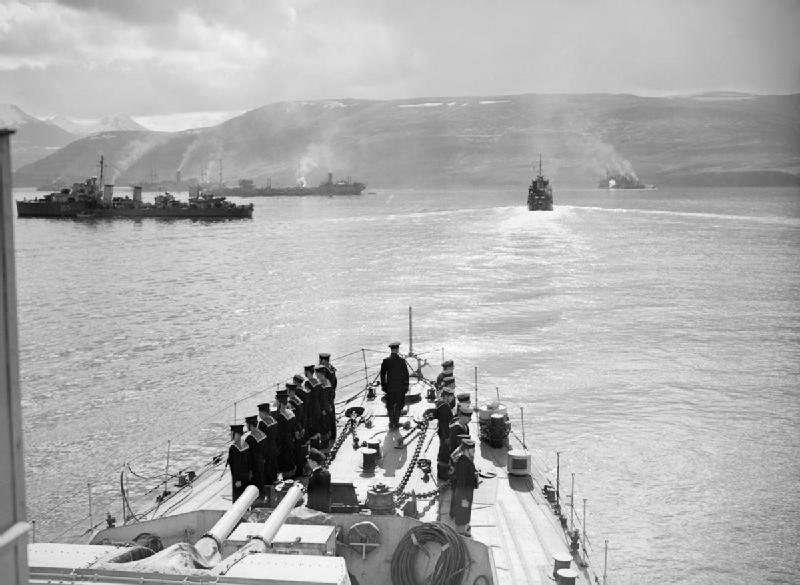
Warsaw_1939_Polish_POWsWith this book, Max Hastings the historian has completed a body of work on the Second World War comparable to Shelby Foote’s magisterial history of the American Civil War. This book fills some of the gaps in the history of the war not covered by his more detailed studies (Overlord on the battle for Normandy; Armageddon on the last year of the war in Europe; Nemesis on the last year of the war in the Pacific; Warlord, his study of Churchill’s war leadership; and Bomber Command). So there is greater consideration here of, for example, the invasion of Poland, the war in the Mediterranean, the major naval campaigns such as the Battle of the Atlantic and the Arctic Convoysartic convoys, and amongst the most chilling chapters, a discussion on the war in the Balkans. Naturally, however the discussion of the war’s final campaigns are more cursory here given Hastings’ other writings.

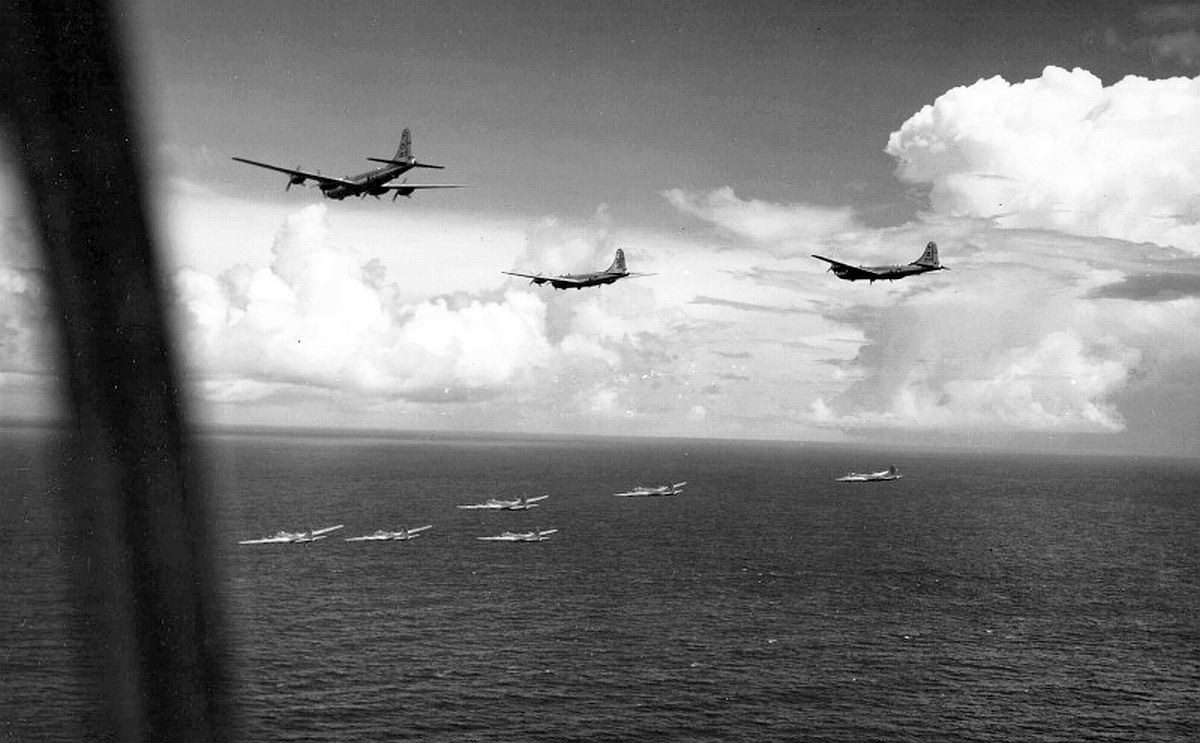
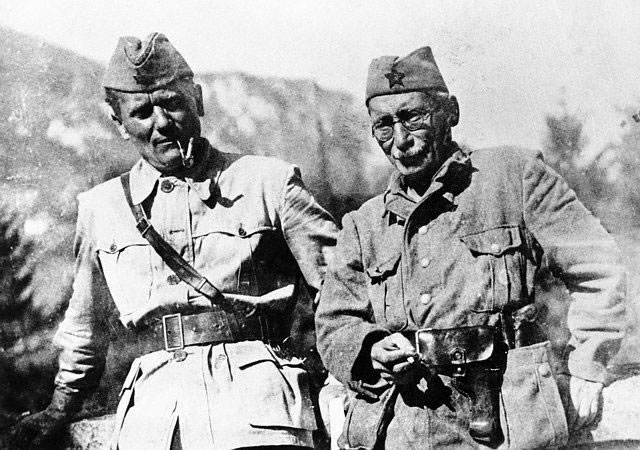
One of the things about Hastings’ historical work that is so delightful is that even if one is familiar with much of the narrative of the events he will often bring new detail or insight to the discussion. This book does not disappoint in this regard: the retreat from Stalingrad, for example, is told principally from an Italian perspective; and the bombing of Hiroshima and Nagasaki is discussed through the idea of “technological determinism” which Hastings sees as shaping key aspects of the Allied campaign, particularly the B29B-29s-Pacific bomber offensive on Japan. By this he means that when a military capacity exists there can become an overwhelming motivation to use it irrespective of the strategic value: it is an idea that also helps illuminates the dynamics behind some questionable dashes into war, such as the 2003 invasion of Iraq.josip-broz-tito-and-mosa-pijade-moshe-piade

There is also a great fair-mindedness to Hastings’ historical writing, acknowledging, given the comparable horror of both Soviet and Nazi tyrannies (something that Timothy Synder explores in greater detail in his exceptional book Bloodlands), that for many eastern Europeans the war never could appear the clear cut battle between good and evil it has become in Anglo-American mythology. Hastings also points out how that Anglo-American myth must take some tarnishing given Britain’s role in the Indian wartime famine, the Anglo-American betrayal of Poland, and some of the needless blood shed by the Allies in the Pacific.

Overall a great work of narrative history, elegantly written with a seeming effortlessness that belies the great learning it contains.

The Speed of Light, by Javier Cercas

The Speed of Light uses the same author-in-search-of-a-story device as Javier Cercas’s previous superb novel of the Spanish Civil War, Soldiers of Salamis. At its core the book is a meditation on how war breeds atrocity and the consequences of atrocity on the perpetrators – the murdered are barely mentioned and only fleetingly considered.my lai

However while a gripping read it ultimately is significantly less satisfying a book than the author’s earlier one about the Spanish Civil War. As one of the characters says to the narrator in The Speed of Light – “you can’t understand because you haven’t killed”. And because the author – presumably not a killer either – does not understand he cannot explain. Instead he describes, recounts and tries to empathise. This is an honourable exercise, but it provides little insight to this subject. Furthermore the author’s blurring of the distinction between himself and his protagonist leads, I found, to great difficulty in trusting the account itself and hence the insight the author offers.

Nevertheless the book is elegantly written and translated, and it is thought-provoking. Perhaps it will lead some to revisit actual histories of the Vietnam war, particularly Four Hours at My Lai, which deals much more directly and insightfully with the realities of war-crimes.

Commandos’ war in a small corner of Croatia: Island of Terrible Friends, by Bill Strutton

KomisaOn holidays on the island of Vis a few years ago I came across a memorial to British commandos in the harbour of Komisa. I found this book after I got home, a non-fiction novel told from the perspective of the real British doctors who worked on the island, in and around Komisa, when it was one of the few bits of Croatia unoccupied by the Germans.

Komiza CommandosThe author, himself a veteran of the war in the Eastern Mediterranean, had clearly taken the time to visit the island as the accounts he gathered are precisely rooted in the geography of the island – its possible to find and follow the roads described in the story and find the locations of many of the incidents. And, while the story is told from the perspectives of the allies and based on the accounts of allied combatants, particularly the doctors on the island, it does not shy away from the nastier aspects of the war: the beautiful island I could see from the window of my holiday apartment, for example, is identified as the place that the Partisans took both German prisoners and their own people judged guilty of infractions to execute them.

Overall a facinating and engagingly written story of deeply likeable people in a bloody but forgotten corner of the bloodiest of wars.

War by Sebastian Junger

War is a book derived from the author’s time spent with an American combat unit in Afghanistan. It is is an exceptionally honest and thoughtful meditation on battle, what it does to combatants and the nature of courage.

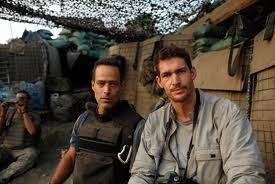
RestrepoJunger frequently allows himself into the story but by and large avoids the “journalist as hero” cliche, using his presence as a surrogate for the reader, trying to make sense, with occasional reflection on social science and history, on what he is seeing and experiencing.

The book generally eschews context, both geo-politcal as well as local, with the voices of Afghans barely heard, and the politics of the region largely undiscussed. Junger argues, not unreasonably, that this is beyond the scope of his research focus. Nevertheless the book remains vital for understanding the risks inherent in waging this type of war. If the reader bothers to contemplate this book beyond the fine writing and gripping descriptions of battle, death and survival, they will find an unsettling moral: if courage is love, as Junger argues convincingly that it is, then the loyalty that breeds may also provide, at least sometimes, the basis for individual participation in atrocity and cover up.

20 years on from Kapuscinski: Fragments of a Forgotten War by Judith Matloff

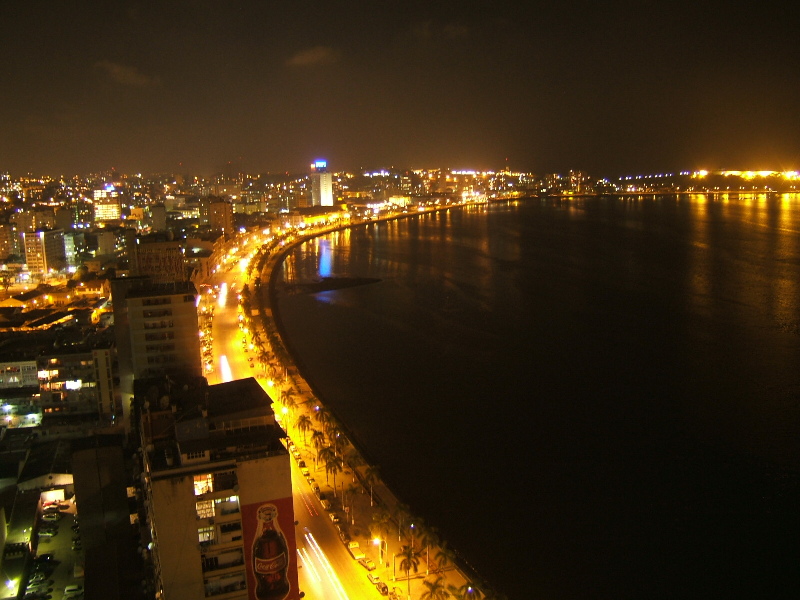
luanda-angolaTwenty years on from Kapuchinski’s exceptional account of the coming of Angolan independence, Another Day of Life, Judith Matloff, an American journalist, reported on the country. Subsequently she produced this book, one of the best English language books on modern Angolan history.

Matloff covers a period which I found particularly compelling because it was that just before the time I worked in Angola myself. She gives us a fine narrative account of these years of continuing civil war, between the governing MPLA and the rebel UNITA movement under the leadership of the psychotic Jonas Savimbi, and the stumbling, ultimately illusory efforts towards peace. Her work is rooted in attention to the history and culture of Angola with a focus on the impact the slaughter had upon the ordinary people. Matloff allows herself into the story occasionally, but with refreshing honesty about her weaknesses and mistakes, avoiding the “journalist as hero” cliche.

Matloff’s title reminds the reader how the bloodshed of Angola’s protracted war was generally ignored by the world for years on end. It is a pity that the book itself also seems to have become as forgotten in the West as the Angolan war was. This is war reportage in the finest tradition of Martha Gelhorn.

Citizen philosophers and a dimwit go to war for Old Ireland: my review of Insurrection by Liam O’Flaherty

imageLiam O’Flaherty’s 1950 novel is an account of a small group of rebels progress through Easter Week 1916, starting with the storming of the General Post Office, through an action clearly based on the intense fighting around Mount Street Bridge, to the final hours around the GPO leading up to the surrender.

As in his books Skerrit and The Informer, O’Flaherty’s principle protagonist is a pretty dim one, in this case a Connemara man Bartley Madden, who is transformed, though not intellectually, by his experiences during the novel. How much you enjoy having a Stage Irishman at the centre of the novel you are reading is probably a matter of personal taste, but I could have done without it. Such a device seems to have been chosen by O’Flaherty in order to explore his political and philosophical ideas, and it is these more than the fighting that are central to his concerns in this novel.

And, unfortunately this makes for a rather unbelievable and clumsy novel. Pages are taken up with philosophical and cod-philosophical discourse. Perhaps this is how soldiers, most particularly citizen-soldiers, spend their time in battle. But even if it rings true I found many of their conversations uninteresting and the view of O’Flaherty, who had been a combatant in both the first world war and the struggles around Irish independence, bleak.

Those who know a little about the 1916 rising will recognise that O’Flaherty is generally faithful to the course of events and the geography of Dublin. However if one is searching for a gripping introduction to the 1916 rebellion, Charles Townsend’s historical account is both more informative and, for me, much more exciting.