Summary: An impressive attempt to cut through Adam’s lies, obfuscations and pseudo-intellectualism to understand more properly his role in war and peace-making
In her book, Every Secret Thing, Gillian Slovo’s magisterial memoir of her parents, Ruth First and Joe Slovo, she reflects on the nature of clandestine life, how deceit becomes an all pervasive thing, a way of existence and a habit of living rather than something that can be easily compartmentalised.
This phenomenon may go some way towards explaining the inscrutability of Gerry Adams, a man who has lived much of his life clandestinely: while he has always denied even membership of the organisation most observers of the North of Ireland, myself included, believe him to have been a long-time leader in the IRA, including a period up to the atrocious La Mon bombing as Chief of Staff.
Malachi O’Doherty makes a serious effort with this book to understand what makes Gerry Adams tick. While he follows a straightforward biographical narrative the book is also something of a philosophical and psychological reflection upon the man and his choices to make war and to make peace.
Throughout his entire career there seems to be one constant with Adams: his belief in the IRA as a moral absolute. Any individual who had committed themselves to this is therefore entitled to unquestioning respect irrespective of what they have done, whether it is murdering a young woman teacher like Mary Travers, or a single mother like Jean McConville, or burning civilians alive, such as at the La Mon Hotel. Anyone who criticises the perpetrators and their actions renders themselves politically suspect and morally indefensible in Adams’ eyes. It is as if Pope Urban’s promise of forgiveness of all sins for those who went on Crusade in the Eleventh Century has been purloined wholesale by Adams in his perspective on those who waged his armed struggle.
Other leaders and generals, Adams’ own description of himself, have similar perspectives on their troops. Theresa May’s stated intent to remove the British military from the scrutiny of the European Convention of Human Rights suggests a similar attitude to another group of professional killers. Perhaps they share the understanding that, as Sherman pointed out, “war is cruelty”. So, having asked men and women to wage it, it is perhaps hypocritical to demand limits on their cruelty once it has been unleashed in what one regards as noble purpose.
I don’t agree that war should ever be unconstrained and believe that those who make war criminals of themselves should be held accountable. But this book does remind us how many of those who were caricatured as evil villains during the Troubles were enormously courageous and self-sacrificing. But courage is not the highest of human virtues – I would say compassion is. And a further thing that this book reminds us is that the dark side of courage is how it can facilitate atrocity.
I was never an admirer of Adams during the Troubles. I found his thinking at best shallow and at worst cock-eyed. I found his justifications for war glib. Adams never seems to have recognised that having claimed for his army a quasi-divine right to wage war that this may give rise to a culture in which individual members regarded their personal right to use violence as a logical continuation of that mystical claim. Nor yet does he seem to have recognised that such a culture might have some relationship to the “unauthorised” operations – murdering civilians and covering up those murders – and the sexual violence that some members indulged in, and in which the leadership seems to have acquiesced.

John Hume and Gerry Adams
I know that Adams has the reputation of being an intellectual amongst the IRA. But true intellectualism resides in rigorous engagement and testing of your ideas with alternative concepts and perspectives. Adams never had this until he began to sit down with John Hume in a protracted dialogue that gave rise to the peace process.
O’Doherty shows that Adams was indispensable in making the peace. So in spite of all his sins and flaws he does indeed deserve the gratitude of the peoples of Ireland and Britain. Certainly when history judges him, it should be more favourable to him than to those self serving clowns in the British Establishment who, at time of publication of this gripping and elegantly written book, have put the peace at risk with their thoughtless blundering.
 And these powers are then likely to be used to enable the political elite to reward some of their most cynical backers: those who have chaffed against the regulations from the EU that have protected workers’ rights, environmental standards and food safety. They will get the
  Summary: Dreams of a better world
 Summary: A fine young adult account of the heyday of piracy in the Americas, with plenty of interesting detail for the more jaded.
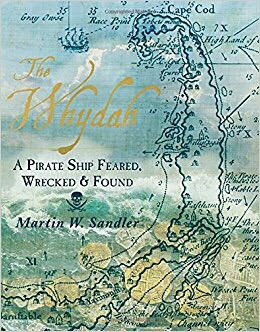
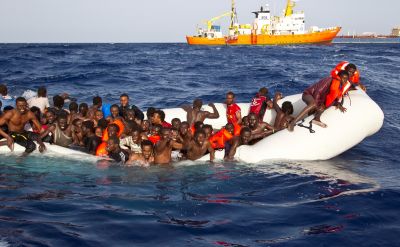 The Whydah is a book that will encourage young people to think and question the myths and fables their more powerful elders tell them. And for those of us who occasionally like to look out to sea, it reminds us how the horizon was once speckled with wooden boats, filled with desperate men and women, prepared to try to steal a better life from those who denied such a thing to them.
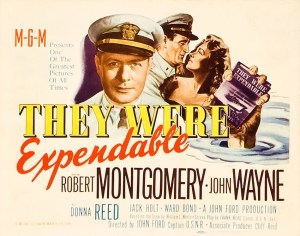 Summary: A gripping war story that gets to the heart of important truths about both war and Jack Kennedy
 Dave Powers, a friend and aide to Jack, once commented that, “Without PT 109 there would never have been a President John F Kennedy.” The legend of Jack’s fortitude and leadership following the sinking of his boat during a small battle in which 15 ill-equipped PT boats were sent to ineffectually attack a convoy of Japanese destroyers, was the foundation upon which Jack’s political career was built. But the story of this relatively brief episode in Jack’s relatively brief life is more important for a number of reasons, not least, after over half a century of muck raking and character assassination, it has proven pretty close to impossible to tarnish this truth of his heroism during those days.
 He didn’t die then and went on to play a decisive role in saving the lives of his surviving crew. Doyle notes: “The longest Olympic swimming event staged before then, the men’s 4,000 metre freestyle race, was held only once, in 1900. Fourteen of the twenty-eight competitors… “did not finish” and the distance was promptly retired. On the afternoon of August 2, 1943, John F. Kennedy covered the same distance, plus a mile more, over open water, behind enemy lines in broad daylight…All the while he bit on a strap and towed a badly burned sailor along with him. Simultaneously … leading nine other men.. towards safety… it was an astonishing feat his crewmen never forgot.”
 Summary: Spenser on sparkling form