Summary: the colours of the rainbow, so pretty in the sky, are also on the faces of the places you go by…


Summary: the colours of the rainbow, so pretty in the sky, are also on the faces of the places you go by…


Summary: American Hastings Banda
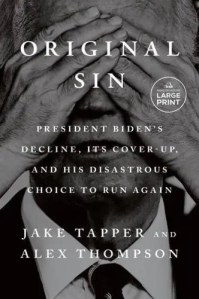
On a human level, this book is a very sad one. Across it, informants repeatedly refer to how their encounters with Joe Biden in the later stages of his presidency reminded them of their own impaired elderly relatives. Indeed, the descriptions of Biden’s deterioration within this book reminded me more than once of my father’s decline.
Of course, devastating as that was, I can be confident that no matter how afflicted my father became, unlike Biden, he would never have added his support to a genocide.

I counted four references to the violence in Palestine across this book, starting with a brief mention of the Hamas atrocity on 7 October 2023, and ending with another brief mention that Biden’s Gaza policy was the area of most substantial disagreement, in private, between Biden and his Vice President Kamala Harris.
This lack of discussion of one of the great moral issues of our day is, perhaps, unsurprising. Tapper and Thompson’s interests, like those of most Americans, are wholly US-centric. For them American preoccupations are paramount. And so they focus on the threat to American democracy posed by Biden’s cogitative decline and the opportunities that this gave to a resurgent Trump. They are uninterested in consequences of the moral collapse in international affairs of Biden and the swathes of the US political establishment that were their sources for this book. That doesn’t directly affect Americans.
This is somewhat disingenuous. There are occasional references through the book to Biden’s loss of support amongst young people. This is attributed solely to Biden’s age. Tapper and Thompson do not consider the possibility that abject disgust at Biden’s support for a racist and genocidal government in Israel could have deprived Harris of the small margins she needed in key battleground states to keep the presidency out of Trump’s hands.
In many respects Original Sin is a fine work of investigative reporting, and it does give important insight into the nature of power in the United States: Biden’s presidency gave power to a small cadre of advisers around him known, behind their backs at least, as the Politbureau. It was in this group’s selfish interest to deny to the world the fact that Biden was no longer physically or mentally fit to be president. To have done otherwise would have been a surrender of the power that they craved.
But the authors’ disinterest in the most murderous of Biden’s policies is reflective of one of the two original sins of the United States: that it was built on genocide and that many in the highest echelons of government still seem to regard this as a legitimate policy option. As a republic it has never quite grasped that human rights are meant to be universal.
Given this, it is difficult sometimes not to feel that in some grand Karmic way the United States deserves Trump: they reap now for themselves what they sowed so long for others.
Summary: an elegant exploration of Hiberno-Indian relations over the decades
While anti-colonialism is now deeply culturally embedded in contemporary Ireland, our history on the matter, as Cauvery Madhavan gently reminds us with this book, is rather more complicated.
The Tainted takes as its starting point a fictionalized story of a 1920 mutiny by Irish troops in India. (In the book the “Kildare” rather than the Connaught Rangers are the mutineers).

Because, superficially, the British and Irish are white, the British expect the Irish to collaborate with them in treating the Indians in the way that the British treat the Irish at home.
By and large the Irish are happy to comply. But when news of the depredations of the Black and Tans percolates through to the Irish barracks the centre cannot hold, and the colonial authorities are murderously provoked when Irish soldiers down arms in protest.
The second two-thirds of the book explore the repercussions from this incident down the years, not least for Rose, a young “Anglo-Indian” woman – daughter of an Irish father and an Indian mother.
Cleverly Madhavan does not allow her narrative to rest with any single character for too long. Instead she shifts the psychological perspective of the novel across a range of characters into the first decades of Indian independence. By doing this she gives insight into the attitudes and prejudices of different communities, and shows how these pose needless challenges to the appreciation of each other’s common humanity.
Madhavan’s novel is an engaging and illuminating exploration of identity, cultures and history, elegantly written and ultimately hopeful. After all, whatever our skin, our blood is the same colour.
Summary: calls for humanitarian aid are being used by pusillanimous politicians to distract from their failures to directly address the causes of humanitarian crisis in Gaza, most specifically Israel’s genocidal assault.
For over five years in the late 1990s I worked, mostly for Oxfam GB, organizing assistance, including water supply and sanitation, for the civilian victims of the civil war in Angola.
So, humanitarian response is a subject area I know a little about. As students of management and leadership will be aware, a problem with a bit of expertise is that you can presume that everyone understands the fundamentals as well as you do. This is called taken-for-grantedness in the literature.
I have been taking-for-granted that David Lammy and Keir Starmer – human rights lawyers after all, as they like to tell us, and therefore smarter than everyone else, as they like to imply – would understand the fundamentals of humanitarianism. After all, they have been pontificating on it since the start of Israel’s murderous assault on Gaza in 2023.
But maybe they don’t. Maybe it is possible that they are not the craven accomplices to war crimes that their ongoing military and diplomatic support of Israel suggests. Perhaps they are just pig ignorant of the vitally important stuff that successful humanitarian response requires.
So, here are a couple of the most basic lessons of humanitarianism for their edification.
1. The solution to a humanitarian crisis caused by war is not aid. It is an end to war. At the early stages of Israel’s latest assault on Gaza, Starmer and others attempted to deflect from their monstrous acquiesce in Netanyahu’s war crimes by rejecting the calls for an immediate ceasefire and instead calling for pauses in the violence to allow for the delivery of more aid.
The technical term for this position in relation to humanitarian response is “Oxford Union debating horseshite”. It is part of an approach to politics that values a plausible sounding point to win an immediate argument over the concrete measures necessary to resolve the actual causes of the crisis that the argument is about. Food assistance, vital as it is, does not protect from the other forms of collective punishment, such as the cutting of power and water that Keir Starmer advocated Israel doing, let alone the mass burning alive of children that Israel has routinised in Gaza since the outset of its violence.
2. If a belligerent nation is using famine as a weapon of war, then they are not going to permit humanitarian assistance unless put under robust pressure to do so. Robust pressure, not expressions of sadness or concern: Boycotts. Divestments. Sanctions. Criminal accounting.
3. If an assaulting army deliberately massacres humanitarian workers delivering food aid to hungry people, they are probably using famine as a weapon of war. Humanitarian workers not party to that war crime will therefore be made a target.
4. If an assaulting army on encountering their own nationals, stripped to their underpants and begging for help in their own language, shoots them, then that army is not on a rescue mission. Imagine what fate awaits those who cannot speak the attackers language. But you don’t have to because it has been documented by those the Israelis would seek to make victims. Indeed, the Israelis themselves have even videoed their own war crimes to show the world, so proud are they of what they inflict.
5. If an assaulting army is enslaving the civilian population they are attacking, then they are certainly not interested in any aspect of the humanitarian well-being of those civilians. In March 2025 the Israeli newspaper Haaertz reported that, ‘In Gaza, Almost Every IDF [Israeli Defence Forces] Platoon Keeps a Human Shield, a Sub-army of Palestinian Slaves.’
The British government used to like to depict itself as a world leader against slavery. But there has been a deafening silence from that government, and indeed much of the anti-slavery community, on this matter.
6. If you have soldiers in place to machine gun aid recipients, then the purpose of an aid distribution is not humanitarian. It is war crimes.
7. If you are materially supporting a political regime that has publicly stated its war aims are ethnic cleansing, then no amount of humanitarian assistance will mitigate that. You too are practicing genocide, even if you are also offering the doomed their meagre last meals.

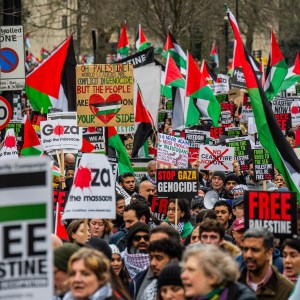
Maybe these ideas are new to Starmer, Lammy and the rest of their government. But they are not hard. Indeed, tens of thousands of ordinary British people demonstrate that they grasp these most fundamental points already as, month in, month out, they gather in protests across the country to indict their own government for its abject moral collapse.
Summary: two books plumbing the depths of the intelligence war during the Troubles
The morally vile, but tactically brilliant, American Confederate general, Nathan Bedford Forrest had a philosophy when giving battle: Get there first with the most.
This philosophy seems to have been taken up with some degree of alacrity by a raft of English politicians and writers who want to capture the history books to rewrite the Irish peace process as a benevolent English achievement.
Central amongst these has been Peter Taylor whose focus for some years has been on the role of British intelligence in the peace process, particularly the “Back Channel” between MI6 and the IRA. This, as far as he seems to be concerned, was the only strand of the peace process that mattered. Forget the Hume-Adams talks; forget Irish diplomacy and the Downing Street Declaration; forget George Mitchell; forget the European Union; forget Mo Mowlem. Instead, the peace process was something gifted to the quarrelsome Irish by perspicacious spooks, selflessly concerned with Paddy well-being.
Hemmings’ book gives a nod to diplomacy with mention of the Anglo-Irish Agreement of 1985 – also portrayed as a British initiative. But, like Taylor he is also principally interested in intelligence operations, albeit with a broader perspective. At its core his book explores three parallel but occasionally overlapping British intelligence operations: In addition to MI6 and the Back Channel, Hemmings describes MI5’s efforts to boost Sinn Fein’s electoral fortunes with a view to weaning them away from violence, and the army’s efforts to disrupt the IRA’s military operations through the activities of, in particular, Freddie Scappaticci – Stakeknife.

Scappaticci was the army’s most important agent in the IRA. A senior figure he was the head of the IRA’s internal security – the Nutting Squad. He was personally involved in the interrogation, torture and murder of dozens of suspected IRA informers. Many of these were, of course, also British agents, like Scappaticci himself.
The term “British agent” can be a misleading one. It can lead one to think of James Bond, who was an intelligence officer NOT an agent. The agents are the vulnerable people who through blackmail and bribery are recruited by officers to turn traitor on former friends and neighbours.
The pathetic plight of these desperate people is a central concern of Richard O’Rawe. O’Rawe, a former IRA man himself, knew Scappaticci. But given the sociopathology that he documents, he records that he is thankful that he did not know him well.
Scappaticci was an army intelligence operation. But O’Rawe shows, there was an essential unity between the IRA’s Nutting Squad and the “Tasking and Co-ordinating Group”, the senior officials from all British intelligence agencies who oversaw their diverse operations. So much so that it was they, ultimately, who decided who would live and who would die, and gave orders accordingly for favoured British agents like Scappaticci to kill other less valued ones.

O’Rawe’s past IRA involvement gives him access to other IRA volunteers and his interviews with them provides a broader perspective on the Troubles to Hemmings whose book is more dominated by British sources. O’Rawe also has an altogether more morally clear-sighted view of that squalid war than Hemmings. He is not afraid to use the term “war crime” in his assessment of the savagery of both IRA and British actions.
Aside from the desperately sad human stories that these books recount, and the important ethical questions relating to the conduct of insurgency and counter-insurgency that they raise, these books also offer valuable insights into some broader historical questions.
First, the whispered accusation that Martin McGuinness was a tout is effectively discounted. Given the efforts that MI5 was putting in over decades to coaxing the republican movement onto a more constitutional path, compromising McGuinness like that would have risked wholly undermining their efforts. But while he may never have been a tout, the callousness which McGuinness showed towards human life, particularly in diverse killings of suspected informers, means that while he may be an important figure in Ireland’s history, he should never be thought of as a hero.
Second, the idea that the IRA was beaten is disabused. Even though British intelligence had compromised major parts of the IRA, its rural organization in South Armagh, Tyrone and Fermanagh were still capable of sustaining the killing, even if there was never any hope of military victory.
This leads us to the third point, that of the importance of the political processes that were running parallel to these intelligence ones. Without those, offering a constitutional framework that, if not giving the IRA all that they wanted, at least gave them some, there would have been nowhere for the Back Channel to go. The British might like to now remember the peace process as a British led affair, one of the great achievements of New Labour as that morally bankrupt party likes to chauvinistically put it. However, without the thread of Irish leadership showing the way, they would still be entangled in the labyrinth of killing typified by their Stakeknife operation.
Both O’Rawe and Hemmings describe with some admiration the efforts of Jon Boutcher’s Kenova enquiry to get to the bottom of the moral morass of the Troubles intelligence operations. Boutcher, who was involved in the police killing of Jean Charles de Menezes may have been expected to do the decent thing by the British Establishment and cover up embarrassing information. Instead, he recommended prosecutions in 28 cases involving both former IRA and senior British personnel.
The Public Prosecution Service declined to undertake these prosecutions, which seems a travesty. But in that it is hardly surprising. The Stakeknife operation is but one among many war crimes that the British state was involved in: Aside from Ballymurphy and Bloody Sunday there was also extensive collusion with Loyalist death squads across the North. So, this makes it more understandable why past British governments have scrambled to introduce blanket amnesties for all Troubles era killings. It also gives insight into why the current British government of “human rights lawyer” Keir Starmer still strives to prevent a public inquiry into the killing of Sean Brown.
Both Hemmings’ and O’Rawe’s books may require some revision – in the details but most probably not in the substance – in the light of Boutcher’s final Kenova report. But they are still fine work, grappling with difficult subjects. O’Rawe’s in particular, while more narrowly focussed than Hemmings, is an elegantly written work, marked by a burning sense of indignation at the scale of the depravity that he describes
Summary: a not very funny rumination on a very funny tv show
Who wants to read about what the tv series Hacks has to say about leadership? Probably no one. But it has lessons on that subject area as important as those that Buffy and Angel teach on philosophy and morality. So here are a few thoughts.

If you haven’t seen Hacks yet, you are lucky. There are four seasons awaiting your delectation. However, like much writing about humour the following is not all that. Still, this is free to read. So tough.
Hacks is about the borderline unhealthy relationship between a legendary comedian, Deborah Vance (played by the legendary Jean Smart) and her new writer, Ava Daniels (the very funny and genuinely admirable Hannah Einbinder).
While the setting may be the glamourous world of showbusiness, fundamentally it is a workplace comedy. In the workplace that Deborah and Ava find themselves in by season 4 they represent archetypes of bad leadership: Deborah is imperious and ridiculously demanding, with no sense of workers’ rights and frequently forgetting that she has a duty to teach not just perform. Ava is well-meaning but so young she does not know what she does not know. In particular she has not quite grasped that her brilliance as a writer does not necessarily provide her with the knowledge and experience to be a professional leader.
If you are in any way like me, this will immediately remind you of Lavina Greacen’s book, Chink, her biography of the Irish Second World War general Eric Dorman-Smith.
Just me?
Well, a central theme of that book was that leadership is a collective task, requiring at least two people to have any chance of working.
This is something that the writers of Hacks also instinctively seem to understand. Neither Ava nor Deborah are necessarily people you would like to know in real life. But together they make each other better as people and as leaders. Of course, they have difficulty admitting this to each other – too much ego getting in the way. And they have even more difficulty realizing that there are others central to what success they have achieved, not least Jimmy, their self-effacing and under-appreciated manager (perhaps the real hero of the show?)
Maybe if they had read a few of Louise Penny’s Inspector Gamache novels they would know that they need to use more the four sentences that achieve wisdom: “I was wrong,” “I’m sorry,” “I don’t know,” and “I need help”.
But they haven’t. Indeed, not enough people have. That is one of the reasons why there is so little wisdom and empathy among those responsible for leading in today’s world. It is also one of the reasons that moral leadership increasingly falls to the protests of artists like Hannah Einbinder and Kneecap, while so many more respectable pillars of society are silent as gravestones.
All that aside, Hacks is one of the best portrayals of workplace politics since The Wire. And it’s bleeding funny. Try it.
Summary: Diverse, highly readable perspectives on the First World War
Like many of my generation, my introduction to the First World War was at school, studying the sublime poetry of Wilfred Owen. Owen’s writings along with others such as Siegfried Sassoon and Robert Graves, did much to promote the “lions led by donkeys” view of that war.
This is a perspective on the war that Peter Hart takes considerable exception to. A key theme of his fine narrative history of that war, similar to Hew Strachan, is that the allied generals have been unfairly maligned, made scapegoats by civilian leaders who bore more responsibility for the carnage.
The generals of the Western Front were, he argues, by and large, diligent soldiers, trying to learn the best way to fight an industrial war. This is something that their prior experiences, helping their colonial empires steal other people’s countries and butchering anyone who objected, had not properly prepared them for.
Better than Strachan, Hart illustrates well the impact of the generals’ decisions on the front line troops of all armies. He quotes extensively from the letters and diaries of the combatants to give a truer sense of their experiences, including of the vicious fighting. This makes it hard to sympathise with Hart’s broader argument that the generals were doing their best.
The industrialised trench warfare of the First World War was not quite unprecedented: the Union’s final campaign against Richmond under Grant previewed the sort of warfare that would come to define the Western Front. Grant had realised that an attritional campaign would bleed the South to such an extent that even if he lost every battle the Union would win the war.
With no extant tactics to breach the fortified lines in a way that would have meaningful strategic impact on the course of the war, the opposing sides settled into a similar war of attrition. This led to regular battles that hoped to inflict such a butcher’s bill on the other side as to make it difficult for them to continue.
Other pressures, not least that of coalition warfare, also demanded action, irrespective of how inadvisable. That is how the British came to attack fortified German positions on the Somme in 1916 – to provide some “relief” to the French under German attack at Verdun. On the first day of the Battle of the Somme the British Army suffered 57,470 casualties, including 19,240 deaths. That still does not seem to me a reasonable price for generals learning on-the-job or offering moral support to an ally.
By way of contrast, during the Second World War Matthew Ridgeway, an American Airborne general risked his entire career by refusing to lead his troops on what he believed would be a suicidal assault on Rome. This would have entailed dropping his lightly armed forces in the midst of two German heavy divisions.
I suspect most of the allied troops on the frontline of the First World War, such as Owen, Sassoon and Graves, would have happily swapped their “diligent” generals for a few with a fraction of Ridgeway’s moral courage.
Graves was almost killed in a later stage of the Somme battle. It is striking that in Goodbye to All That, his engaging account of his wartime experiences, he never describes killing anyone, though he hints that he did. The closest he comes is describing a sniping opportunity to kill a bathing German. Graves writes that he could not bring himself to press the trigger on the naked man, so he assigned the task to a subordinate instead.
Graves clearly carried the war with him for decades after. The guilt and trauma of it infuses his account of the Greek Myths, for example.
Given the horror of the war, it is understandable that we all should look for who to blame. This is among the tasks that Max Hastings undertakes in his typically gripping account of the outbreak of the war. Hastings is at pains to point out that Germany more than any other nation was the one that could have put a stop to the descent into cataclysm. Hence in Hastings’ view this is the country that should bear most of the blame. Hart has a similar perspective, noting that Germany believed that as war was inevitable the sooner it began the better it suited them.
In this Hastings and Hart offer somewhat different perspectives to Christopher Clark’s exceptional book on the same subject, The Sleepwalkers. This lays considerably more of the blame on Serbia, Britain and France’s ally. Margaret Macmillan, whose book, The War that Ended Peace, also explored the dangerous, dizzying array of alliances and egos that shepherded Europe to war. Both these accounts suggest there is plenty more blame to go around all combatant nations.
With The Peacemakers Macmillan explores the end of the war, specifically the Paris Peace conference that led to the Versailles Settlement. This established much of the contemporary political shape of Europe. Alongside the “Great Power” politics of the Conference, Macmillen’s book is also the story of how the peoples of, in particular, central and eastern Europe shook off the rule of the Great Powers whose blundering had dragged them into catastrophic war.
But the Versailles settlement also sowed the seeds of future war in Europe, by assigning all the guilt for the war to Germany. This ignored the role of, in particular, Serbia in starting things. It also ignored the fact that the Germany that came to Paris was a different country to the one at the start of the war. Not fundamentally different, of course: as German history since 1919 has shown it a country that has never quite lost its relish for atrocity. But by 1919 it had been through a democratic revolution that was economically crippled by the demand for reparations from the victorious powers. This created the political conditions for the Nazis to emerge.
In granting to Britain the Palestine mandate the Versailles Settlement also paved the way for a new settler-colonial entity there, and for the Zionist genocide of the indigenous people that, with shameless US, German and British support, continues to this day.
The First World War remains an example of, as William Faulkner once wrote, the past not even being past. Its dark legacy is a bloody one in the present for millions of defenceless human beings.
So, perhaps Wilfred Owen remains still the most vital voice on the First World War, understanding from that one war the pity of all war, and encouraging a level of empathy for the victims of war that no discussions of causality, strategy or blame ever can.
Summary: “Ever try. Ever fail. No matter. Try again. Fail again. Fail better.”
As a means to educate, stories are as old as humanity. And the best ones endure. That is why, for example, the wisdom of the parables of Jesus still resonates.
Philip Gourevitch, in his book “A Cold” Case, explored the importance of stories in mentorships, as a way in which leaders share their experience with the next generation of “apprentices”. That is a tradition that Martin Farrell enters with his book, “Good Leaders in Turbulent Times: How to Navigate Wild Waters at Work”.

As well as having led organisations himself, Farrell has a long background mentoring leaders: he was a particular help to me during one nightmarish phase of my career. So, he has deep understanding that even the best leaders often have to endure reversals and “the slings and arrows” of those who have never experienced the grinding responsibilities of choice-making that leadership entails.
In other words, he has heard, if not all the stories, a great many of them. He recounts these here in the intertwined stories of a group of fictional not-for-profit CEOs at various stages of their careers each enduring their own professional crises. As resources for learning they are a reminder to other leaders going through their own trials that they are not alone. Others have passed this way and endured… or at least survived. Here are some of the ways they managed to cope.
Farrell understands that beneath the latest fads and fashions, which come and go and come back again, leadership is a human process and it takes a human toll. That is a truth that is often underappreciated by new leaders when they take up their roles. More unforgivably it is too often forgotten by board members who blunder in their organizational stewardship as a result, often in ways that they are never held accountable for.
Because of this, Farrell’s book is a vital one and should be required reading for CEOs. It should also be required reading for board members, particularly those who have never been CEOs. It is book that the for-profit as well as the not-for-profit sectors can usefully learn from.
Good Leaders in Turbulent Times is an accessible, humane book, imaginatively designed and wonderfully illustrated by Steve Appleby. It is an important contribution to leadership literature.
Summary: Huck and Jim try to flee their woes, stalked by the malevolent figure of Tom Sawyer.
Dith Pran, the Cambodian journalist made famous by the movie, The Killing Fields, wrote that the most terrifying of the Khmer Rouge were the child soldiers. They had no sense of either mortality or conscience and would kill with no compunction and little excuse.
In his writings on Vietnam, Tim O’Brien also describes this phenomenon amongst American troops, themselves little more than children. O’Brien describes the results when they are unleashed, as the dogs of war inevitably are, on a substantially defenceless civilian population whose pleas for mercy the Americans never understand.
The literary archetype for this monstrousness is perhaps Tom Sawyer. While not the main focus of this book, his presence when he appears inevitably causes mayhem, anguish and a threat to life for any with the misfortune to cross this dangerous clown’s path.

Huckleberry Finn is one of the great novels of America. In it Huck, a free-spirited kid who has grown up in the woods, and Jim, an escaped slave, both flee to the Mississippi River to seek the freedom to pursue their different ideals of happiness.
Along the way they have comic and comic-dreadful encounters with con men, blood feuds, and slave catchers who threaten to undermine their plans. But perhaps the most sinister threat comes from Tom Sawyer, Huck’s supposed friend.
In the book Tom seems to embody not the ideal of personal freedom cherished by Huck and Jim, but another American ideal still very much at large: that of the virtue of overweening self interest. Nothing matters to Tom but his own amusement and he has no concern if the modest hopes of people he regards as lesser, particularly Jim, are torn apart in the service of his gratification.
The spirit of Tom Sawyer still pervades American politics. There is a lineal link from Tom’s ludicrous plans of piracy to Trump’s grotesque fantasies of the benefits of genocide in Gaza. Those Americans who gave repeated standing ovations to Benjamin Netanyahu when that war criminal and genocidist addressed a joint session of Congress embody the spirit of Tom Sawyer. For them too, the lives of large swathes of humanity simply do not matter.
Huckleberry Finn is a charming and very funny reflection on the American Dream. But it knows there is an American nightmare too, and it stares deep into that void left by the absence of American conscience.
Summary: what it says on the tin… and a foot