Giving journalists a good name: Asking for Trouble by Donald Woods

Donald Woods bannedDonald Woods was that very rare sort of journalist who gives journalists a good name: a brave and principled man who fought apartheid and, following the assassination of Steve Biko, which he did much to expose to the world, was “banned”, that is put under house arrest, by the South African government for his troubles.

He wasn’t always this though and his autobiography is an honest account of his education from a prejudiced youth to freedom fighter and prisoner of conscience, though he would probably never have described himself this way: his autobiography suggests he was a man who had a lovely sense of humour about himself and the world. This, and his passionate rage against injustice illuminates his account of his life reporting apartheid South Africa, which is told in the snappy prose style of a gifted newspaperman.

The Fall of Carthage by Adrian Goldsworthy

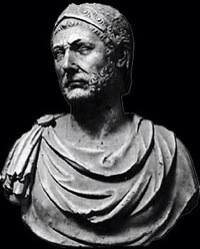
20140707-140519-50719822.jpgThe Fall of Carthage is Adrian Goldsworthy’s account of the three wars between Rome and Carthage, the two great Mediterranean city states, from their first clashes in 265 BCE to the final destruction of Carthage in 146 BCE.

It’s a clear and compelling account, but I must say I found it less gripping that Goldsworthy’s biography of Caesar. On reflection this is not because of any lack of scholarship on the part of Goldsworthy or any less elegance in his writing. It is rather a problem of the sources which are sparser in comparison with Caesar’s era and significantly less colourful: Hannibal, for example, has left no correspondence from which to gain insight to his tactical and strategic thinking, let alone his life and loves.

In his introduction to the book Goldsworthy states that it is not his intention to seek military lessons for the contemporary world from the Punic wars. Rather he simply wants to explain those wars in the context of the third and second centuries BCE. His success at this is perhaps best demonstrated in his discussion of the battle of Cannae. Here he provides a clear account of how the heavily outnumbered Hannibal managed to encircle and defeat his Roman opponents. (The manoeuvring at Cannae has inspired many subsequent generals to try to emulate, including, I believe, Pilsudski in his brilliant rout of Soviet forces outside Warsaw in 1920.) However where many other accounts skate over the aftermath of the encirclement, which had effectively decided the outcome of the battle, Goldsworthy points out how that was not the end of the fighting. Indeed the killing went on for hours afterwards as the Carthaginian forces blunted their swords and spears in the sanguinary process of butchering almost 60,000 men,

However there remain, I think, some inescapably timeless lessons from the narrative.

In the first Punic war, which was primarily a naval contest, the Carthaginians had by far the superior navy. Naval fighting in those days focused on ships trying to ram each other and this required considerable skill amongst the ships’ crews which the Romans found they simply could not match. So instead they conceived of a tactic of grappling and boarding the Carthaginian vessels and soon rendered the skill of ships “dog-fighting” each other substantially obsolete.

The second Punic war opened with Hannibal’s extraordinary invasion of Italy from across the Alps. This was followed rapidly by his stunning successes at Lake Trasimene and Cannae, which subsequent historians have argued left the path to Rome open to him. Goldsworthy argues that Hannibal did not follow this path because by all contemporary measures he had won the war and expected a settlement. The Romans however had, unappreciated by most of their contemporaries, conceived war totally differently and indeed waged it totally as a consequence. Hence they were prepared to absorb eye watering levels of casualties sooner than admit defeat. As a result it was the tactically undefeated Hannibal who was driven out of Italy by a strategy which, certainly at the outset of his war, he could never have conceived of.

Both these examples show how a wholly new reconceptualisation of a situation can lead to previous ideals being rendered irrelevant.

Reflection on these wars also corroborates Thucydides assertion that wars tend to be fought for three principle reasons: “honour” – meaning here not integrity but rather that peculiar sense of reputation or personal worth that used to bring young men onto duelling grounds to kill each other, and still is used by some men to justify their murder of female relatives – “fear” and “profit’. In spite of much human progress since Scipio Aemilianus oversaw the final genocide at Carthage, humanity still does not seem to have found a cure for these ills.

The Cuckoo Calling – JK Rowling (writing as Robert Galbraith)

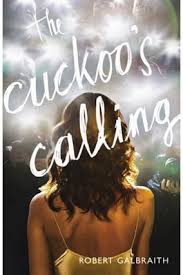
cuckoocallingA supermodel, Lula, falls to her death from her balcony in London. The police rule the death as suicide. However the model’s brother is unconvinced. So, he hires a private detective to reinvestigate the case.

Enter JK Rowling’s new serial hero: Cormoran Strike, a gumshoe in the classic mould. Comoran is a war injured ex-military police investigator, haunted by the demons of his youth, his past cases, his war and his shattered love-life. Cormoran, and his side kick Robin – you gotta love an author who calls the side-kick Robin, (though here Robin is a bright young female PA rather than a boy-wonder) – begin an investigation into the tangled web of Lula’s life and death.

The result is a great crime novel, closer to the American hard-boiled tradition rather than the genteel English country house mystery, but with a strong sense of contemporary London.

Despite the shift in genres from children’s literature to crime, JK Rowling displays the traits that made her Harry Potter series such a joy: intricate plotting, great pacing, elegant writing and a lovely sense of humour – Cormoran’s drunken, broken hearted discourses being a particular pleasure: I’ve got to admit I identified with this aspect of the chap’s life more than might be healthy.

All in all it’s a delight from start to finish and I very much look forward to Cormoran’s next outing.

Caesar by Adrian Goldsworthy

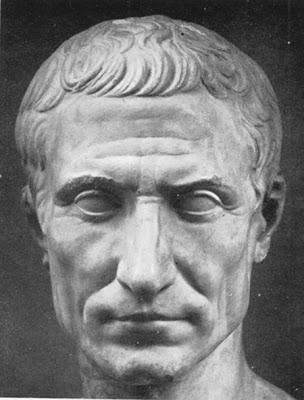
Julius_CaesarSummary: an extraordinarily gripping account of one of history’s most dramatic lives

I started reading this book because I felt I should: I realised I didn’t have a fully formed opinion of Julius Caesar, other than Shakespeare’s negative portrayal of him. I felt that this was something of a character flaw for an erudite chap of the 21st Century.

So I started reading and was quickly hooked. Certainly, as Goldsworthy points out, Caesar had a more dramatic life than almost any other human being who ever lived, from his conquest of Gaul, to his crossing of the Rubicon, to the delivery of Cleopatra to his bedchamber in a laundry basket, to his assassination in the Senate. But there was more than that: I was surprised by just how much I came to like Caesar.

One anecdote early on I found peculiarly endearing: At the height of the Catiline conspiracy crisis Cicero addressed the Senate demanding the death penalty for the conspirators. Caesar followed this by arguing for their banishment instead. Cato, a bitter opponent of Caesar, took this as indicating that Caesar was secretly in league with the conspirators and stood to denounce him in colourful terms. While this was going on a slave arrived in the Senate to deliver a message to Caesar. He read it quietly and then tucked it into his toga. Cato seeing this declared that there was proof of his collusion: see Caesar has just received a communication from the conspirators. Caesar calmly took the letter from his toga and handed it to Cato to read, whereupon Cato discovered that the suspicious letter was in fact a very passionate love letter from Caesar’s mistress, Servilia, Cato’s own sister. Enraged Cato threw the letter back at him.

I like to imagine Caesar having a chuckle at being the architect of such devilment.

Caesar was certainly, as well as being a military genius and a fine writer, a ruthless and self-interested man. But, by Goldsworthy’s account he was a considerably less gratuitously violent than most of his contemporaries, tending to use terrorism for clear political purposes rather than for its own sake or the sadistic enjoyment of it. While he made a vast fortune from the trafficking into slavery of thousands of Gallic prisoners of war, his conduct regarding the treatment of prisoners during the subsequent civil war was admirably humane by the standards of his contemporaries and indeed in comparison to many subsequent military leaders down to the present day. It is chilling to think though that his humaneness to the pirates who once held him for ransom, and who he befriended during his captivity, merely meant that he ordered their throats to be cut before their crucifixion.

The book is a exquisitely written account of his career, so gripping that it made me on several occasions miss my tube stop as I was reading it on the underground.

Masterful.

The Blood Telegram: Nixon, Kissinger and a Forgotten Genocide by Gary Bass

Summary: a fine and gripping account of the Bangladeshi struggle for independence, and the US’s chronic tendency to support genocidists

Yahya Khan

The Blood Telegram takes its title from a dissenting diplomatic communication from the staff of the US Dacca mission, protesting the conduct of US policy in relation to what was then East Pakistan. The US was at the time uncritically supporting the Pakistani dictator Yahya Khan in spite of his very bloody crackdown on the people of East Bengal who had the temerity to defeat him in a democratic election. The slaughter Khan unleashed in East Pakistan was carried out substantially with US supplied weapons and with a disproportionate focus on the Hindu minority of the region, leading the US dissenters in the Dacca consulate, amongst others, to describe it as a genocide.

Indira Gandhi, the Indian Prime Minister

From this important incident in US diplomatic history the book opens out into a wider consideration of the Bangladeshi independence struggle and its geopolitical context. The bloodshed in East Pakistan prompted a massive outflow of refugees into India and led to the beginning of a guerrilla war between Bengali nationalists, supported by India, and the West Pakistani army, supported by the US. Nixon and Kissinger justified their uncritical support for West Pakistan because that country was providing a highly secret diplomatic channel between the US and China that promised to recast the entire Cold War. But it is clear from the transcripts of their White House conversations that they also held a visceral and irrational hatred of India and Indians which shaped their policy.

map_bangladesh

There is a strong echo of Shawcross’ Sideshow (Nixon, Kissinger and the Destruction of Cambodia) in this book with its close consideration, from transcripts of White House conversations, of the role of these two’s formulation of foreign policy and bolstering the Pakistani dictatorship against the democratic will of the Pakistani people. However unlike Shawcross Bass augmented this enquiry with a careful consideration of India’s political, military and humanitarian response to the crisis and the politics of Bengali nationalism including and first hand and secondary accounts (many from Sydney Schanberg of The Killing Fields fame) of the actions of the Bengali guerrillas.

The result is a consistently gripping account of a war that is substantially forgotten in the West but which still casts a long shadow of the politics and development of South Asia.

The Republic, by Charles Townshend

Image

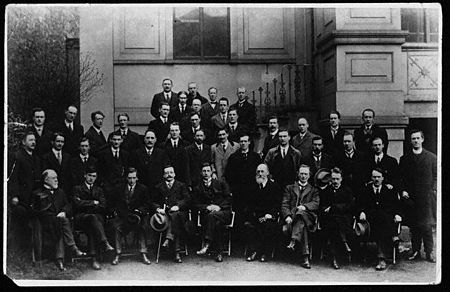
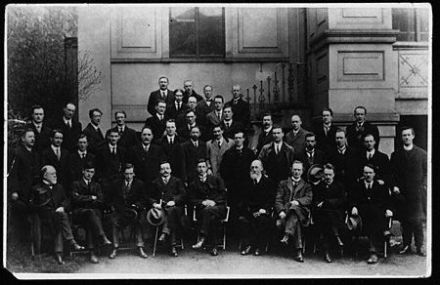
Members of the first Dail Eireann

The Republic, something of a sequel to Townshend’s earlier book on the 1916 rebellion, is a fine history of the Irish independence struggle from 1917 to 1923. It was a novel take on the period, for me, because of its close consideration of the political as well as the military aspects of the struggle.

By Townshend’s account the political aspects of the struggle were decisive in ensuring its success. By this account the refusal of Sinn Fein to take up seats in Westminster and instead establish an Irish parliament in Dublin was no mere empty gesture. Rather it was a political gambit to obtain Irish self-rule after efforts towards this end over the previous 75 years had been sabotaged by British and Unionist interests.

The efforts of Collins in particular, Cosgrave and Stack to establish the “shadow state’s” finances, local government and courts gave even more concrete expression to the idea of a republic espoused by the first Dail, particularly in those areas where Irish military activity had destroyed British institutions and so carved out considerable space for nascent Irish political institutions to function.

Mulcahy, in spite of his brutal decisions during the post-Independence Civil War, which included his support for the reprisal murder of prisoners of war, many of them former comrades from the struggle against the British, comes out of the account relatively positively as a man committed to civil authority and the establishment of democratic control of the army. Indeed, in the light of these principles those brutal decisions become much more understandable, though still repellant: at a certain level Mulcahy must have felt he was dealing with traitors to those democratic principles.

The book reminds the reader of how history repeats itself, first as tragedy, second as farce. The Provisional IRA and post 1969 Sinn Fein aped many of the initiatives of the first Dail revolutionaries but with none of the substance: their political wing were “absentionist”, refusing like the first Dail members, to take their seats in Westminster if elected, without having the popular support or intellectual capacity to establish a “Shadow State” to replace the institutions which made British rule a reality. Most farcical they continued to claim legitimacy from the second Dail, all subsequent elections being “illegitimate” because of partition. In latter years, Adams and McGuinness made regular pilgrimages to the home of Tom Maguire, the last survivor of the 2nd Dail Executive, and hence in their eyes the “legitimate” government, to receive his imprimatur on political decisions and military initiatives. In a very real sense the Provisionals claimed divine right to wage war while the first Dail strove for democratic rights.

I have a few quibbles with the book: Townshend persists with the hackneyed view that Collins had the option to run the ambush at Beal na mBlath rather than “fight into it”. Hence he concludes, unfairly I think, that Collins brought his own death on himself. (For more on this, if you’re interested, see my earlier blog, “Stop and we’ll fight them”) Elsewhere, perhaps more justifiably, he refuses to come to conclusions on key controversies of the period such as the circumstances of the final massacre at Kilmichael, or how many innocents were caught up in the killings of intelligence officers on Bloody Sunday morning. In both these instances he notes the controversies but does not come to a particular conclusion. Paradoxically though, while he is certainly familiar with it, he does not explicitly consider the material from the Bureau of Military History on the Intelligence war that underpinned Coogan’s, Dwyer’s and Foy’s assessments Bloody Sunday.

Nevertheless the book is a fine account of the period combining narrative and thematic discussions to provide a compelling account of the period.

Follicly challenged Paddy as knight errant: Plugged by Eoin Colfer

This book marks Eoin Colfer’s move from children’s to adult fiction with the introduction of another serial character: Daniel McEvoy – ex Irish army sergeant, now working as a doorman in a sleasy New Jersey nightclub, worrying about losing his hair and trying to stay out of trouble.

McEvoy is an attractive character and his reflections on life and death, as he tries to extricate himself from increasingly complex and life-treatening situations, are very entertaining and often insightful. However in spite of the violence the book is more of a comedy than a thriller: except for a few scenes there is little sense of menace, and the wise-cracking, though generally entertaining, on a number of occasions simply does not ring true, disrupting any tension that had begun to accumulate. Hugh Laurie managed the combining of comedy and thriller better in his novel “The Gun Seller” in no small part by cutting the wise-cracks from the action scenes. (Paradoxically real life can produce unbelievable dialogue: George McDonald Fraser notes in his memoir of the war in Burma, “Quartered Safe Out Here”, that he once heard a comrade shout, after having been shot, “They got me the dirty rats!”, something, he says, that despite being true was so unbelieveable he would never have used it in a work of fiction.)

These points aside, the plot is compelling and satisfyingly twisty, drawing upon the roots of modern crime fiction: Dan carries with him an echo of Chandler’s Marlowe as a fundamentally honourable man, a contemporary knight errant, in a corrupt metropolis. The jokes are generally very good indeed. And many of the characters, particularly, I thought, Zeb and Simon, well drawn. It also highlights the courage and experiences of UN peace-keeping forces (Dan is a veteran of the operation in Lebanon), something rarely touched upon in popular culture, and something that deserves greater attention.

And the book kept me up at night so I could finish it and find out how the various strands resolve: one should never quibble too much about a book that can do that.

Unpeeling the layers of a cover up: Who murdered Chaucer? by Terry Jones

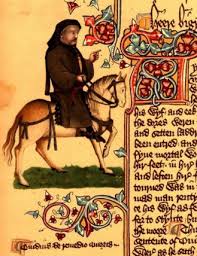
Chaucer1

The authors admit at the outset that they are not even sure if Chaucer was murdered. But they use the question to probe the political and cultural milieu of the late 14th century. In the process they convincingly destroy the myth of Henry Bollingbroke’s popular and bloodless coup against Richard II and instead show it up for the illegal, sanguinary and repressive affair that it was. In this context the authors show that it is at least plausible that Chaucer, the court poet and political follower of Richard, did not die peacefully, particularly given the emnity that he earned from his lambasting IN ENGLISH of the corruption in the Church in Canterbury Tales. They also construct a compelling circumstantial case against the likely culprit.

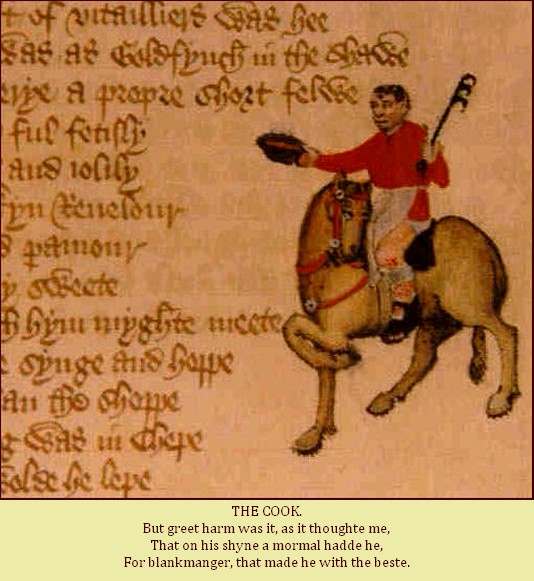
Chaucer-04-CookAlong the way the authors provide a useful introduction to the Canterbury Tales themselves and the importance of Chaucer as both a poet and a proponent of the English language.

One slightly irritating feature of the book is its peppering with Jones’ jokes. No doubt someone thought that this would be expected by readers. However this is ill judged. The book can stand on its own as a piece of historical and literary research and it doesn’t need the jokes to carry the reader forward: The argument does this on its own… And the jokes are not very good.

This quibble aside it is a fine book and a worthy companion piece to Terry Jones’ Chaucer’s Knight.

20 years on: Innocent by Scott Turow

After 20 years its good to catch up again with some of the key characters of Presumed Innocent who have, since that book’s publication, been hovering at the edges of Turow’s novels – almost all based in the fictional metropolis of Kindle County – a stand-in, one presumes, for contemporary Chicago.

Rusty Sabich, the protagonist of Presumed Innocent, is now a senior judge. Tommy Molto, his former prosecutor, is in Rusty’s old job, in charge of the County’s Prosecuting Attorney’s office. The plot of this book revolves around the mysterious death of Rusty’s wife, Barbara, as Tommy is reluctantly drawn into investigating him again.

While the plot and mystery are compelling the true joy of the book arises from the exploration of the messy lives and loves of the characters. Turow uses the device of first person, present tense narrative for three of his principal protagonists. Hence we come to know them intimitately while they remain in crucial ways mysteries to each other and to Tommy. There is an echo in this book of vintage Graham Greene in the compassion and understanding with which Turow treats the characters and their mistakes. However, unlike much of Greene’s work, in this book it is the Catholic character, Tommy, who’s moral compass is steadiest in the midst of all, his prosecutorial zeal mellowed with love and age to a more humane commitment to justice and rule of law.

This book may lack the twists and surprises of Presumed Innocent, but it makes up for it in many other ways, not least the beauty of its writing, and is pretty much an unalloyed joy from start to finish.

Quartered Safe Out Here by George MacDonald Fraser

Summary: gripping private’s eye view of the war against the Japanese in Burma, by the man behind Flashman

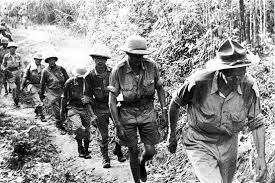
Towards the end of his life George McDonald Fraser wrote this memoir of his experiences as a very young man fighting in the last battles of the Burma campaign. He acknowledges the unreliabilityBurma of his memory – the result not of age but of being a young private (later a lance corporal) in the chaos of war. His memory of contacts with the enemy in battle is very clear, he writes, but he needed to refer to regimental histories in order to make sense of these memories in the broader narrative of the campaign – something to which he would never have been privy at the time.

The result is a remarkable book – funny, exciting and moving by turns as he recounts his life in Nine Section, a Scot in the midst of Cumbrians. He remained to the end of his life, he notes, a man of his times, a product of imperial Britain, unforgiving of the Japanese (the repeated use of the term “Jap” drives home this point) and unapologetic of these facts. His honesty about this and about how the war was fought is an important aspect of the book, fundamental to presenting a clear sighted but affectionate portrait of the sort of men who served. Paradoxically this also leads to points where he rails against aspects of the modern world – European Union, and a perceived “softness” on criminals for example – perhaps honest about what he felt but, unlike the rest of the book, little to do with considered experience.

These quibbles aside this is an exceptional book, beautifully written and a fine tribute to the men Fraser served with and the generation who defeated European fascism and Japanese militarism.