The Red Moth, by Sam Eastland

Summary: So, apart from the genocide, tyranny, and the purges, Stalin really wasn’t such a bad old stick

As the German Army is approaching the gates of Leningrad, a light aircraft is brought down by Russian troops. The couriers on board are carrying a painting of a red moth.

When news of this peculiar cargo reaches Stalin, his suspicion is aroused. So he summons his best investigator, Inspector Pekkala, to enquire into the meaning.

Inspector Pekkala is something of a literary cousin of Philip Kerr’s inspired creation Bernie Gunther, another honest detective in the midst of a monstrous system. However unlike Gunther, who is believably worn down over the years by violence and compromise, Pekkala seems almost superhumanly incorruptible: undiminished and undaunted, even in the face of Stalin’s rage.

The interplay between Pekkala and Stalin is very entertaining, but it did bother the history student in me. In these books Stalin comes across more as a stern police captain rather than the genocidist whose paranoid purges of his own military and bureaucracy brought his country to the brink of ruin. Yet both Pekkala, and his side kick Kirov, manage their intimate service to this psychotic in a way that keeps their hands clean, the consciences clear, and their integrity as human beings undimmed. This aspect of the story does demand that whatever structure the reader is suspending their disbelief from has to be stretched a bit further to cross this historical chasm.

This quibble aside, The Red Moth is a hugely entertaining excursion to the battlefields of the Eastern Front, and Eastland’s familiarity with the milieu of Stalinist Russia does paint an engaging portrait of life in those bloody times.

The First World War, by Hew Strachan

Summary: Forget about those working class oiks in the trenches

This is a history of the First World War from the perspective of the High Commands. There is little consideration of the experiences of the ordinary soldiers, or of the civilian populations, though the appalling depredations that they experienced in many places are noted.

Instead Strachan endeavours to show the war for the world struggle across multiple fronts that it was, rather than confine his consideration to the trenches of the Western Front. As far as these are concerned, he notes, the “horror of the trenches” was much less horrible than the horror of mobile warfare and open battle when the majority of the casualties occurred.

Amongst the themes that the book explores is the idea that this was a purposeful war in which the liberalism of the Entente – Britain, France, Russia, and latterly the USA – confronted the conservative militarism of the Central Powers – Germany, Austria-Hungary, and the Ottoman Empire. From this emerged the geo-politics of the Twentieth and now Twenty-First centuries.

He also argues that the legend of “lions led by donkeys” regarding the armies, particularly of the British, is unfair. Instead he argues that the generals when confronted with the new challenges of industrialised warfare learned to develop new and effective tactics and operational approaches.

And yet – when all is said and done even with Strachan’s cogent survey of the strategy and conduct of the war lords – the First World War continues to leave an impression of a war blundered into by a group of imperial leaders with little concern for the their people. Strachan notes that this perspective grew in popularity in the years after the war. But it was certainly present in some form during the war when the combatant poet Wilfred Owen noted how these “old men” were, content, individually and collectively, to watch “half the seed of Europe” slaughtered “one by one”.

Strachan’s erudition means that this book is not one that can be set aside lightly. But it’s sympathy for the high commanders and lack of attention to the plights of the ordinary soldiers and civilians does leave me with a niggling feeling that perhaps, as Dorothy Parker once suggested of another book, it should be flung aside with great force.

The Wonga Coup, by Adam Roberts

img_1101Summary: A book about an unpleasant bunch of mercenaries, and the even more obnoxious Mark Thatcher coming a-cropper at the insolent hands of Johnny Foreigner

In March 2004 a group of mercenaries led by a former British officer, Simon Mann, attempted to undertake a coup in Equatorial Guinea, one of the nastiest dictatorships in Africa. Of course the motivation of Mann and his cronies was not in the least humanitarian, but rather a hope of getting their greedy hands on the country’s considerable oil wealth.

They had form as “soldiers of fortune”. Mann and co were behind Executive Outcomes, a mercenary operation that stiffened the Angolan army’s campaign against the UNITA rebels during that country’s civil war. Those escapades helped Mann become a millionaire.

However while Mann may have had some considerable tactical skills that could contribute to the winning of battles, his talents as an organiser of coups were much less impressive. The plan was bedevilled from the outset by difficulties with logistics and supply, not least of weapons. In the end the amateurishness of their efforts, particularly in the organisers’ inability to keep their plans secret, meant that the coup was easily rolled up by Zimbabwean, South African and Equatorial Guinean intelligence services before a shot was fired. Many of the plotters spent years in dreadful prisons in Zimbabwe and Equatorial Guinea.

In addition to a forensic detailing of the twists and turns of the plot The Wonga Coup has a number of interesting revelations. For a start Mann’s plot wasn’t the first to threaten the Equatorial Guinea dictatorship. The novelist Fredrick Forsyth, it seems, had tried to organise the same thing in the 1970s to install as president his friend, Odumegwu Emeka Ojukwu, the former head of Nigeria’s Katanga secessionists. He failed, but the experience provided him with the detailed research for a novel, The Dogs of War.

The Wonga Coup also details the involvement in the coup of Mark Thatcher, repellant son of the vile former British Prime Minister. Thatcher comes across as just as unpleasant as you might imagine and the account of his downfall at the hands of the South African justice system and its anti-mercenary laws is probably the most deeply satisfying part of the book.

Overall The Wonga Coup is a carefully researched and elegantly written account of a bunch of wealthy, grasping thieves’ efforts to enrich themselves further, and brought down by the extent of their own overweening arrogance that rendered them capable of overlooking even their own incompetence.

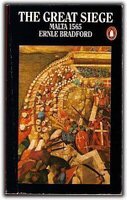
The Great Siege: Malta 1565, by Ernle Bradford

img_1080In 1564 the Ottoman Sultan, Suleiman the Magnificent, decided to try to put paid, once and for all, to the religious-fanaticism tinged piracy on Turkish shipping of the Knights of St John. To do this he aimed to capture their base on the island of Malta. By early summer 1565 he had put his plan in motion and managed to land a force of over 30,000 crack troops on the island to confront the ten thousand or so knights and men-at-arms under the command of the Order.

So began the first great siege of Malta, and it was an extraordinarily vicious and bloody affair.

Ernle Bradford (1922-86), the author, was a participant in the second great siege of Malta, during the Second World War, as a navigator on a Royal Navy destroyer. So he brings to this account of the battle a strong sense of what it means to wage war on this island.

Bradford is a generous and fair-minded chronicler of the battle, recognising the extraordinary courage of both Christian and Ottoman forces, and the extraordinary barbarism with which they fought each other. For example frequently the Ottomans would execute their prisoners by means of bastinado. Or, following the Turkish capture of one of the Knights’ forts, St Elmo, La Valletta, the Grand Master of the Knights, ordered the Ottoman positions to be bombarded with the heads of murdered Turkish prisoners of war. Such courage and barbarism had the same roots: a belief in the evil of their opponents and a conviction that death in the Holy War in which they fought was the noblest thing, and that it would lead to immediate transportation to paradise.

The outcome of the battle shaped decisively the course of European and Ottoman history. But more than that, the conduct of the battle remains vitally relevant. It gives an insight into the frightening violence that can emerge when human beings believe themselves in possession of so absolute a truth that it not only allows them, but requires them, to be the judge of others.

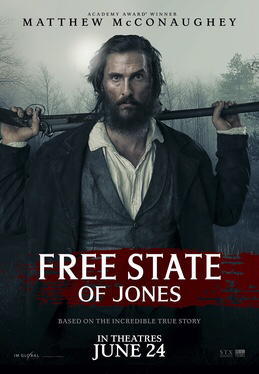
Free State of Jones: film review

Free State of Jones, got rather mixed reviews when it was released. Having finally watched it I cannot really understand why that should be. Perhaps, paradoxically, because it is a serious movie which tells an important story that eschews many of the normal Hollywood cliches?

The movie focuses on a little known aspect of the American Civil War in which a guerrilla army of former slaves and deserters, drove the Confederacy out of a portion of Mississippi. Matthew McConaughey plays the guerrilla leader, Newton Knight, a Confederate deserter disgusted by the pointless brutality of the civil war who decides he is no longer going to fight for a system that he does not believe in. What begins initially as a flight from the authorities in which he finds refuge with a small group of runaway slaves slowly grows into a rebellion against the brutal and corrupt Confederacy as Knight begins to transform his small group of fugitives into an increasingly potent army.

The climax of their military campaign, as depicted in the film, was the capture of the town of Ellisville, after which they haul down the flag of the racist Confederacy that is flying over the Jones County courthouse, and raise the Stars and Stripes instead. That’s the bit that made me cry. I found it a particularly poignant moment given the intent of so many of Donald Trump’s acolytes to figuratively and literally replace the US flag with the Stars and Bars of the Confederacy instead.

One would normally expect the movie to end there on that triumphant note. But it does not. Instead it follows the characters through the post Civil War betrayals of their dreams of justice, and the resurgence, through Ku Klux Klan terrorism and federal government failures, of the systems of segregation which replaced the systems of slavery.

It might be the most honest movie yet about the Civil War and its aftermath. In short it is a sombre and downbeat movie about the betrayal of brave patriots who deserved much better from those they fought for.

But for all that the movie is not without hope: the love and friendship between the central characters played with great subtlety and conviction by McConaughey, the always sublime Gugu Mbatha-Raw, Mahershala Ali and Keri Russell, is something, the film asserts, that the world will finally recognise as shaming the the corrupt and the racist.

It is a fine movie that deserves to be recognised as an important one and seen by many more people. Whether that happens or not it will remain a rich credit to everyone involved in its making.

The Other Side of Silence, by Philip Kerr

It’s 1956 and Bernie Gunther, social democratic Berlin detective, and former whipping boy of Heydrich and Goebels, is living incognito on the French Rivera, working as a hotel consierge with only a regular bridge game by way of diversion. However, as usual, trouble, in the form of a former Gestapo acquaintance intent on blackmailing the English novelist, Somerset Maugham, finds Bernie.

While the main action in this novel relates to the Cold War, significant parts of what happens find their origin much deeper, in Nazi era Germany, and in particular the 1945 Battle of Königsberg that has featured in other novels of the series, in which Bernie was captured by the Soviets. For Bernie “the past is not dead, it is not even past,” as William Faulkner put it elsewhere.

The same can also be said for the character of Somerset Maugham in this novel, whose clandestine life as a British agent and as a homosexual comes back to haunt him.

The Bernie Gunther series is a particularly rich and wry meditation on history. This instalment is no exception, and as always Bernie remains an engaging guide though Europe’s shameful past. True he has become morally diminished by years of war and bloodshed, but he still struggles to hold on to a sense of humour and some modicum of basic human decency in the midst of it all. And that, sometimes, may be the best any of us can hope for.

The violence of slavery: how businesses can respond to forced and child labour in their supply chains

Remarks to conflict minerals supply chain compliance and transparency conference, Berlin, 30 Nov 2016

Investigations into conflict minerals, such as diamonds and oil, over the past twenty years have shown how international markets and northern hemisphere business executives have wittingly and unwittingly contributed to the financing of war affecting poor people in the global South.

There has been some notable progress of course. But recent investigations, such as into cobalt mining in central Africa, shows that much still needs to be done.

Conflict, particularly if it affects places which supply scarce commodities, poses a considerable challenge for businesses wishing to operate ethically. Many of the most basic protections that we take for granted are absent and rule of law, if it ever existed, can become a distant memory. Over 2,000 years ago Cicero noted that, “In times of war, the laws are silent,” because of the damage that war does to the institutions of state, and because war breaks the bonds of human restraint, as Shakespeare recognised, letting slip the dogs.

Consequently conflict creates the conditions in which exploitation and enslavement can be perpetrated to extract minerals for international markets that finance the conflict that in turn perpetuates the conditions in which exploitation and enslavement can continue. It is a vicious circle that I came to loathe during the long and bloody war in Angola, where I worked for five years, trying to ensure basic provision of water and sanitation in the midst of the devastation created by the oil and diamond financed war machines of the antagonists.

Slavery has long been part of war. Caesar enriched himself by the trafficking of millions of prisoners captured in his conquest of Gaul. Islamic State and Boko Haram, drawing on the jurisprudence of Saudi Arabia, seem to have a similar attitude towards those they conquer and subjugate. But the risks of trafficking and enslavement do not end at the edges of the theatres of war. Those who successfully flee the killing fields can find themselves subject to renewed risks if the seeking of refuge leaves them impoverished and without permission to seek decent work legitimately.

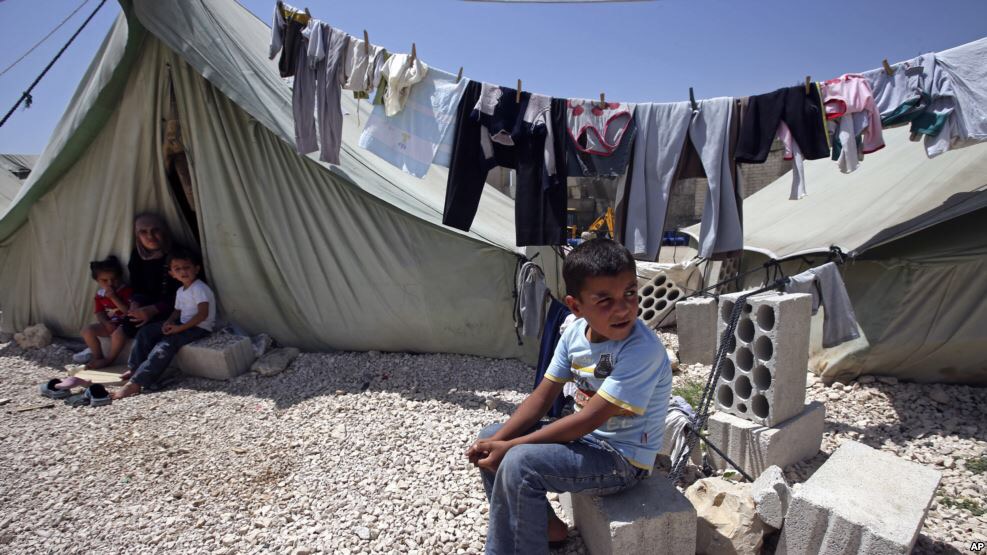
I have spoken to humanitarian workers who have found in the refugee camps of the Middle East increased trafficking of children for forced marriage and other forms of sexual exploitation, and of trafficking for forced child labour in agriculture and other forms of production. We may feel shocked when we understand how parents are involved in handing their children over for exploitation, but for many the trafficking of their children into slavery now may seem like a lesser evil than allowing them to starve. Those refugees who have been fortunate enough to make it into Europe may find their troubles are not ended if they also do not have permission to seek work legitimately. They also may find themselves at increased risk of exploitation and enslavement if they seek work in the informal or grey economy.

Put another way, Europe’s political response to the refugee crisis in the Mediterranean has been a direct contributor not only to the carnage at sea, but to increased risks of trafficking on land. For businesses this means that supply chains that had been hitherto thought safe from human rights violations are now considerably less so.

Considering all of this I think it is perhaps more useful at this point in time to take a much broader perspective of the risks that conflict poses to supply chains more generally, rather than those associated only with scarce minerals or other commodities. Because one of the commodities that war and conflict produce in such abundance is forced labour, and that can get into all sorts of places. And even where conflicts are less overt or where societies are ostensibly at peace, human trafficking cannot occur without violence.

For example the enslavement of Dalits and Adavasi across south Asia is one manifestation of the violence that emerges from the discrimination that prevails against them across that sub-continent due to the failure to establish effective rule of law that protects the rights of all citizens equally. A consequence of that are endemic levels of slavery in agriculture, quarrying, including mica, brick kilns, and many other manufacturing sectors including garments.

Consider also, for a moment, North Korea. North Korean exports in 2013 were estimated as being in the region of USD 7 billion. In 2015 the UN special rapporteur on human rights in North Korea estimated that the trafficking by the state of its own citizens for forced labour in other countries, including the building sites of Qatar and farms and factories in Poland and Malta, was worth in excess of USD 2 billion. In other words the repressive apparatus of the North Korean dictatorship and the threat to international peace that its nuclear weapons programme poses is sustained insignificant part by international complicity in the trafficking of North Korean citizens.

Some of this may seem daunting, and business leaders may feel powerless in the face of the social and political systems that underpin contemporary forms of slavery and child labour. It one be foolish for anyone to expect any business to be able to solve all such problems, even only in their own supply chains. The United Nations Guiding Principles on Business and Human Rights recognise this, stating that it is the responsibility of businesses to respect the human rights of workers, and it is the responsibility of governments to protect those rights. And within this framework I believe that businesses can do more.

The first thing that businesses can and should do is to commit to use whatever power is at their disposal to end the problems that they can end. This will not be everything, but by ensuring transparency in supply chains businesses will not only be able to identify what are the risks of human rights abuses that they face in these supply chains, but understand why these risks exist. In Malaysia, for example, the forced labour of migrants is a particular problem in part because of the tied visa regulations that give employers considerable powers over workers. Ensuring that workers have all the necessary paperwork from day one of their employment to ensure they can leave that employment of their own volition if they so wish would reduce the risks of exploitation. Similarly businesses should refuse to work with labour providers who charge workers fees, often of such exorbitance that they effectively render the workers in bondage.

Second businesses must recognise that the challenges of human rights in supply chains are pre-competitive. No business should be seeking a competitive advantage based on lowering their labour costs to close to zero by effectively enslaving workers. I say no business should do this but of course many do. But likewise no business should be seeking commercial advantage based on simply ensuring that the workers in their supply chain are treated as human beings. That should be the common starting point for all. But in the absence of this there is considerable risk that those who see a commercial advantage in an ethical reputation may be tempted to cover up information about abuses in the supply chains rather than confront and rectify the abuses.

Third businesses should be prepared to recognise when a problem is beyond their power and speak publicly about that. The slavery that exists within the Thai and Irish fishing fleets is in part due to poor regulation and inspection of these sectors. Those are governmental responsibilities. Similarly the child labour that is so endemic in the West African agricultural sector is in part due to the fact that there are too few schools and often these schools are of a poor quality. Again this is a matter that governments should rectify.

Which brings me to my fourth point. Businesses must not be coy about their political voice. Politicians tend to pay more attention to business leaders than to those of non-governmental organisation such as myself. And I get the impression that business leaders are not shy about speaking on a range of what might be called traditional business- political matters, such as tax or trade policy.

But with the globalisation of the international political economy it is important to recognise that human rights and development policy can also have commercial and legal implications for businesses, The US Trade Enforcement and Facilitation Act empowers the US Customs Service to exclude from US markets goods tainted with forced or child labour. The UK’s Modern Slavery Act requires businesses to state what they are doing to eliminate slavery from their supply chains. As I said businesses should commit to doing what is in their power to end slavery in their supply chains, and sometimes the most important power that they should exercise is that of demanding appropriate action from governments.

In the final analysis slavery is a human institution. It can be changed by human action. The great strides that we have seen in against slavery in the course of human history have occurred when businesses have joined with governments, trades unions and civil society to reject this form of violence against vulnerable human beings. You know this yourselves. When we act together, we can overcome.

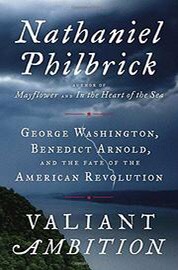
Valiant Ambition – George Washington, Benedict Arnold and the fate of the American Revolution, by Nathaniel Philbrick

Valiant Ambition is a sequel to Philbrick’s Bunker Hill. That prior book dealt with the origins of the American War of Independence in Boston, and covered key events including the Boston Massacre, the Tea Party, the initial clash of arms at Lexington and Concord, Bunker Hill, where the American’s didn’t shoot until they could see “the whites of their eyes”, and Washington assuming command on the death of General Warren and finally driving the British from the city.

This book takes up the story with Washington’s incompetent defence of New York, his retreat into New Jersey and crossing of the Delaware in a desperate attempt to maintain some cohesion to his army, before his extraordinarily courageous counter attack, re-crossing the Delaware in mid-winter.

img_1012

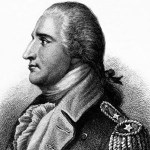
Benedict Arnold

In parallel with Washington misadventures Philbrick describes the altogether more effective military exploits of Benedict Arnold, whose extraordinary courage and aggressive instincts time and time again thwarted British stratagems to snuff out the rebellion.

Arnold’s name has become a byword for perfidy in the United States. But Philbrick reminds us just how vital his role was in securing American independence. Philbrick notes how it was American victory in the Saratoga campaign which convinced France to enter the war on the side of the United States, and that it was Arnold’s actions at those battles that, more than anyone else, secured the victory.

But Arnold was a particularly thin skinned soul, and his shoddy treatment by the Continental Congress stoked his alienation eventually leading him to explore the possibility not only of defecting to the British, but inflicting a devastating blow to American independence by surrendering the fortress at West Point.

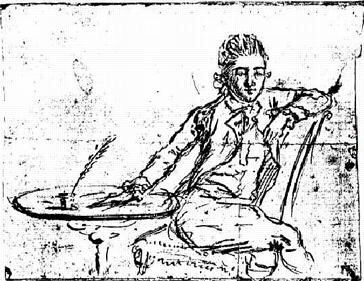
Self portrait of John Andre

Towards this end he established a line of communication with Major John Andre, a young British officer who had risen to the role of adjudant to Sir Henry Clinton, the British commander in New York. By Philbrick’s account Andre is not the honourable officer of legend, brought low also by Arnold’s treachery. Rather Philbrick notes that he was a hugely charming and erudite officer but a thoroughly ambitious one with a ruthless streak, previously demonstrated by is involvement in actions that verged on being war crimes.

Philbrick argues that it was Arnold’s treason that was decisive in uniting the nation behind the cause of independence: one could get only so far with the inspiration of the heroic Washington, he argues. What the young nation really needed was a villain and Arnold, previously the most effective battlefield general in the American army, filled that role to perfection.

It is an intriguing tale. Doubtless Philbrick is already working on a follow-up.

A New Europe Forum? Plotting a path to peace in a time of war

Also published in Left Foot Forward http://leftfootforward.org/2016/07/a-new-europe-forum-could-help-tackle-islamist-terrorism/ 

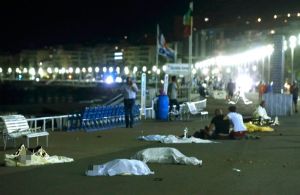
It is plain now that we are in the midst of a civil war in Europe. It has been going on for some time with Europeans butchering fellow Europeans in London, Paris, Brussels and most recently Nice.

Nice-Attack-1

Aftermath of the 14 July 2016 Nice attack

It is difficult for those of us who lack the murderous impulse of the deluded and inadequate perpetrators of such recent horrors to obtain any empathetic understanding of them. But perhaps one obvious but important truth is that those who aspire to mutilate their fellow human beings are alienated from the communities that they live among, and from the values of the societies that they seek to terrorise.

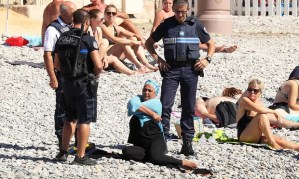
If this is indeed the case then the necessary security measures which the governments of Europe are scrambling to put in place will be inadequate in addressing the underlying causes of this alienation. Furthermore if clumsily managed, security measures can exacerbate the situation, accentuating the sense of alienation of some who come to the attention of the security services and driving them into the ranks of the fratricidists who live amongst us.

image

Not winning hearts and minds: French police force a burkini clad woman to strip

So what is needed, in addition to more police and intelligence operations to thwart aspiring killers, is a political response to the situation. It is difficult for an outsider to say specifically what measures would be necessary to counter the alienation of the communities from which the killers spring. But Europe could take a lesson from Irish history here.

In the dark days of the 1980s when the violence in the North of Ireland was taking on a permanent complexion in the absence of any credible political initiatives, the leader of the Social Democratic and Labour Party, John Hume, suggested the establishment of the New Ireland Forum as a means by which Irish leaders committed to non-violence could begin to plot a new political path towards a peaceful future. From these modest beginnings a new political process emerged which led, ultimately, to the Good Friday Agreement, and the first durable peace Ireland has seen in hundreds of years – at least until it has come under threat from the delusional aspirations of English nationalists to hack apart the European basis of this peace.

Following this lead the European Parliament should establish an inquiry into the causes of European jihadism and to propose political, economic and social responses to the alienation of the European communities from which this murderous jihadism springs. The inquiry should seek to take evidence not only from fellow politicians and academics, religious and community leaders, but also from ordinary people from all parts of Europe.

The evidence, as well as the analysis and conclusions from this inquiry should be published and European governments should be required to report on how they have responded to the recommendations.

Some measures to blunt the threat may be straightforward: people tend to be less likely to seek to destroy their society if they see plainly that the society is providing them with decent jobs and housing. Some measures may relate to addressing some of the chaos which certain European nations have helped create in the Middle East, such as establishing peace in Syria, Iraq, Palestine and Israel: Geography dictates that Europe simply cannot be at peace when the Middle East is in conflagration. Other initiatives may be more novel and unexpected.

The threat of violence that is posed is not yet an existential one for Europe. But it is a challenge to European values of pluralism, democracy, human rights and rule of law. If we cannot plot a political response to this violence that springs from and honours these values, then the arguments of the ideologues of bloodshed will be made a little stronger.

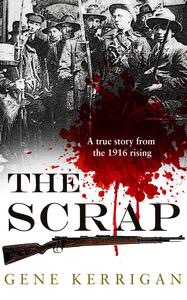
The Scrap, by Gene Kerrigan

Summary: a volunteers’-eye perspective on the 1916 battle


The Scrap is an account of the 1916 Rebellion. Like many other fine accounts, such as Charles Townshend’s, it draws heavily on the archives of the Irish Bureau of Military History, which years after the Irish War of Independence gathered the oral testimony of the survivors. But where other accounts seek to tell the story of the overall battle, Kerrigan’s focus is on a relatively small group of participants, principally the members of F Company of the Irish Volunteers.

This perspective reminded me of Cornelius Ryan’s frontline account of D-Day, The Longest Day. The result is a hugely rich work, which offers, at least to me, a whole array of new detail and insights on the fighting. For example I never knew that Oscar Traynor, a future commander of the Dublin Brigade of the IRA, had been professional goalkeeper for Belfast Celtic. Or that Arthur Shields, the actor who was a regular member of John Ford’s company perhaps most famously playing the Church of Ireland vicar in The Quiet Man, was a veteran of the 1916 Rising. Or that the rebels had made radio broadcasts from O’Connell “Sacksville” Street to announce the Irish Republic to the world.

John Wayne, John Ford, and Arthur Shields on the set of The Quiet Man

In the midst of this there is further important detail on aspects of the fighting including initial clashes in the north of the city around Fairview, at the City Hall, and a worm’s eye view of the desperate fighting around Henry Street in the final hours of the Rebellion. The book also throws interesting light on the actions and decisions of the leaders during the Rising, particular Pearse, Connolly and McDermott.

Kerrigan does not shy away from the horrors of the battle either. In one disturbing passage a medic examines the head of an injured child in the darkness, accidentally running his fingers across her mouth and feeling her teeth. When a light is brought he finds that he has actually run his hand across a gaping wound in the dying child’s head.

Gene Kerrigan is a legendary journalist and makes no attempt to dress this book up as academic history: there are no footnotes, for example. He is also an exceptionally gifted writer and this is a remarkable and arresting contribution to the literature on the1916 Rebellion, giving a strong sense not just of what happened, but what it was like to be there.