Sudan stories III: war by remote control

Summary: Elphaba on some disturbing new trends in the Sudanese conflict

We are constantly learning how this obsene tit-for-tat war goes between groups who care nothing for the folks in the middle. Towns fall to one side and then are re-taken, new weaponry allows for new tactics in an unclear strategy. 

So it is that drones this week hit Singa taking out the power supply and with it the water. I imagine a person many miles away with a computer programme and some coordinates playing an online game with lives. Of course on the ground there has been a rounding up of people suspected of guiding the missiles to their targets.

There is a deep weariness as people say: “Ah so we’re back to that again” and for how long?My family member, Ax, says they came in the middle of the night Wednesday and it took several attempts to hit their target.  The noise sent people scurrying outside. Some left Singa again, crossing the river as they were revisited by the trauma and fear of last year. He kept the family indoors more worried about the risk of falling debris than immediate re-occupation. But that grim possibility is never fully out of mind.

The scaling up of threats from RSF (they hit the airport that the government was boasting they would re-open soon, they claimed to have taken Fasher, they threatened cities beyond Sudan that support the Govt) and counter attacks from the government (they killed the leadership of communities in Kordofan as they met last week) seems to be in preparation for talks in the US – talks that although reported are hotly denied in Sudan. Even talking about them is risky.

Meanwhile Ax and I mused on the differences between towns in England and Sudan: a mini tale of two cities. Where in dying town-centres in UK the shops all seem to be nail-bars, second-hand clothes shops and takeaways, in Singa  every shop is a pharmacy, mini-clinic or something medical related.

We are hoping this latest wont lead to something more serious.  

Sudan Stories II: Not Exactly a Getaway Car

Summary: second in a series of guest blogs from “Elphaba” on the ongoing war in Sudan

There was some great excitement in Singa this week as it was announced that many vehicles had been found and owners could bring proof of ownership and reclaim theirs. Ours was a battered, old, much-loved and very unreliable crate. She appeared to have some kind of sentience: working on a whim for some and not others. Opening and closing the windows was an act of will power (no winders that worked). But she had given great service carrying sheep, produce, people and everything in between for several years before she was taken at gun point last summer

A family member, Ax, went to see if she was there. He said the site was depressing. It was full of lines of metal shells, most with no wheels, broken windows and some with little or no innards. 

At the back of his mind in going to look for the vehicle, apart from the fact that it is “something to do” when daily routines are still restricted, was a potential to get her back “in case we need to run”. But then you are an easier target in car than on foot. Behind this is the reality that although our family are for the most part fine, there is a thin ice feeling.

On the 4th October a friend in El Obeid rang and we were delighted to hear all was well. The next day he rang to say that they had been bombarded with drones. Omderman has also been hit. Nothing is resolved. And South Sudan is still unravelling.

One of the fall-outs of the war coupled with climate change (I think) has been a steep increase in Dengue fever. We also hear disputed reports of cholera outbreaks. Now at the tail-end of the rains is the malaria season 

In the end we could not locate our vehicle. We laughed that she was never exactly a get away car, except in the sense that we seemed to get away with paying very little road tax over the years. In this seemingly endless war, the citizens who have lost most of what we think of as essentials are expected to pay significant amounts to reclaim their cars at a time that inflation in the costs of everyday needs, and the continuing devaluation of currency, bites. 

From Siege to Safety: A Sudanese Family’s Journey

Summary: First in a series of guest blogs on the war in Sudan, by “Elphaba”

I have been writing family bulletins for myself and anyone ready to read them since the start of the war in Sudan in April 2023. Kind readers have followed events that have driven my family from their homes at gun point from areas around Umderman to Gedarif and Singa. Then again from Singa as they went under siege there.

Before the war, meeting of the Blue and White Niles at Khartoum: many of the buildings in this photo have now been burnt down

In an attempt to spread the burden of too many mouths to feed under one roof and much heart searching they scattered further. Some made the treacherous route to the north only later to face long electricity blackouts in April and May in the hottest time of the year. Others fled Singa on foot eastwards to Gedarif. From there one or two made it to Saudi Arabia where they have safety but at the cost of visa renewals and a deep sense of loss.

Now since the start of this year with relative peace in the Eastern areas of Sudan. For our family, at last, the kids are mostly back at school, the offices working and the economy working on some level. The banks work intermittently and cash is in very short supply. Some can use online banking with an app but for all everyday trading for basic goods, it is only cash. Adding to this, at some point in the year someone thought it a good idea to introduce a new currency and a new layer of potential confusion and corruption. In most of the East only the new currency works, while in the West only the old. In Khartoum and Wad Medani both get used.

With no immediate drama, I worry that we run the risk of joining the world in forgetting that the war and instability is far from over and accepting a new normal that is anything but. Now with the rains falling heavily there is very little seed to plant to benefit because infrastructure is decimated and only very few have any spare funds. And there is drama. For our friends in El Obeid and our once-home Dilling, siege, counter siege and fear have outlasted anything seen in the East and Darfur continues to be another story again. We last heard from close family friends there about a year ago.

As in Israel/Palestine there are huge profits and plans for still greater ones being made by those who would seize power and (ab)use weakness. In Port Sudan there are huge agricultural schemes under discussion not to mention rebuilding contracts and deals with the Gulf. It is mind-numbingly depressing in its logic of winner – eventually- takes all at whatever cost.

Meanwhile, for our family there is the on-going need to claw back dignity and rebuild with the resources we have.  The young men – nephews and sons – working for low wages as labourers, drivers and other sorts of fixers send back what they can. They are themselves stranded in nearby countries away from their families and they know that whatever they send it is never enough. We are aware we have more than many and less than others.

I challenge anyone to fault the determination. My elderly sisters-in-law (elderly = 10 years older than me and in their 70s) have returned to their suburb in Umderman. There is no power. They returned to homes totally stripped bare “not even a teaspoon”. The first job for Nxxx was to buy a front gate as that too had been taken. Bottled gas costs 5 times what it did a year ago and anyway the cooker is gone. The widespread gossip that her neighbour’s son – now gone – whom Nxxx had known since childhood orchestrated the theft of her property and many others. And yet after a few days Nxxx at least is back in her house. As Rxxx explained to me from Saudi Arabia, her homesickness palpable: “of course all the family have been amazing. We are lucky. So much luckier than many. But you ache for what is yours, where you are you and where you’re not thought of a ‘a displaced’”

The violence has gone from these neighbourhoods for now and the young men returning have great plans to fix the power. Knowing the place well, I have no idea how they are getting by. I know it will be a profoundly communal endeavour. My 24year old nephew, his own life plans long since on hold returned from Port Sudan to help his father. He says they live on ful and ta’amia because that is made at a local shop where they have fuel. I imagine them all together much of the day to support, chat about possibilities, find workarounds to issues, talk prices and a future. I hope this will help them recover for now from the trauma of recent months/years. 

The profound divide emerging in Sudan and the discrimination and racism that underlies the political stories is a worrying strategic trend that most Sudanese don’t have the luxury of considering. Maybe in that there are some universal trends.

The UK’s relationship with Israel: a study in sophistry

Summary: Is high office worth the price of a soul?

In the Guardian profile of David Lammy on Saturday 2 August 2025 I was struck by one sentence: “On Radio 4’s Today, he [Lammy] energetically rebutts the suggestion that he hasn’t blocked all arms exports to Israel.

This led me to check again what Lammy had said when announcing the suspension of some arms licences to Israel in September 2024. Then he said, “There are a number of export licences that we have assessed are not for military use in the current conflict and therefore do not require suspension. They include items that are not being used by the Israel Defence Forces in the current conflict, such as trainer aircraft or other naval equipment. They also include export licences for civilian use, covering a range of products such as food-testing chemicals, telecoms, and data equipment.

That passage begs many questions. For example, is it possible to train pilots to drop 2,000 pound bombs on defenceless women and children without the use of British supplied trainer aircraft? Or how would the Israeli policy of banning Gazans from fishing in the Mediterranean be impeded if it did not have British supplied naval equipment? Those who have paid any attention to advances in the use of information systems in intelligence analysis for military operations will also wonder what role British supplied telecoms and data equipment have played in the Israeli identification and assassination of journalists, health and aid workers across Gaza. 

Sophistry – the use of clever sounding arguments to deceive – is, of course, stock in trade of politicians. There is the stench of such sophistry in Lammy’s pronouncements on Israel, which remains a valued ally of the UK in spite of the extraordinary genocide that it has wrought on Gaza in plain view of the world.


In September 2024 Lammy asserted that, “There is no equivalence between Hamas terrorists… and Israel’s democratic Government”.  To which one can only conclude that Lammy, desperate for high office, has, in the words of Orwell, submitted to the Party’s final most essential command: that he reject the evidence of his own eyes and ears. 

On 2 August, the Guardian reported that Lammy “calls shooting civilians waiting for aid ‘grotesque’, ‘sick’; demands ‘accountability’ from the Israeli side. He says things are ‘desperate for people on the ground, desperate for the hostages in Gaza’, that the world is ‘desperate for a ceasefire, for the suffering to come to an end’”.

And yet, Lammy participates in a government that has continued the Tory’s policy of providing direct military support to Israel. As late as August 2025 the Jerusalem Post reported that the UK flies surveillance over Gaza to “locate hostages”. It should be remembered that that on encountering Israeli hostages, stripped to their underpants and begging for help in Hebrew, the Israeli Defence Forces shot them. So it seems unlikely that the Israeli government  is interested in hostages as anything other than an excuse for more violence. In this context the UK’s “search for hostages” is likely a mere pretext for more general intelligence sharing.

It is possible that Lammy and the rest of the British government may finally be becoming squeamish at the level of killing in Gaza. But that does not absolve them of past complicity. Netanyahu and the rest of those that they have allied with have not changed. As a lawyer Lammy “ought to have known” that his allies were just going to do exactly what they said they were going to do at the start of the butchery

Given the weakness of international institutions that the British and other Western Governments have contributed to through their complicity in Israel’s war crimes, Lammy and his colleagues in policy may yet avoid a criminal reckoning. But they will always have to answer to their consciences on whether the perks of high office were actually worth the price of their souls. 

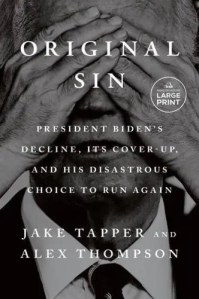
Original Sin: President Biden’s decline, its cover-up, and his disastrous choice to run again, by Jake Tapper and Alex Thompson

Summary: American Hastings Banda

On a human level, this book is a very sad one. Across it, informants repeatedly refer to how their encounters with Joe Biden in the later stages of his presidency reminded them of their own impaired elderly relatives. Indeed, the descriptions of Biden’s deterioration within this book reminded me more than once of my father’s decline.

Of course, devastating as that was, I can be confident that no matter how afflicted my father became, unlike Biden, he would never have added his support to a genocide. 

I counted four references to the violence in Palestine across this book, starting with a brief mention of the Hamas atrocity on 7 October 2023, and ending with another brief mention that Biden’s Gaza policy was the area of most substantial disagreement, in private, between Biden and his Vice President Kamala Harris. 

This lack of discussion of one of the great moral issues of our day is, perhaps, unsurprising. Tapper and Thompson’s interests, like those of most Americans, are wholly US-centric. For them American preoccupations are paramount. And so they focus on the threat to American democracy posed by Biden’s cogitative decline and the opportunities that this gave to a resurgent Trump. They are uninterested in consequences of the moral collapse in international affairs of Biden and the swathes of the US political establishment that were their sources for this book. That doesn’t directly affect Americans.

This is somewhat disingenuous. There are occasional references through the book to Biden’s loss of support amongst young people. This is attributed solely to Biden’s age. Tapper and Thompson do not consider the possibility that abject disgust at Biden’s support for a racist and genocidal government in Israel could have deprived Harris of the small margins she needed in key battleground states to keep the presidency out of Trump’s hands.

In many respects Original Sin is a fine work of investigative reporting, and it does give important insight into the nature of power in the United States: Biden’s presidency gave power to a small cadre of advisers around him known, behind their backs at least, as the Politbureau. It was in this group’s selfish interest to deny to the world the fact that Biden was no longer physically or mentally fit to be president. To have done otherwise would have been a surrender of the power that they craved.

But the authors’ disinterest in the most murderous of Biden’s policies is reflective of one of the two original sins of the United States: that it was built on genocide and that many in the highest echelons of government still seem to regard this as a legitimate policy option. As a republic it has never quite grasped that human rights are meant to be universal. 

Given this, it is difficult sometimes not to feel that in some grand Karmic way the United States deserves Trump: they reap now for themselves what they sowed so long for others.

Humanitarian response for slow learners: lessons urgently needed for Gaza

Summary: calls for humanitarian aid are being used by pusillanimous politicians to distract from their failures to directly address the causes of humanitarian crisis in Gaza, most specifically Israel’s genocidal assault.

For over five years in the late 1990s I worked, mostly for Oxfam GB, organizing assistance, including water supply and sanitation, for the civilian victims of the civil war in Angola. 

So, humanitarian response is a subject area I know a little about. As students of management and leadership will be aware, a problem with a bit of expertise is that you can presume that everyone understands the fundamentals as well as you do. This is called taken-for-grantedness in the literature. 

I have been taking-for-granted that David Lammy and Keir Starmer – human rights lawyers after all, as they like to tell us, and therefore smarter than everyone else, as they like to imply – would understand the fundamentals of humanitarianism. After all, they have been pontificating on it since the start of Israel’s murderous assault on Gaza in 2023. 

But maybe they don’t. Maybe it is possible that they are not the craven accomplices to war crimes that their ongoing military and diplomatic support of Israel suggests. Perhaps they are just pig ignorant of the vitally important stuff that successful humanitarian response requires. 

So, here are a couple of the most basic lessons of humanitarianism for their edification.

1. The solution to a humanitarian crisis caused by war is not aid. It is an end to war. At the early stages of Israel’s latest assault on Gaza, Starmer and others attempted to deflect from their monstrous acquiesce in Netanyahu’s war crimes by rejecting the calls for  an immediate ceasefire and instead calling for pauses in the violence to allow for the delivery of more aid

The technical term for this position in relation to humanitarian response is “Oxford Union debating horseshite”. It is part of an approach to politics that values a plausible sounding point to win an immediate argument over the concrete measures necessary to resolve the actual causes of the crisis that the argument is about. Food assistance, vital as it is, does not protect from the other forms of collective punishment, such as the cutting of power and water that Keir Starmer advocated Israel doing, let alone the mass burning alive of children that Israel has routinised in Gaza since the outset of its violence.

2. If a belligerent nation is using famine as a weapon of war, then they are not going to permit humanitarian assistance unless put under robust pressure to do so. Robust pressure, not expressions of sadness or concern: Boycotts. Divestments. Sanctions. Criminal accounting.

3. If an assaulting army deliberately massacres humanitarian workers delivering food aid to hungry people, they are probably using famine as a weapon of war. Humanitarian workers not party to that war crime will therefore be made a target.

4. If an assaulting army on encountering their own nationals, stripped to their underpants and begging for help in their own language, shoots them, then that army is not on a rescue mission. Imagine what fate awaits those who cannot speak the attackers language. But you don’t have to because it has been documented by those the Israelis would seek to make victims. Indeed, the Israelis themselves have even videoed their own war crimes to show the world, so proud are they of what they inflict.

5. If an assaulting army is enslaving the civilian population they are attacking, then they are certainly not interested in any aspect of the humanitarian well-being of those civilians. In March 2025 the Israeli newspaper Haaertz reported that, ‘In Gaza, Almost Every IDF [Israeli Defence Forces] Platoon Keeps a Human Shield, a Sub-army of Palestinian Slaves.

The British government used to like to depict itself as a world leader against slavery. But there has been a deafening silence from that government, and indeed much of the anti-slavery community, on this matter. 

6. If you have soldiers in place to machine gun aid recipients, then the purpose of an aid distribution is not humanitarian. It is war crimes. 

7. If you are materially supporting a political regime that has publicly stated its war aims are ethnic cleansing, then no amount of humanitarian assistance will mitigate that. You too are practicing genocide, even if you are also offering the doomed their meagre last meals. 

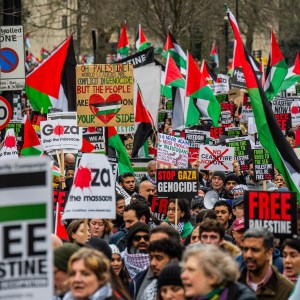
Maybe these ideas are new to Starmer, Lammy and the rest of their government. But they are not hard. Indeed, tens of thousands of ordinary British people demonstrate that they grasp these most fundamental points already as, month in, month out, they gather in protests across the country to indict their own government for its abject moral collapse.

Four Shots in the Night, by Henry Hemming; and Stakeknife’s Dirty War, by Richard O’Rawe

Summary: two books plumbing the depths of the intelligence war during the Troubles

The morally vile, but tactically brilliant, American Confederate general, Nathan Bedford Forrest had a philosophy when giving battle: Get there first with the most.

This philosophy seems to have been taken up with some degree of alacrity by a raft of English politicians and writers who want to capture the history books to rewrite the Irish peace process as a benevolent English achievement. 

Central amongst these has been Peter Taylor whose focus for some years has been on the role of British intelligence in the peace process, particularly the “Back Channel” between MI6 and the IRA. This, as far as he seems to be concerned, was the only strand of the peace process that mattered. Forget the Hume-Adams talks; forget Irish diplomacy and the Downing Street Declaration; forget George Mitchell; forget the European Union; forget Mo Mowlem. Instead, the peace process was something gifted to the quarrelsome Irish by perspicacious spooks, selflessly concerned with Paddy well-being. 

Hemmings’ book gives a nod to diplomacy with mention of the Anglo-Irish Agreement of 1985 – also portrayed as a British initiative. But, like Taylor he is also principally interested in intelligence operations, albeit with a broader perspective. At its core his book explores three parallel but occasionally overlapping British intelligence operations: In addition to MI6 and the Back Channel, Hemmings describes MI5’s efforts to boost Sinn Fein’s electoral fortunes with a view to weaning them away from violence, and the army’s efforts to disrupt the IRA’s military operations through the activities of, in particular, Freddie Scappaticci – Stakeknife. 

Scappaticci was the army’s most important agent in the IRA. A senior figure he was the head of the IRA’s internal security – the Nutting Squad. He was personally involved in the interrogation, torture and murder of dozens of suspected IRA informers. Many of these were, of course, also British agents, like Scappaticci himself. 

The term “British agent” can be a misleading one. It can lead one to think of James Bond, who was an intelligence officer NOT an agent. The agents are the vulnerable people who through blackmail and bribery are recruited by officers to turn traitor on former friends and neighbours. 

The pathetic plight of these desperate people is a central concern of Richard O’Rawe.  O’Rawe, a former IRA man himself, knew Scappaticci. But given the sociopathology that he documents, he records that he is thankful that he did not know him well. 

Scappaticci was an army intelligence operation. But O’Rawe shows, there was an essential unity between the IRA’s Nutting Squad and the “Tasking and Co-ordinating Group”, the senior officials from all British intelligence agencies who oversaw their diverse operations. So much so that it was they, ultimately, who decided who would live and who would die, and gave orders accordingly for favoured British agents like Scappaticci to kill other less valued ones. 

O’Rawe’s past IRA involvement gives him access to other IRA volunteers and his interviews with them provides a broader perspective on the Troubles to Hemmings whose book is more dominated by British sources. O’Rawe also has an altogether more morally clear-sighted view of that squalid war than Hemmings. He is not afraid to use the term “war crime” in his assessment of the savagery of both IRA and British actions. 

Aside from the desperately sad human stories that these books recount, and the important ethical questions relating to the conduct of insurgency and counter-insurgency that they raise, these books also offer valuable insights into some broader historical questions. 

First, the whispered accusation that Martin McGuinness was a tout is effectively discounted. Given the efforts that MI5 was putting in over decades to coaxing the republican movement onto a more constitutional path, compromising McGuinness like that would have risked wholly undermining their efforts. But while he may never have been a tout, the callousness which McGuinness showed towards human life, particularly in diverse killings of suspected informers, means that while he may be an important figure in Ireland’s history, he should never be thought of as a hero. 

Second, the idea that the IRA was beaten is disabused. Even though British intelligence had compromised major parts of the IRA, its rural organization in South Armagh, Tyrone and Fermanagh were still capable of sustaining the killing, even if there was never any hope of military victory. 

This leads us to the third point, that of the importance of the political processes that were running parallel to these intelligence ones. Without those, offering a constitutional framework that, if not giving the IRA all that they wanted, at least gave them some, there would have been nowhere for the Back Channel to go. The British might like to now remember the peace process as a British led affair, one of the great achievements of New Labour as that morally bankrupt party likes to chauvinistically put it. However, without the thread of Irish leadership showing the way, they would still be entangled in the labyrinth of killing typified by their Stakeknife operation.

Both O’Rawe and Hemmings describe with some admiration the efforts of Jon Boutcher’s Kenova enquiry to get to the bottom of the moral morass of the Troubles intelligence operations. Boutcher, who was involved in the police killing of Jean Charles de Menezes may have been expected to do the decent thing by the British Establishment and cover up embarrassing information. Instead, he recommended prosecutions in 28 cases involving both former IRA and senior British personnel. 

The Public Prosecution Service declined to undertake these prosecutions, which seems a travesty. But in that it is hardly surprising. The Stakeknife operation is but one among many war crimes that the British state was involved in: Aside from Ballymurphy and Bloody Sunday there was also extensive collusion with Loyalist death squads across the North. So, this makes it more understandable why past British governments have scrambled to introduce blanket amnesties for all Troubles era killings. It also gives insight into why the current British government of “human rights lawyer” Keir Starmer still strives to prevent a public inquiry into the killing of Sean Brown

Both Hemmings’ and O’Rawe’s books may require some revision – in the details but most probably not in the substance – in the light of Boutcher’s final Kenova report. But they are still fine work, grappling with difficult subjects. O’Rawe’s in particular, while more narrowly focussed than Hemmings, is an elegantly written work, marked by a burning sense of indignation at the scale of the depravity that he describes

Goodbye to All That, by Robert Graves;  The Great War, by Peter Hart; Catastrophe: Europe goes to war 1914, by Max Hastings;  and The Peacemakers, by Margaret Macmillan

Summary: Diverse, highly readable perspectives on the First World War

Like many of my generation, my introduction to the First World War was at school, studying the sublime poetry of Wilfred Owen. Owen’s writings along with others such as Siegfried Sassoon and Robert Graves, did much to promote the “lions led by donkeys” view of that war. 

This is a perspective on the war that Peter Hart takes considerable exception to. A key theme of his fine narrative history of that war, similar to Hew Strachan, is that the allied generals have been unfairly maligned, made scapegoats by civilian leaders who bore more responsibility for the carnage.

The generals of the Western Front were, he argues, by and large, diligent soldiers, trying to learn the best way to fight an industrial war. This is something that their prior experiences, helping their colonial empires steal other people’s countries and butchering anyone who objected, had not properly prepared them for. 

Better than Strachan, Hart illustrates well the impact of the generals’ decisions on the front line troops of all armies. He quotes extensively from the letters and diaries of the combatants to give a truer sense of their experiences, including of the vicious fighting. This makes it hard to sympathise with Hart’s  broader argument that the generals were doing their best. 

The industrialised trench warfare of the First World War was not quite unprecedented: the Union’s final campaign against Richmond under Grant previewed the sort of warfare that would come to define the Western Front. Grant had realised that an attritional campaign would bleed the South to such an extent that even if he lost every battle the Union would win the war. 

With no extant tactics to breach the fortified lines in a way that would have meaningful strategic impact on the course of the war, the opposing sides settled into a similar war of attrition. This led to regular battles that hoped to inflict such a butcher’s bill on the other side as to make it difficult for them to continue.

Other pressures, not least that of coalition warfare, also demanded action, irrespective of how inadvisable. That is how the British came to attack fortified German positions on the Somme in 1916 – to provide some “relief” to the French under German attack at Verdun. On the first day of the Battle of the Somme the British Army suffered 57,470 casualties, including 19,240 deaths. That still does not seem to me a reasonable price for generals learning on-the-job or offering moral support to an ally. 

By way of contrast, during the Second World War Matthew Ridgeway, an American Airborne general risked his entire career by refusing to lead his troops on what he believed would be a suicidal assault on Rome. This would have entailed dropping his lightly armed forces in the midst of two German heavy divisions.

I suspect most of the allied troops on the frontline of the First World War, such as Owen, Sassoon and Graves, would have happily swapped their “diligent” generals for a few with a fraction of Ridgeway’s moral courage. 

Graves was almost killed in a later stage of the Somme battle. It is striking that in Goodbye to All That, his engaging account of his wartime experiences, he never describes killing anyone, though he hints that he did. The closest he comes is describing a sniping opportunity to kill a bathing German. Graves writes that he could not bring himself to press the trigger on the naked man, so he assigned the task to a subordinate instead.

Graves clearly carried the war with him for decades after. The guilt and trauma of it infuses his account of the Greek Myths, for example.

Given the horror of the war, it is understandable that we all should look for who to blame. This is among the tasks that Max Hastings undertakes in his typically gripping account of the outbreak of the war. Hastings is at pains to point out that Germany more than any other nation was the one that could have put a stop to the descent into cataclysm. Hence in Hastings’ view this is the country that should bear most of the blame. Hart has a similar perspective, noting that Germany believed that as war was inevitable the sooner it began the better it suited them. 

In this Hastings and Hart offer somewhat different perspectives to Christopher Clark’s exceptional book on the same subject, The Sleepwalkers. This lays considerably more of the blame on Serbia, Britain and France’s ally. Margaret Macmillan, whose book, The War that Ended Peace, also explored the dangerous, dizzying array of alliances and egos that shepherded Europe to war. Both these accounts suggest there is plenty more blame to go around all combatant nations. 

With The Peacemakers Macmillan explores the end of the war, specifically the Paris Peace conference that led to the Versailles Settlement. This established much of the contemporary political shape of Europe. Alongside the “Great Power” politics of the Conference, Macmillen’s book is also the story of how the peoples of, in particular, central and eastern Europe shook off the rule of the Great Powers whose blundering had dragged them into catastrophic war. 

But the Versailles settlement also sowed the seeds of future war in Europe, by assigning all the guilt for the war to Germany. This ignored the role of, in particular, Serbia in starting things. It also ignored the fact that the Germany that came to Paris was a different country to the one at the start of the war. Not fundamentally different, of course: as German history since 1919 has shown it a country that has never quite lost its relish for atrocity. But by 1919 it had been through a democratic revolution that was economically crippled by the demand for reparations from the victorious powers. This created the political conditions for the Nazis to emerge. 

In granting to Britain the Palestine mandate the Versailles Settlement also paved the way for a new settler-colonial entity there, and for the Zionist genocide of the indigenous people that, with shameless US, German and British support, continues to this day. 

The First World War remains an example of, as William Faulkner once wrote, the past not even being past. Its dark legacy is a bloody one in the present for millions of defenceless human beings.

So, perhaps Wilfred Owen remains still the most vital voice on the First World War, understanding from that one war the pity of all war, and encouraging a level of empathy for the victims of war that no discussions of causality, strategy or blame ever can.

Leadership in the “grey-zone” 

Summary: Remarks to the conference “Leadership in Dialogue: Exploring the Spaces between Ideas, Communities, Worldviews”, Birmingham, 8 to 10 December 2024[1]

There are diverse perspectives on leadership. Mine is leadership as a responsibility to choose – particularly in choices that affects the lives of others, in organisations or in wider society.

That has been most the defining feature of my experience of leadership, and something you never really appreciate until you are in that role. Key aspects of leadership involve decisions on resource allocation. Such choices are always fraught because there are always winners and losers, upset and distress, and lingering resentments. 

Of course it can always be worse – I spend a good number of years leading humanitarian operations in, among other places, Angola during the civil war there. This led to some choices that were even more filled with anguish than the difficult but routine budget allocations that all leaders have to deal with. I write in my book, Ethical Leadership, about having to prioritize the lives of one group of people over another and how you have to learn to live with that after. That thought experiment with the runaway tram can get very real in some leadership roles. 

So given that these are leadership realities, ethical leadership is self-evidently important: by ethical leadership I mean the attempt to make the most life affirming choice possible, irrespective of the difficulty of the situation. A life affirming choice is one that optimizes the protection of the environment on one hand and the protection of human rights on the other.

Now, when we are making choices it is important for leaders to remember that those choices are made in, what I call in my book “a cruciform of agency”.

That is, there are aspects of the choice – whether that choice relates to a love affair, or work, or war – that are in the social world: those are the rules and resources associated with the choice:  the laws, polices, practice, finances or people who will be affected.

Then there are the personal aspects of the choice: the ones relating to the choice maker’s aspirations and experiences, and most fundamentally to their moral values.

The dialogue between these personal and social aspects of choice can be conceived of interacting orthogonally, hence the idea of a cruciform of agency emerges.

Now there is a 2002 paper by Craig and Greenbaum on a mining operation in South Africa. In that paper they recount how when they raised concerns with the mine management about issues such as health and safety, or labour terms and conditions, or the environmental damage that the operation caused, the managers they interviewed would express sympathy, but assert there was nothing they could do. The company they worked for caused the problems. Their responsibility was simply to get on with the job. They seemed to believe that they had no moral responsibility for the damage caused by the company despite the fact that it was they themselves who constituted the company. 

This denial of personal responsibility of policy makers and business executives for the consequences of their choices is a central constraint on obtaining progress on many of the world’s contemporary problems including slavery, something that affects an estimated 50 million people in the world today. 

I have rarely met anyone who has been in favour of slavery in principle. However, many in reality are in favour of slavery in practice. And if you doubt that, to take just one example, look at the hostile environments for migrants that many political leaders, from left to right in rich countries, take such pride in. This, despite the well documented fact that such hostile environments lead to the trafficking into forced labour and sexual exploitation of hundreds of thousands of vulnerable people. 

If the personal aspects of leadership, particularly the moral responsibility of the leader for the consequences of their choices is abandoned then ethical leadership becomes impossible, and indeed much worse may emerge. But this is not uncommon.

You all know the history: The Nazi’s used the idea of “just following orders” to try to evade personal moral responsibility for their atrocities.

Henry Kissinger infamously used the notion of “realpolitik” to justify his murderous foreign policy that devastated the lives of millions in Bangladesh, Cambodia and Vietnam.

Today, Joe Biden, Olaf Scholz, Keir Starmer and David Lammy use the formulation “Israel has the right to defend itself” to justify their craven complicity in war crimes and genocide.

While the words used in each of these examples are different, their purpose is the same. They are explicit attempts to disguise moral bankruptcy and evade basic leadership responsibilities for the catastrophic human consequences of their choices. For this they deserve utter condemnation in “history and eternity” as Abraham Lincoln once put it.

The evasion of personal responsibility in a choice is the anathema of ethical leadership, and it brings with it a loss of authority: what follower worth their salt is ever going to respect a moral coward.

And there is always something more moral that leaders can do, even in the most extreme of circumstances. At the very least they can protest.

The current British prime minister likes to boast that his is not a party of protest. Which of course is true. Because protest is leadership. Protest is a way in which a society can open dialogue with itself and change the ways it thinks about itself. 

Protest is sometimes the only way more formal dialogue with power can be obtained. Protest is how women’s rights and gay rights, minority rights and, indeed, all human rights have been advanced in the world. Protest matters nationally and internationally as the struggles to end apartheid in South Africa and bring some measure of justice to the north of Ireland have shown. 

It also matters internationally because the failure of the West to protest Israel’s atrocities in Gaza, Lebanon and now Syria, compared to our volubility on Ukraine exposes an ugly, frankly racist, double standard at the centre of Western policy. 

Much of the progress towards human dignity, including limiting contemporary forms of slavery, has been through advancing international rule of law. This avenue for progress has now been struck a grievous blow, because the profound undermining of the principle of the universality of human rights that Western policy towards Gaza has asserted. This has undermined in a fundamental way the ideal of an impartial system of international rule of law. 

Many European leaders are expressing concern at the threat that Donald Trump poses to international order. But the damage done to that system of rule of international law by Biden, Starmer and Scholz is already catastrophic. 

At the heart of ethical leadership is the ideal once set out by the Irish patriot and anti-slavery campaigner Roger Casement who said, “We all on earth have a commission and a right to defend the weak against the strong and to protest brutality in every shape and form.” 

That is a commission which we must all take up. Because, more than any other time in my life, the challenge for all of us to lead ethically is at its most urgent. We are all leading in the grey zone now. Indeed, it is almost night.


[1] In his essay collection, The Drowned and the Saved, Primo Levi wrote of the “grey zone” a morally ambiguous space where the ideas of right and wrong are no longer absolute and “good” decisions are impossible. 

My best reads of 2024

Summary: some humanitarian assistance for book shopping this Christmas

As Christmas approaches some of you may be pondering books for yourselves or the bibliophiles in your life.

So here, in (more or less) chronological order are my best books of the year. Four entries are Irish; three about aspects of the British empire and one is about an aspect of the American empire; two trace the roots of Israel’s genocide in Palestine; two are feminist dystopian thrillers and one is a bit of feminist literary criticism; and there is one that is about pretty much everything. And there is some stuff about the Roman Empire, because there sorta has to be.

Each item has a link to a longer review if you want to know more. Hopefully some will supply some of you with some inspiration. 

  1. The Kidnapping: A hostage, a desperate manhunt and a bloody rescue that shocked Ireland, by Tommy Conlon and Ronan McGreevy – a lucid and gripping account of an incident in the Troubles that illustrates just what an all-Ireland affair they were.
  2. Empireworld, by Sathnam Sanghera – an elegantly written exploration of the contemporary impact of the British Empire on the world.
  3. Brotherhood: when West Point rugby went to war, by Martin Pengelly – an important insight through the prism of rugby into American war-making amongst the post-9/11 generation of American officers.
  4. Dirty Linen: The Troubles in my home place, by Martin Doyle – An outstanding portrait of the pity of war in the North of Ireland, that also builds a picture of the pervasiveness of collusion between British state forces and loyalist paramilitaries.
  5. Resting places: On Wounds, War and the Irish Revolution, by Ellen McWilliams – an exceptional book in which the interplay of the most personal of histories with the political helps illuminate some of the most shameful aspects of Ireland’s past.
  6. Spent Light, by Lara Pawson – “It’s quite hard to describe really. To begin with, it’s about a toaster, but it ends up being about everything,” the Kirkdale Bookshop on Spent Light.
  7. Ghosts of the British Museum, by Noah Angell – a fascinating exploration of the dark side of British history and culture through the spooky stories of one museum
  8. Sweet Home, by Wendy Erskine  – a wonderful collection of short stories of contemporary Belfast
  9. (A twofer) The General’s Son, by Miko Peled; and The Ethnic Cleansing of Palestine, by Ilan Pappe – two outstanding works of personal and national history that amount to a searing protest against genocide and apartheid by two Israelis of conscience and exceptional moral courage.
  10. Another twofer: The Handmaid’s Tale, and the Testaments, by Margaret Atwood – two all too believable dystopian thrillers, set in a United States that has been transformed into a theocratic dictatorship of the sort imagined in the fevered dreams of the legions of Trump’s incel supporters
  11. The Flashman Papers, by George McDonald Fraser – not sure if this is a thoughtful rumination on Empire masquerading as a scurrilous romp or vice versa. A sort of Carry on British Colonialism with all the casual racism that entails.
  12. Of course, you may still be thinking about the Roman Empire – some of us are men after all. So there are these: Palatine, by Peter Stothard; Emperor of Rome, by Mary Beard; Pax: War and Peace in Rome’s Golden Age, by Tom Holland
  13. Finally there is Monsters: what do we do with great art by bad people? by Clare Dederer – a fascinating exploration of the relationship between the audience and the monstrous artist, included, not least, for having the chutzpah in recognising that Stephen Fry can be an awful eejit sometimes.

That makes 13. A lucky number.