Four Shots in the Night, by Henry Hemming; and Stakeknife’s Dirty War, by Richard O’Rawe

Summary: two books plumbing the depths of the intelligence war during the Troubles

The morally vile, but tactically brilliant, American Confederate general, Nathan Bedford Forrest had a philosophy when giving battle: Get there first with the most.

This philosophy seems to have been taken up with some degree of alacrity by a raft of English politicians and writers who want to capture the history books to rewrite the Irish peace process as a benevolent English achievement. 

Central amongst these has been Peter Taylor whose focus for some years has been on the role of British intelligence in the peace process, particularly the “Back Channel” between MI6 and the IRA. This, as far as he seems to be concerned, was the only strand of the peace process that mattered. Forget the Hume-Adams talks; forget Irish diplomacy and the Downing Street Declaration; forget George Mitchell; forget the European Union; forget Mo Mowlem. Instead, the peace process was something gifted to the quarrelsome Irish by perspicacious spooks, selflessly concerned with Paddy well-being. 

Hemmings’ book gives a nod to diplomacy with mention of the Anglo-Irish Agreement of 1985 – also portrayed as a British initiative. But, like Taylor he is also principally interested in intelligence operations, albeit with a broader perspective. At its core his book explores three parallel but occasionally overlapping British intelligence operations: In addition to MI6 and the Back Channel, Hemmings describes MI5’s efforts to boost Sinn Fein’s electoral fortunes with a view to weaning them away from violence, and the army’s efforts to disrupt the IRA’s military operations through the activities of, in particular, Freddie Scappaticci – Stakeknife. 

Scappaticci was the army’s most important agent in the IRA. A senior figure he was the head of the IRA’s internal security – the Nutting Squad. He was personally involved in the interrogation, torture and murder of dozens of suspected IRA informers. Many of these were, of course, also British agents, like Scappaticci himself. 

The term “British agent” can be a misleading one. It can lead one to think of James Bond, who was an intelligence officer NOT an agent. The agents are the vulnerable people who through blackmail and bribery are recruited by officers to turn traitor on former friends and neighbours. 

The pathetic plight of these desperate people is a central concern of Richard O’Rawe.  O’Rawe, a former IRA man himself, knew Scappaticci. But given the sociopathology that he documents, he records that he is thankful that he did not know him well. 

Scappaticci was an army intelligence operation. But O’Rawe shows, there was an essential unity between the IRA’s Nutting Squad and the “Tasking and Co-ordinating Group”, the senior officials from all British intelligence agencies who oversaw their diverse operations. So much so that it was they, ultimately, who decided who would live and who would die, and gave orders accordingly for favoured British agents like Scappaticci to kill other less valued ones. 

O’Rawe’s past IRA involvement gives him access to other IRA volunteers and his interviews with them provides a broader perspective on the Troubles to Hemmings whose book is more dominated by British sources. O’Rawe also has an altogether more morally clear-sighted view of that squalid war than Hemmings. He is not afraid to use the term “war crime” in his assessment of the savagery of both IRA and British actions. 

Aside from the desperately sad human stories that these books recount, and the important ethical questions relating to the conduct of insurgency and counter-insurgency that they raise, these books also offer valuable insights into some broader historical questions. 

First, the whispered accusation that Martin McGuinness was a tout is effectively discounted. Given the efforts that MI5 was putting in over decades to coaxing the republican movement onto a more constitutional path, compromising McGuinness like that would have risked wholly undermining their efforts. But while he may never have been a tout, the callousness which McGuinness showed towards human life, particularly in diverse killings of suspected informers, means that while he may be an important figure in Ireland’s history, he should never be thought of as a hero. 

Second, the idea that the IRA was beaten is disabused. Even though British intelligence had compromised major parts of the IRA, its rural organization in South Armagh, Tyrone and Fermanagh were still capable of sustaining the killing, even if there was never any hope of military victory. 

This leads us to the third point, that of the importance of the political processes that were running parallel to these intelligence ones. Without those, offering a constitutional framework that, if not giving the IRA all that they wanted, at least gave them some, there would have been nowhere for the Back Channel to go. The British might like to now remember the peace process as a British led affair, one of the great achievements of New Labour as that morally bankrupt party likes to chauvinistically put it. However, without the thread of Irish leadership showing the way, they would still be entangled in the labyrinth of killing typified by their Stakeknife operation.

Both O’Rawe and Hemmings describe with some admiration the efforts of Jon Boutcher’s Kenova enquiry to get to the bottom of the moral morass of the Troubles intelligence operations. Boutcher, who was involved in the police killing of Jean Charles de Menezes may have been expected to do the decent thing by the British Establishment and cover up embarrassing information. Instead, he recommended prosecutions in 28 cases involving both former IRA and senior British personnel. 

The Public Prosecution Service declined to undertake these prosecutions, which seems a travesty. But in that it is hardly surprising. The Stakeknife operation is but one among many war crimes that the British state was involved in: Aside from Ballymurphy and Bloody Sunday there was also extensive collusion with Loyalist death squads across the North. So, this makes it more understandable why past British governments have scrambled to introduce blanket amnesties for all Troubles era killings. It also gives insight into why the current British government of “human rights lawyer” Keir Starmer still strives to prevent a public inquiry into the killing of Sean Brown

Both Hemmings’ and O’Rawe’s books may require some revision – in the details but most probably not in the substance – in the light of Boutcher’s final Kenova report. But they are still fine work, grappling with difficult subjects. O’Rawe’s in particular, while more narrowly focussed than Hemmings, is an elegantly written work, marked by a burning sense of indignation at the scale of the depravity that he describes

Goodbye to All That, by Robert Graves;  The Great War, by Peter Hart; Catastrophe: Europe goes to war 1914, by Max Hastings;  and The Peacemakers, by Margaret Macmillan

Summary: Diverse, highly readable perspectives on the First World War

Like many of my generation, my introduction to the First World War was at school, studying the sublime poetry of Wilfred Owen. Owen’s writings along with others such as Siegfried Sassoon and Robert Graves, did much to promote the “lions led by donkeys” view of that war. 

This is a perspective on the war that Peter Hart takes considerable exception to. A key theme of his fine narrative history of that war, similar to Hew Strachan, is that the allied generals have been unfairly maligned, made scapegoats by civilian leaders who bore more responsibility for the carnage.

The generals of the Western Front were, he argues, by and large, diligent soldiers, trying to learn the best way to fight an industrial war. This is something that their prior experiences, helping their colonial empires steal other people’s countries and butchering anyone who objected, had not properly prepared them for. 

Better than Strachan, Hart illustrates well the impact of the generals’ decisions on the front line troops of all armies. He quotes extensively from the letters and diaries of the combatants to give a truer sense of their experiences, including of the vicious fighting. This makes it hard to sympathise with Hart’s  broader argument that the generals were doing their best. 

The industrialised trench warfare of the First World War was not quite unprecedented: the Union’s final campaign against Richmond under Grant previewed the sort of warfare that would come to define the Western Front. Grant had realised that an attritional campaign would bleed the South to such an extent that even if he lost every battle the Union would win the war. 

With no extant tactics to breach the fortified lines in a way that would have meaningful strategic impact on the course of the war, the opposing sides settled into a similar war of attrition. This led to regular battles that hoped to inflict such a butcher’s bill on the other side as to make it difficult for them to continue.

Other pressures, not least that of coalition warfare, also demanded action, irrespective of how inadvisable. That is how the British came to attack fortified German positions on the Somme in 1916 – to provide some “relief” to the French under German attack at Verdun. On the first day of the Battle of the Somme the British Army suffered 57,470 casualties, including 19,240 deaths. That still does not seem to me a reasonable price for generals learning on-the-job or offering moral support to an ally. 

By way of contrast, during the Second World War Matthew Ridgeway, an American Airborne general risked his entire career by refusing to lead his troops on what he believed would be a suicidal assault on Rome. This would have entailed dropping his lightly armed forces in the midst of two German heavy divisions.

I suspect most of the allied troops on the frontline of the First World War, such as Owen, Sassoon and Graves, would have happily swapped their “diligent” generals for a few with a fraction of Ridgeway’s moral courage. 

Graves was almost killed in a later stage of the Somme battle. It is striking that in Goodbye to All That, his engaging account of his wartime experiences, he never describes killing anyone, though he hints that he did. The closest he comes is describing a sniping opportunity to kill a bathing German. Graves writes that he could not bring himself to press the trigger on the naked man, so he assigned the task to a subordinate instead.

Graves clearly carried the war with him for decades after. The guilt and trauma of it infuses his account of the Greek Myths, for example.

Given the horror of the war, it is understandable that we all should look for who to blame. This is among the tasks that Max Hastings undertakes in his typically gripping account of the outbreak of the war. Hastings is at pains to point out that Germany more than any other nation was the one that could have put a stop to the descent into cataclysm. Hence in Hastings’ view this is the country that should bear most of the blame. Hart has a similar perspective, noting that Germany believed that as war was inevitable the sooner it began the better it suited them. 

In this Hastings and Hart offer somewhat different perspectives to Christopher Clark’s exceptional book on the same subject, The Sleepwalkers. This lays considerably more of the blame on Serbia, Britain and France’s ally. Margaret Macmillan, whose book, The War that Ended Peace, also explored the dangerous, dizzying array of alliances and egos that shepherded Europe to war. Both these accounts suggest there is plenty more blame to go around all combatant nations. 

With The Peacemakers Macmillan explores the end of the war, specifically the Paris Peace conference that led to the Versailles Settlement. This established much of the contemporary political shape of Europe. Alongside the “Great Power” politics of the Conference, Macmillen’s book is also the story of how the peoples of, in particular, central and eastern Europe shook off the rule of the Great Powers whose blundering had dragged them into catastrophic war. 

But the Versailles settlement also sowed the seeds of future war in Europe, by assigning all the guilt for the war to Germany. This ignored the role of, in particular, Serbia in starting things. It also ignored the fact that the Germany that came to Paris was a different country to the one at the start of the war. Not fundamentally different, of course: as German history since 1919 has shown it a country that has never quite lost its relish for atrocity. But by 1919 it had been through a democratic revolution that was economically crippled by the demand for reparations from the victorious powers. This created the political conditions for the Nazis to emerge. 

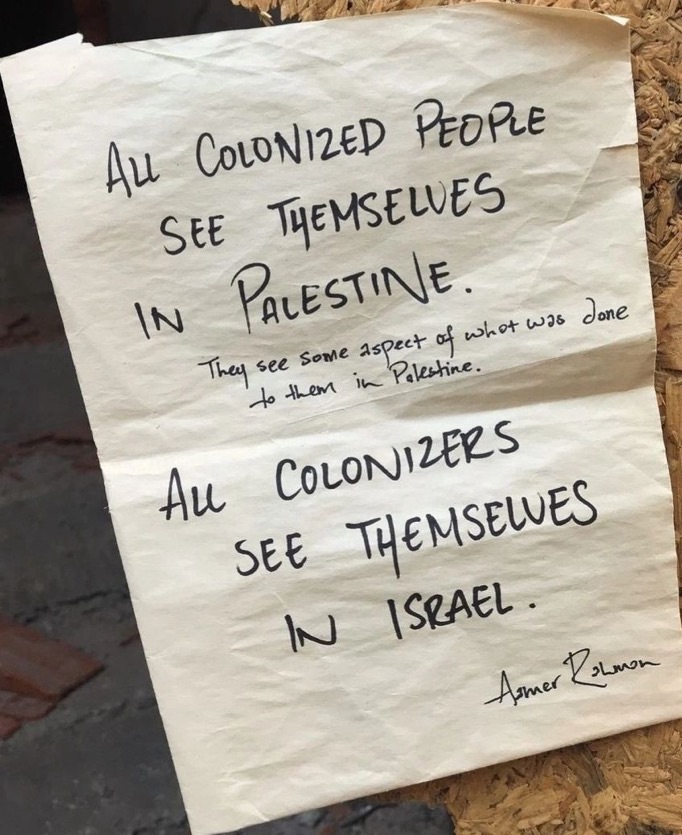
In granting to Britain the Palestine mandate the Versailles Settlement also paved the way for a new settler-colonial entity there, and for the Zionist genocide of the indigenous people that, with shameless US, German and British support, continues to this day. 

The First World War remains an example of, as William Faulkner once wrote, the past not even being past. Its dark legacy is a bloody one in the present for millions of defenceless human beings.

So, perhaps Wilfred Owen remains still the most vital voice on the First World War, understanding from that one war the pity of all war, and encouraging a level of empathy for the victims of war that no discussions of causality, strategy or blame ever can.

Leadership in the “grey-zone” 

Summary: Remarks to the conference “Leadership in Dialogue: Exploring the Spaces between Ideas, Communities, Worldviews”, Birmingham, 8 to 10 December 2024[1]

There are diverse perspectives on leadership. Mine is leadership as a responsibility to choose – particularly in choices that affects the lives of others, in organisations or in wider society.

That has been most the defining feature of my experience of leadership, and something you never really appreciate until you are in that role. Key aspects of leadership involve decisions on resource allocation. Such choices are always fraught because there are always winners and losers, upset and distress, and lingering resentments. 

Of course it can always be worse – I spend a good number of years leading humanitarian operations in, among other places, Angola during the civil war there. This led to some choices that were even more filled with anguish than the difficult but routine budget allocations that all leaders have to deal with. I write in my book, Ethical Leadership, about having to prioritize the lives of one group of people over another and how you have to learn to live with that after. That thought experiment with the runaway tram can get very real in some leadership roles. 

So given that these are leadership realities, ethical leadership is self-evidently important: by ethical leadership I mean the attempt to make the most life affirming choice possible, irrespective of the difficulty of the situation. A life affirming choice is one that optimizes the protection of the environment on one hand and the protection of human rights on the other.

Now, when we are making choices it is important for leaders to remember that those choices are made in, what I call in my book “a cruciform of agency”.

That is, there are aspects of the choice – whether that choice relates to a love affair, or work, or war – that are in the social world: those are the rules and resources associated with the choice:  the laws, polices, practice, finances or people who will be affected.

Then there are the personal aspects of the choice: the ones relating to the choice maker’s aspirations and experiences, and most fundamentally to their moral values.

The dialogue between these personal and social aspects of choice can be conceived of interacting orthogonally, hence the idea of a cruciform of agency emerges.

Now there is a 2002 paper by Craig and Greenbaum on a mining operation in South Africa. In that paper they recount how when they raised concerns with the mine management about issues such as health and safety, or labour terms and conditions, or the environmental damage that the operation caused, the managers they interviewed would express sympathy, but assert there was nothing they could do. The company they worked for caused the problems. Their responsibility was simply to get on with the job. They seemed to believe that they had no moral responsibility for the damage caused by the company despite the fact that it was they themselves who constituted the company. 

This denial of personal responsibility of policy makers and business executives for the consequences of their choices is a central constraint on obtaining progress on many of the world’s contemporary problems including slavery, something that affects an estimated 50 million people in the world today. 

I have rarely met anyone who has been in favour of slavery in principle. However, many in reality are in favour of slavery in practice. And if you doubt that, to take just one example, look at the hostile environments for migrants that many political leaders, from left to right in rich countries, take such pride in. This, despite the well documented fact that such hostile environments lead to the trafficking into forced labour and sexual exploitation of hundreds of thousands of vulnerable people. 

If the personal aspects of leadership, particularly the moral responsibility of the leader for the consequences of their choices is abandoned then ethical leadership becomes impossible, and indeed much worse may emerge. But this is not uncommon.

You all know the history: The Nazi’s used the idea of “just following orders” to try to evade personal moral responsibility for their atrocities.

Henry Kissinger infamously used the notion of “realpolitik” to justify his murderous foreign policy that devastated the lives of millions in Bangladesh, Cambodia and Vietnam.

Today, Joe Biden, Olaf Scholz, Keir Starmer and David Lammy use the formulation “Israel has the right to defend itself” to justify their craven complicity in war crimes and genocide.

While the words used in each of these examples are different, their purpose is the same. They are explicit attempts to disguise moral bankruptcy and evade basic leadership responsibilities for the catastrophic human consequences of their choices. For this they deserve utter condemnation in “history and eternity” as Abraham Lincoln once put it.

The evasion of personal responsibility in a choice is the anathema of ethical leadership, and it brings with it a loss of authority: what follower worth their salt is ever going to respect a moral coward.

And there is always something more moral that leaders can do, even in the most extreme of circumstances. At the very least they can protest.

The current British prime minister likes to boast that his is not a party of protest. Which of course is true. Because protest is leadership. Protest is a way in which a society can open dialogue with itself and change the ways it thinks about itself. 

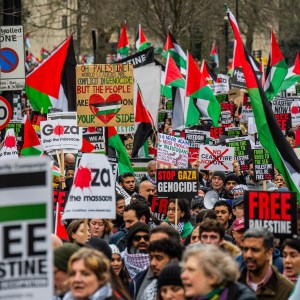
Protest is sometimes the only way more formal dialogue with power can be obtained. Protest is how women’s rights and gay rights, minority rights and, indeed, all human rights have been advanced in the world. Protest matters nationally and internationally as the struggles to end apartheid in South Africa and bring some measure of justice to the north of Ireland have shown. 

It also matters internationally because the failure of the West to protest Israel’s atrocities in Gaza, Lebanon and now Syria, compared to our volubility on Ukraine exposes an ugly, frankly racist, double standard at the centre of Western policy. 

Much of the progress towards human dignity, including limiting contemporary forms of slavery, has been through advancing international rule of law. This avenue for progress has now been struck a grievous blow, because the profound undermining of the principle of the universality of human rights that Western policy towards Gaza has asserted. This has undermined in a fundamental way the ideal of an impartial system of international rule of law. 

Many European leaders are expressing concern at the threat that Donald Trump poses to international order. But the damage done to that system of rule of international law by Biden, Starmer and Scholz is already catastrophic. 

At the heart of ethical leadership is the ideal once set out by the Irish patriot and anti-slavery campaigner Roger Casement who said, “We all on earth have a commission and a right to defend the weak against the strong and to protest brutality in every shape and form.” 

That is a commission which we must all take up. Because, more than any other time in my life, the challenge for all of us to lead ethically is at its most urgent. We are all leading in the grey zone now. Indeed, it is almost night.


[1] In his essay collection, The Drowned and the Saved, Primo Levi wrote of the “grey zone” a morally ambiguous space where the ideas of right and wrong are no longer absolute and “good” decisions are impossible. 

My best reads of 2024

Summary: some humanitarian assistance for book shopping this Christmas

As Christmas approaches some of you may be pondering books for yourselves or the bibliophiles in your life.

So here, in (more or less) chronological order are my best books of the year. Four entries are Irish; three about aspects of the British empire and one is about an aspect of the American empire; two trace the roots of Israel’s genocide in Palestine; two are feminist dystopian thrillers and one is a bit of feminist literary criticism; and there is one that is about pretty much everything. And there is some stuff about the Roman Empire, because there sorta has to be.

Each item has a link to a longer review if you want to know more. Hopefully some will supply some of you with some inspiration. 

  1. The Kidnapping: A hostage, a desperate manhunt and a bloody rescue that shocked Ireland, by Tommy Conlon and Ronan McGreevy – a lucid and gripping account of an incident in the Troubles that illustrates just what an all-Ireland affair they were.
  2. Empireworld, by Sathnam Sanghera – an elegantly written exploration of the contemporary impact of the British Empire on the world.
  3. Brotherhood: when West Point rugby went to war, by Martin Pengelly – an important insight through the prism of rugby into American war-making amongst the post-9/11 generation of American officers.
  4. Dirty Linen: The Troubles in my home place, by Martin Doyle – An outstanding portrait of the pity of war in the North of Ireland, that also builds a picture of the pervasiveness of collusion between British state forces and loyalist paramilitaries.
  5. Resting places: On Wounds, War and the Irish Revolution, by Ellen McWilliams – an exceptional book in which the interplay of the most personal of histories with the political helps illuminate some of the most shameful aspects of Ireland’s past.
  6. Spent Light, by Lara Pawson – “It’s quite hard to describe really. To begin with, it’s about a toaster, but it ends up being about everything,” the Kirkdale Bookshop on Spent Light.
  7. Ghosts of the British Museum, by Noah Angell – a fascinating exploration of the dark side of British history and culture through the spooky stories of one museum
  8. Sweet Home, by Wendy Erskine  – a wonderful collection of short stories of contemporary Belfast
  9. (A twofer) The General’s Son, by Miko Peled; and The Ethnic Cleansing of Palestine, by Ilan Pappe – two outstanding works of personal and national history that amount to a searing protest against genocide and apartheid by two Israelis of conscience and exceptional moral courage.
  10. Another twofer: The Handmaid’s Tale, and the Testaments, by Margaret Atwood – two all too believable dystopian thrillers, set in a United States that has been transformed into a theocratic dictatorship of the sort imagined in the fevered dreams of the legions of Trump’s incel supporters
  11. The Flashman Papers, by George McDonald Fraser – not sure if this is a thoughtful rumination on Empire masquerading as a scurrilous romp or vice versa. A sort of Carry on British Colonialism with all the casual racism that entails.
  12. Of course, you may still be thinking about the Roman Empire – some of us are men after all. So there are these: Palatine, by Peter Stothard; Emperor of Rome, by Mary Beard; Pax: War and Peace in Rome’s Golden Age, by Tom Holland
  13. Finally there is Monsters: what do we do with great art by bad people? by Clare Dederer – a fascinating exploration of the relationship between the audience and the monstrous artist, included, not least, for having the chutzpah in recognising that Stephen Fry can be an awful eejit sometimes.

That makes 13. A lucky number.

Not ethical leadership: a rocky start to Starmer’s first days in government

Summary: things can sometimes only get worse.

Keir Starmer’s government prides itself in not being idealistic. “We are not a party of protest!” they declare.

The smug, self-satisfaction that this statement implies might be better sustained if the party were conducting itself with unimpeachable professionalism now that it is in government. But its first 100 days in office have been notably rocky. A survey of this period by the Guardian was headlined, “We all hope it’s teething troubles – but worry it’s something worse.”

Well, I suspect it is something worse.

This thought will likely have occurred to many students of organisations. It will be a particular worry to those concerned, as I have been, with what is required to lead ethically: that is, the struggle to make organisational decisions that optimise life-affirming choices by seeking to protect human rights and advance environmental restoration. 

For me, there seems to be three inter-related structural problems with Starmer’s Labour party that are the root of the Labour government’s shaky start and shady future. The first of these is that Starmer’s Labour party is strikingly authoritarian. 

Everyone who has ever effectively led people in organisations will be aware that sometimes a directive approach is needed. For example, if it is necessary to evacuate a building due to an emergency, it is not appropriate to ask everyone how they feel about that first. It is necessary to point folk to the fire exits and tell them to get out. 

However, Starmer seems to privilege such an approach over more collaborative ones even when there is no compelling need. Indeed, his leadership seems to have a problem with any independence of thought and voice.

The run up to the 2024 general election was marked by accusations of a purge of left wing and pro-human rights candidates, and the parachuting into various constituencies of Starmer loyalists, some of them morally repugnant.

Starmer and his acolytes present this as “discipline” and “strong leadership”. It is a peculiar notion of strong leadership when a leader is afraid to countenance a bit of criticism or consider different perspectives on issues. 

From the longer-term view of organisational health this approach is even more problematic. Because if organisations exclude dissent, they reduce their capacity to think critically, to test ideas and winnow out the stupid or counter-productive ones. 

All leadership teams, no matter how smart, will come up with poor ideas from time to time. But truly smart leaders understand that they need processes in place to guard against such things. The restriction of dissension in Labour undermines the necessary processes.

This leads to a second structural problem which will increasingly emerge for Labour as this government proceeds. The purging of intellectual and philosophical diversity, and the fear of being seen as disloyal that is bred by leadership authoritarianism, will reduce Labour’s capacity to generate new ideas as time and events evolve. This will make it more difficult for the government, and the party as a whole, to right recent wrongs and to respond to the new challenges that will inevitably emerge. 

Both these problems, of authoritarianism and lack of intellectual diversity, are dwarfed by the most fundamental of Labour’s current structural problems: that is its moral bankruptcy. 

This was most starkly on display in the infamous interview that Starmer gave to LBC in which he endorsed collective punishment on the people of Gaza for the attacks on Israeli civilians on 7 October 2023, something that he should know as a lawyer, is a war crime under international law. Later assertions that Starmer misspoke or was taken out of context are undermined by the fact that in the weeks following this Labour front-benchers, including the crassly cynical Emily Thornberry and the craven Peter Kyle also publicly endorsed their Dear Leader’s position.

There was a softening of Labour’s Gaza position in the run up to the 2024 election, when it looked as if such an inhumane policy might cost it seats as Israel’s apparent genocidal intent became ever more explicit. However, on attaining power, it has, with a few cosmetic changes, returned to its substantially uncritical support of Netanyahu’s far-Right government. Hence Starmer is notably more reticent on the carnage inflicted on Palestinian civilians in comparison with his public anguish over Israeli casualties.

It is in the context of these three structural failures that we should consider the votes in the first 100 days of this government on maintaining the two-child limit on child benefits and cutting winter fuel payments for pensioners

Not to put too fine a point on it, these votes look more like a process for the breaking of the human spirit of backbench members of parliament rather than any cool consideration of regrettable financial necessity. 

In bringing these matters to a vote when they did, the Labour leadership sought to purge any residual dissent by demanding that, in the name of loyalty, backbenchers should betray their constituents and their consciences on the issue of the poverty of English people, until now a residual Labour moral value.

Having done this, the thoroughly compromised backbenchers have been truly initiated into the moral bankruptcy that is at the core of the British Labour party. So, all will have diminished credibility if they are ever tempted to mount a future principled challenge to the leadership’s proposals, no matter how stupid or morally repellent those proposals might be. 

Starmer’s Labour may be better than the Tories that they replaced. But there seems to me to be a rot at their heart, the stench of which may soon become overwhelming. 

Old habits, new protests: on the politics of Israel’s allies

Summary: those who have lost their moral compass will never understand that protest is leadership

Rule of international double standards

Today, it appears that many Western political leaders apply multiple caveats to the principle of the universality of human rights. The result is that rather than rule of international law we seem increasingly to have rule of international double standards. 

This is particularly plain in relation to British, American and German policy towards Gaza. In comparison with their supportive policy towards Ukraine and their outrage at Putin’s war crimes there, in relation to Gaza there is a lack of condemnation for ceaseless attacks upon civilians. On the contrary, the British, Americans and Germans remain publicly and materially supportive of Israeli policy.

The moral black hole at the heart of Western policy towards Israel

British, American and German policy on Gaza appears to be underpinned by a view that Palestinian lives are not equal to Israeli lives and so unworthy of comparable protection. Hence those three governments seem to have decided that it is better to arm and provide diplomatic cover for the far-Right Netanyahu government rather than to uphold the most basic principles of human rights and international humanitarian law.

In the face of the considerable evidence of genocide these governments are deaf to the international protests of conscience, and to the demands of Palestinian and Israeli voices for peace. Instead, they work to maintain the murderous Israeli Defence Forces supply lines at all costs. 

I have heard some try to justify this human rights double standard in relation to Israel by responding to protests with patronising reference to the need for realism, for a “realpolitik” approach to the conflict. This is, perhaps, a notion they may imagine that the protesters do not have the sophistication to properly understand. However, many will know that “realpolitik” is a term that has considerable previous, notably in the hands of Henry Kissinger, as a euphemism for moral vacuity and acquiescence in crimes against humanity. 

Given this many will remain unconvinced that “realpolitik” really is a sufficient justification for the mounting horrors in Gaza and the West Bank. So, why are the US, the UK and Germany so steadfast in their support of a far-Right Israeli government pursuing such a horrendous campaign of violence?

It is worth remembering that Germany was genocidal in Namibia well before the Nazis ever came to power. While relatively democratic, Britain and the United States were also genocidal in the 19th and 20th centuries in relation to, amongst others, Native Americans, Ireland and South Asia. It was democratically elected governments in the US that launched the invasion of Vietnam and the destruction of Cambodia. It was democratically elected governments in the US and UK that unlawfully invaded Iraq. Today it is democratically elected governments in the US, UK and Germany that have facilitated the far-Right in Israel in their indiscriminate slaughter of Gazan civilians

So, if we take even a medium-term historical view on these countries, it seems that there is a strain of thinking in those nations’ political cultures stretching from Left to Right that still view war crimes and genocide not as appalling and even unforgivable aberrations, but as legitimate policy options when it is convenient for them or those, however unsavoury, that they deem allies. 

Protest as leadership

It is in this context that the leaderships of the US, the UK and Germany display such an extraordinary arrogance toward those protesting their disgust at their policies. In the UK, along with their gleeful grasping at graft, their contempt towards protesters is a measure of government ministers’ extraordinary sense of entitlement.

But it is the protests of which they are so contemptuous that so often change cultures and countries in the ways in which corrupt politicians can only dream. This is because protest is moral leadership that seeks to make the world a better place by demanding that it become so. 

It is because of protesters that women have the vote, that apartheid has been ended in South Africa, that civil rights have been advanced in the US and the North of Ireland. When many governments have sought to merely manage the status quo – the “realpolitik” – protesters have asserted that this is not good enough and demanded better.

Today protesters understand, as the Irish patriot and human rights activist Roger Casement once put it, that “… we all on earth have a commission and a right to defend the weak against the strong, and to protest against brutality in any shape or form”.

So, at the end of the day, as Israel’s allies become ever more deeply mired in the murder of children, it is the protesters they disdain who will perhaps contribute most substantially to an end to apartheid in Israel/Palestine and thereby save the souls of their own countries.