The Future of the SDLP

img_1542The Social Democratic and Labour Party (SDLP) of the North of Ireland has always been a coalition. There are folk in the SDLP who, if they were living in Dublin or Cork or Galway, would be in Fianna Fáil, or Fine Gael, or Labour. But, faced with an existential challenge around the issues of civil rights and peace, they coalesced into a movement that sought to advance the ideals of social and liberal democracy in the face of horrific violence and sectarianism. Such coalitions are significant in history: Both the African National Congress in South Africa, and Congress in India drew together similar diverse elements in the common cause of liberation.

For myself, if I was living in the south of Ireland I would be Labour. But that does not mean I have any less respect for comrades and compatriots from different political traditions who have, with empty hands, faced down the authoritarianism of both the Provos and the British Government to create a peace process out of the nothingness of thought and compassion. It is they, more than anyone, who have, on the streets of Belfast and Derry and Newry and every other town and village in between, brought about the peace process when so many others turned their faces away from the fratricidal bloodshed.

Many southern leaders have also made extraordinary contributions to this struggle for peace and civil rights in the North of Ireland. Sean Lemass, Justin Keating, Garret Fitzgerald, Peter Barry, Dick Spring, Albert Reynolds, Bertie Aherne, Enda Kenny, Leo Varadkar, and Simon Coveney are amongst the most prominent of these leaders and I believe and hope they will be properly honoured by history.

But all of these apart, perhaps, from Sean Lemass, have been guided by the collective wisdom and experience of the SDLP. The SDLP, while consciously standing aside from the political disputes of the 26 counties, have forced the ideal of a new Ireland – one uniting Catholic, Protestant and Dissenter within the framework of an united Europe – back onto the political agenda of the whole island even in the bloodiest and most sectarian moments of our recent history.

This remains a vital and unfulfilled ideal.

There may be a time in the future when the SDLP should break up into the different Irish traditions of Fianna Fáil, Fine Gael and Labour, or, preferably, contribute to a fundamental realignment of these elements into clearer conservative and progressive formations.

But today, with Brexit and the disfunction of the British state again threatening war in Ireland, is not the day for that reckoning.

The SDLP is a vital independent voice for social democracy in the islands of Ireland and Britain. It must remain so.

Brexit: just when you think things can’t get any worse, they can

Common sense does not always prevail. Situations and circumstances can take on their own momentum leading to disastrous outcomes.

Take the case of the First World War. Nobody in the chancelleries of the Great Powers wanted or foresaw war when news of Gavrilo Princip’s bloody action in Sarajevo was first heard. Very quickly however imperial bellicosity, diplomatic ineptitude,  and the demands that railway timetables imposed on the movement of German troops led to a conflagration that engulfed all of Europe.

For those who think such things couldn’t happen again it is worth looking at Bob Woodward’s exploration of the decision-making leading up to George W Bush’s invasion of Iraq. This describes how an initial request for a contingency plan quickly ballooned, as part of the planning process, into troops and armour in the desert and with that a overwhelming pressure for invasion and war. The consequences of the resultant chaos is with us still.

“Events, dear boy, events” still, as they have always, drive decision makers to places they do not necessarily want to go. And, as certain as that, is that whenever there is a Big Red Button that should never be pushed there is always a Father Dougal there to push it no matter how catastrophic the consequences.

I suspect that is where we are with Brexit now. Every – EVERY – credible report and study shows it will be a disaster. Logic alone suggests that cutting your country from its closest allies at the behest of Donald Trump and Vladimir Putin is a poor idea. The consequence may be a relatively small disaster, as in the case of Theresa May’s vile, xenophobic deal. Or it may be a disaster comparable to a small war, as in the case of a “no-deal” Brexit. But whatever shape Brexit ultimately takes there will be one commonality – it will be a disaster.

There are assurances from parliamentarians that parliament will not countenance a “no-deal” situation. But to avoid such an outcome requires rational thought and moral courage. That is in spectacularly limited supply amongst the current membership of the House of Commons. From the sinister, such as Jacob Rees-Mogg and Kate Hoey, to the cravenly self-serving, such as Boris Johnson and Theresa May, to the simply stupid, such as David Davis, Andrea Leadsom, Priti Patel, Steve Baker, Nadine Dories, to the Lexit fantasists like Jeremy Corbyn, there is a such a plethora of clowns and charlatans lining up to press that Big Red Button, that it is a brave person who will bet that sanity will triumph.

That so much of the media is still treating this gallery of eejits and gobshites as credible and serious-minded leaders foretells a future reckoning for the Fourth Estate. Truly this has not been their finest hour.

In the course of its long and blood-stained history England, aside from a few brief episodes, has managed to avoid the deprivations it has inflicted on so much of the rest of the world. This has led to a considerable sense of exceptionalism that still pertains: “What has happened to others cannot happen to us.” Why? “Because we’re English, that’s why.”

But the English are as human as the rest of us and cursed with the same flaws and fears that have driven disasters in so many other parts of the world. Having placed their trust in the array of shysters that now infests the Palace of Westminster, it may simply now be their turn, and Brexit their reckoning.

However it may be some small consolation for those who will suffer Brexit’s bitterest consequences that those who have led them to this juncture will not share in their suffering. Rees-Mogg, Johnson, Davis et al will remain ensconced in wealth and privilege no matter how deep the economic downturn, and those who can least afford to pay will bear the brunt. In the century since the lions were first led by the donkeys to the slaughter of the First World War the donkeys will finally be unequivocally in charge again. And God help us all when that happens.


Not British Enough: the DUP and the (next) great betrayal

There is the story of Sam the stockbroker, who made so much money that he was able to buy himself a 100 foot yacht and have it moored in New York Harbour.

He then invited his parents to dinner on board the yacht and dressed specially in a captain’s uniform that he bought to go with the boat.

After dinner he said to his parents, “Well, I bet you never thought you would see this: your own son the captain of such a vessel.”

His mother smiled at him. “Son”, she said, “to me you are a captain. To your father you are a captain. But to a real captain, you’re not a captain.”

Junior

That story came back to me recently listening to Ian Paisley Junior ranting off again about Brexit, and what the British Government should do to put “Brussels” in their place. Junior, never the sharpest of spoons in the knife drawer, hasn’t realised yet that to his voters he and his may be British. To some of his political opponents in Ireland they may even be British. But to the real British, the ultras who are busily trying to craft their little Engländer Brexit, they are not British.

That will matter when the crunch-time comes between the British government and the EU. When it comes to the choice between a deal that will satisfy those, like Jacob Rees-Mogg, seeking Brexit to avoid EU tax regulations for themselves and their clients, those, like Micheal Gove, using Brexit as an executive power grab, and those, like Theresa May, slavering over the anti-migrant ethnic cleansing that they dream of after Brexit, the interests of embarrassing “Irish” types like the DUP are not going to count for much. Instead they will be ignominiously dumped just as every British vassal has been as soon as it becomes convenient or necessary to advance the interests of the “real” British.

The outcome of the negotiations between the EU and the UK over the Irish border is already settled. It was settled in December 2017 when the UK agreed in effect that the north of Ireland would remain, de facto, in the Single Market and Customs Union. Hence the border will be in the Irish Sea. This, the “back-stop option”, is something that the DUP will regard as the most abject and treasonous of betrayals. It does have a certain ironic, comic value however: it is the inevitable outcome of the DUP’s successful, if dubiously ethical, campaigning for the UK to leave the EU.

The current pantomime that the UK is indulging, repeatedly proposing to EU 27 the same fantastically unworkable ideas for dealing with the border, is not a serious negotiating effort. There is no expectation on the part of the British that these proposals will provide any basis for a mutually agreed solution let alone that they may be accepted unamended. Their purpose is merely as a subterfuge to attempt to delude the DUP into believing that the British government is still fighting their corner so that continued DUP support for the UK government will be maintained. Of course eventually denial of the intended “betrayal” becomes impossible and the Tories will have to either come clean or accept the economic devastation that a no-deal Brexit would bring.

The loyalty to the British Crown of the Unionist community in the North of Ireland is an incredible thing. Tens of thousands have displayed awesome courage in its service and bled for it over the centuries in every war and imperial adventure that the British have undertaken. But this loyalty has never been reciprocated by the British Establishment. The DUP are about to find that out as they are abandoned like the cheap stooges to power that they are.

The Problem of Jefferson: political inaction and the continuation of slavery in the world

My remarks to the Slavery Panel during the Women’s Forum in the Commonwealth Heads of Government Meeting

It’s highly appropriate that slavery is on the agenda of the Commonwealth Heads of Government Meeting this week. Because while London is sometimes thought of as the cradle of the anti-slavery movement, the anti-slavery movement truly started years before the meeting in 1787 that set up the Committee to Abolish the trans-Atlantic Slave Trade. It started the first time west African men and women rose up to fight with their bare hands for their freedom from the slave ships, and whose actions disrupted the slave trade to such an extent as to save hundreds of thousands of others from such trafficking.

That is a tradition that has continued across the centuries and across what is now the Commonwealth. From Caribbean leaders such as Mary Prince, to African leaders like Equiano and Cugano, to Asian leaders such as Dr Ambedkar, to contemporary organisations like Piler in Pakistan, OKUP in Bangladesh, Centre for Education and Communication in India, and the Global Alliance against Trafficking in Women. All these have asserted and continue to assert the principles of human rights in opposition to the way the world dehumanises and enslaves others.

So after these centuries of struggle why are we still discussing how to end slavery. Well it is because we, as a human society, still permit slavery to exist.

While I have rarely met anyone who is in favour of slavery in principle, I have met many people who are in favour of slavery in practice. Slavery provides benefits to the powerful, in terms of cheap commodities, cheap construction workers, vulnerable domestic workers, advantages in terms of trade, opportunities to sexually abuse women and children, or simply to indulge prejudice.

So while we all bear a moral responsibility for this continued existence of slavery, the greatest responsibilities must be borne by those with the greatest power to end the power.

A recurrent problem through history is what I have come to think of as the problem of Jefferson. Jefferson was possibly the most brilliant man to hold the US presidency and a vocal opponent of slavery. But all he used that brilliance for was developing excuses why he couldn’t do anything about slavery.

Today politicians and business leaders across the world, including within the Commonwealth, find, in the name of convenience and prejudice, all sorts of reasons not to stand up for the children of their nations and citizens everywhere to end slavery and its causes. Migrants are vilified and exploited in the countries where they live and work and are too often ignored by the governments of the countries from which they originate. Governments make inadequate provision for education, particularly of girls, and both women and girls are denied their most basic rights. Civil society activists and trade unionists who lead the struggle against slavery and for decent work are isolated and persecuted. Police corruption is tolerated. Rule of law is undermined.

The struggle to end slavery is a political one. And yet it is not a coherent political priority for any of the governments of the Commonwealth, even those most voluble in their antipathy towards slavery. So long as this remains the case, it is ordinary Commonwealth citizens who will pay the price with their lives and liberty.

The Undiscovered Country appeal: Dublin reflections

Dublin Castle

Across the rooftops to Dublin Castle

This week I’m in Dublin, where, during Easter Week 1916 the Irish War of Independence began. Historians still argue over how necessary or justifiable that war was to achieve Irish independence. But whatever the rights and wrongs of it in the grand, historical scheme of things, at the most basic level it followed a bloody path of ordinary people doing brutal things to each other. As Eamon says in The Undiscovered Country, “even just wars are evil things.”

I learned the evil of war early. One of my earliest memories is seeing a neighbour getting shot. Another is of narrowly avoiding a culvert bomb set by the IRA to attack the British Army. The brother of a classmate at primary school was murdered by the SAS. Ten years ago I discovered that a group of Loyalist paramilitaries had planned, in reprisal for an IRA atrocity, to attack the primary school that I attended to kill all the children and teachers. The plan was eventually vetoed: some things were just too much of a war crime for the war criminals of the North of Ireland.

Some of the the themes of The Undiscovered Country are, unfortunately, as timeless as war itself. Others are, equally unfortunately, very timely. I wrote much of the book as a hard won peace, brought into being at another past Easter with the Good Friday Agreement, came under threat from a neo-imperialist faction of the British Establishment blundering towards a scorched-earth Brexit with utter unconcern for the damage they will cause to erstwhile friends and neighbours. It’s in this context that Eamon and Mick ruminate over chess and pints on the realities of colonialism and some of the absurdities of historical memory.

Thanks to the extraordinary generosity and support of over 150 friends I have now reached 62% funding for The Undiscovered Country. So, with another 40 or so pre-sales, the next big milestone of 70% funding beckons, and with that a step closer to the chance to share with the wider world all this, and more en route to solving a knotty mystery, including the cultural threats posed by mainland Europe’s resealable beer bottles, an assessment of Hamlet as a revolutionary, and the etiquette of buying pints in an Irish pub.

So, if you can see your way to adding your support to this endeavour by following this link

https://unbound.com/books/the-undiscovered-country/

and pledging what you would like, I would send you a hundred thousand and mark your name with gratitude in the book itself.

Very best

Aidan

Chimes at Midnight: Brexit and the demise of rule of law in the UK

Summary: the increased threat of terror brought by the UK’s decision to withdraw from European security cooperation mechanisms actually plays into the central purpose of the Brexit project: erosion of rule of law

The idea of rule of law is not a new one. It is frequently dated as far back as Aristotle, who said “It is better for the law to rule than one of the citizens.”  But the idea is at least a hundred years older. Sophocles dramatized it in his play, Oedipus the King, in which, as a result of his own investigation, the King finds himself responsible for the plague on Thebes and realises that he must be held accountable, just as anyone else would be, to his prior judgement.
daily-mail

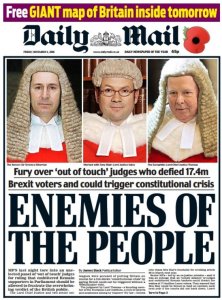
The Daily Mail reminds readers of its long-standing association with fascism

Rule of law then is the idea that it is the law, independently administered, that governs a people not the whims of any monarch or minister or mob, and that no one is above the law. So, when the mob gathers with flaming torches and pitchforks outside the “witch’s” hovel, or the minister wants rid of his mistress’ husband, the law should protect the basic human rights of the wise-woman and the cuckold, and restrain human excesses, or punish them when they transgress the law.

It is this concept, one that in British law can be traced back as far as Magna Carta, that is most fundamentally under attack with Brexit. It began with press and political denunciations of the independence of the judiciary. It has continued with British government proposals to use the excuse of Brexit and the “will of the people” to grant sweeping Henry VIII powers to ministers. If these powers are granted they will permit ministers to make law without reference to parliament.

img_0940

Tom Bingham, Baron Bingham of Cornhill, who served as Master of the Rolls, Lord Chief Justice, and Senior Law Lord

In his magisterial book on the subject, Tom Bingham sets out the fundamental principles of rule of law, noting that these include a requirement for compliance of the state with its obligations in international as well as national law. Bingham quotes Professor William Bishop as describing the international rule of law as including, “the realization that law can and should be used as an instrumentality for the cooperative international furtherance of social aims in such a fashion as to preserve and promote the values of freedom and dignity for individuals.”

But this ideal has long been anathema to powerful sections of the Conservative party. In 2015 David Cameron removed from the ministerial code the requirement for ministers to adhere to international law. Theresa May has never been shy about her wish to remove the UK from the jurisdiction of the European Court of Human Rights, an entity separate to the EU.

Brexit furthers this ambition to remove the constraints of international law from the UK government. As part of the Brexit process, the Government intends to remove the UK from the jurisdiction of the Court of Justice of the European Union. This, if it happens, will further remove constraints on ministerial power. A side effect of this will be to put in jeopardy the UK’s continued law enforcement and intelligence cooperation in Europe. But while this would undoubtedly increase the risks of terrorism for ordinary UK citizens, there is little that the pathetic foot soldiers of Islamic State can do that will pose an existential threat to the nation. However, the cynical might comment that, as in the past, an upsurge of terrorist attacks on the civilian population would provide a convenient excuse for a further concentration of power in the hands of ministers and further erosion of the civil rights of the British people.

Since the Brexit vote in 2016, the British Government have sought to find common ground with some of the most unsavoury governments and anti-democratic leaders on the planet. As well as Theresa May’s supplication to Donald Trump and the leaders of the bloodthirsty Saudi Arabian government, she has also proven herself a ready apologist for the governments of Poland and Hungary as they also strike at the foundations of human rights and rule of law in their own countries. Disgraced former Defence Secretary Liam Fox, gave more away than he intended with his declaration of “shared values” with Rodrigo Duterte, the Philippines leader whose repudiation of rule of law is so absolute that he promotes indiscriminate murder as a central tenet of his so-called “war on drugs”.

But all this should not be surprising. Because, for the empire-dreaming elite whose money and lies obtained the soiled “mandate” for Brexit, the diminution of rule of law is their central purpose. It will facilitate an environment in which ecological and safety standards, workers’ and consumers’ rights are negated. Capital will once more be given pre-eminence over labour, as newly empowered ministers ensure that the wealthiest are permanently put above the law, at least as far as their tax affairs are concerned. No matter what fantasies are spun by the leadership of the British Labour party about the possibilities of a “People’s Brexit”, they will not alter, one iota, the vital essence of this project, irrespective of who is in government.

So, the prospects of Brexit for the UK are not simply of economic decline, international isolation and irrelevance. British democratic standards and human rights, a tradition that can be traced back to Runnymede, are themselves under threat as the UK continues to seek its future alliances with new dictatorships and old autocracies.

As Shakespeare’s Falstaff reflects while Prince Hal prepares to repudiate their friendship and put him back into his lowly place, these are the “chimes at midnight”. They ring again today for any British subject not wealthy enough to indulge in tax avoidance. The lower orders have had their day. Now they must know their place.

On the value of conspiracy theories: the Kennedy assassinations and “official versions”

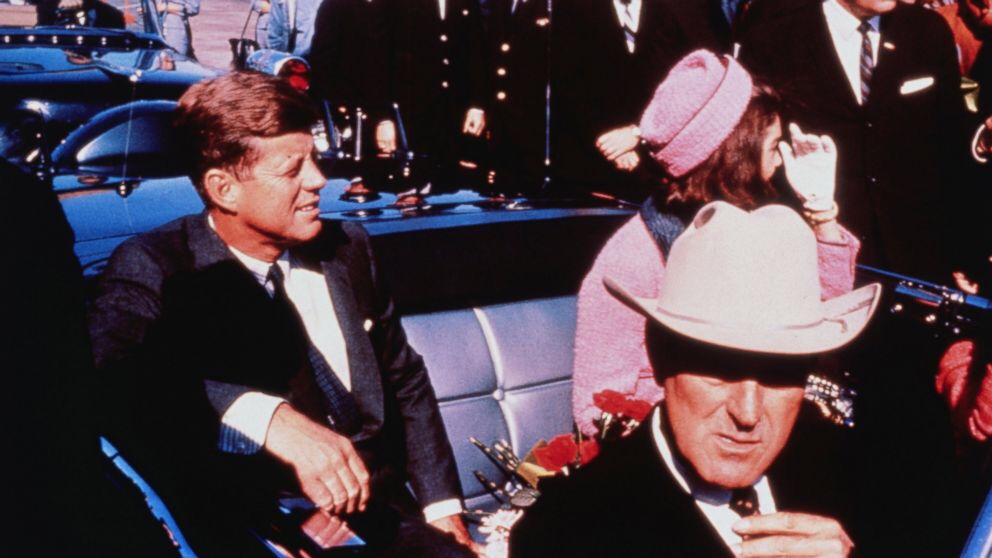
For many Gerald Posner’s book, Case Closed, is the definitive word on Jack Kennedy’s assassination. Posner concludes that Lee Harvey Oswald acting alone shot Kennedy on 22 Nov 1963 in Dallas Texas. It is a widely shared conclusion. Vincent Bugliosi, a distinguished prosecutor who put Charles Manson in jail, concluded the same in his own consideration of the case. And this is of course the official verdict of the Warren Commission established by Lyndon Johnson to investigate the assassination.

And yet as the US gets ready to publish another trove of documents relating to the Kennedy assassination, a clear majority of Americans – in 2013 the Economist reported 61% – still believe that Jack Kennedy was killed in a multi-person ambush organised by high officials in the US government.

David Talbot’s 2007 book Brothers, goes some way to explaining why so many still think this way. Talbot recounts how two of Kennedy’s closest advisers, Dave Power and Kenny O’Donnell, both veterans of World War 2, both travelling in the same car behind Kennedy when they saw him killed, were both under the clear impression that their convoy was under fire from multiple directions, including the infamous Grassy Knoll ahead of them, as well as the Book Depository behind them where Oswald was located.

Furthermore the subsequent killing on live television of Oswald by Jack Ruby, a mob-connected Dallas night-club owner, reeks of cover-up: Ruby’s story, that he wanted to protect Jackie Kennedy from the trauma of a protracted trial, is as fantastical as any Brexit bus slogan.

Talbot alleges that a pivotal figure behind the assassination of Jack Kennedy was Howard Hunt, someone who became infamous in the Seventies for his part in the break-in to the Democratic National Headquarters in the Watergate Building in Washington and the subsequent Nixon administration cover-up.

Talbot notes that in a memoir, American Spy, that Hunt wrote shortly before his death in 2007, Hunt included a “speculative” section on how the CIA would have gone about the killing IF it had been involved. In connection with the publication of that book Rolling Stone interviewed Hunt’s son who claims that, when he thought he was dying, Hunt described to him in some explicit detail the architecture of the conspiracy, which allegedly involved both Lyndon Johnson and senior CIA officials.

Talbot also claims that in spite of public statements that he believed Oswald was the lone assassin, Bobby Kennedy had been privately investigating Jack’s killing for years. Indeed, Talbot believes that, with the help of an FBI investigator, Bobby Kennedy had actually cracked the case, and it was his intention to have it officially reopened if elected president. That dream, of course, came to a bloody end in the Ambassador Hotel, Los Angeles, California in June 1968 when Bobby was himself assassinated.

Robert Vaughn, the scholar and actor, was with Bobby that night, and Vaughn has noted that there were more bullets fired than Sirhan Sirhan, the convicted killer, had in his gun. So, he concludes, there must also have been a conspiracy to kill Bobby. Perhaps this was a further measure to ensure that the truth of Jack’s death never emerged?

Perhaps it is far-fetched to believe in a conspiracy behind the killings of Jack and Bobby Kennedy. And it is improbable that whatever the contents of the papers to be released this week that they will shed much new or definitive light on those awful days. But at a moment in history when it appears that Donald Trump won the White House as a consequence of a Russian backed coup, and when a cynical campaign of lies has been used to strike at the foundations of a strong and united Europe, then perhaps the Kennedy assassinations still have important lessons for us. Not least they show that, whatever the official versions of events, that power and the powerful must be constantly questioned by the citizenry because it is only upon a foundation of doubt and skepticism that democracy, human rights and the rule of law can safely rest.

Finally: The Benefits of Brexit

Over the past months I have noticed a recurrent question on social media asking users to name a single benefit of Brexit.

I have managed to think of a few. In future there will be access to duty free in Dublin Airport for the flights to London. And, when the UK government inevitably betrays the DUP and sets the border between UK and Ireland down the middle of the Irish Sea, as the desperate price they must pay to get a trade deal with the EU, that will be a significant step towards the reunification of Ireland. Though, of course, given that the path towards a reconciliation amongst the Irish people was already set by the Good Friday Agreement this particular benefit could probably have been happily forgone.

But aside from these the search for Brexit benefits has been a forlorn quest. Brexiters have long been flummoxed when challenged to name which particular European laws they objected to. And even the dimmest seem finally to have realised that the stories of bendy bananas were preposterous myths and the promises of £350 million a week for the UK’s National Health Service were cynical lies.

But of course there are enormous benefits of Brexit for some, though not of course the vast majority of those deceived into voting for it, or even the racists and xenophobes for whom economic concerns are secondary to ones of hatred.

No, those who will benefit are an entirely different stripe of ideologue. They are a political and social elite who campaigned against the EU to concentrate power more firmly into their hands, irrespective of the social and economic cost to the majority.

For all their talk of the sovereignty of parliament the first fruits of their labours will be obtained if the Repeal bills currently before parliament are enacted into law and they are granted the sweeping Henry VIII powers those bills request. Such powers will enable ministers, for years to come, to make law without recourse to parliament.

And these powers are then likely to be used to enable the political elite to reward some of their most cynical backers: those who have chaffed against the regulations from the EU that have protected workers’ rights, environmental standards and food safety. They will get the regulatory bonfire they have long craved and that leading Brexiters have been promising.
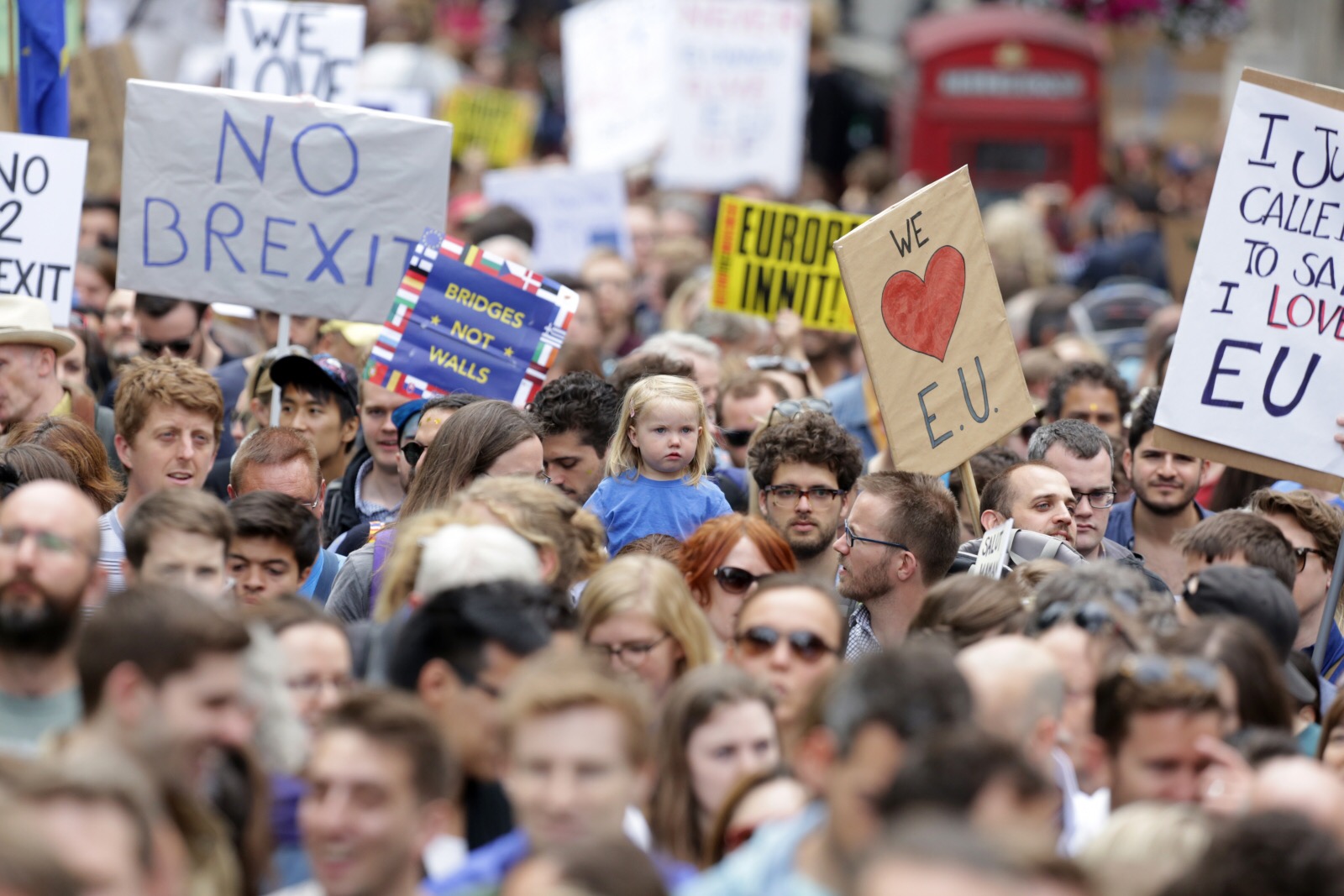
As the proportions and specific horrors of the catastrophe that will be Brexit become clearer by the day, it seems beyond rationality that the UK government still seems intent on embracing the disaster. But for some at the most senior levels of government this seems a price worth paying for supreme power in the devastated aftermath.

That the opposition Labour Party, wrapped up in its fantasies of some post-Trotskyist “People’s Brexit”, is so pusillanimously facilitating this careening towards disaster is even more bizarre. But then the careers of those, Left and Right, who are facilitating this mess, will naturally have come to an end as the reality bites, and they will be in comfortable retirement as the next generation scrambles to pick up the pieces.

Another fine mess: politics since the Brexit vote

Also published in Left Foot Forward 

When I worked in Angola in the late 1990s, towards the end of the Civil War, I discovered an important truth: just when you think things can’t get any worse, they can. So has it proven with British politics since the 23 June 2016 when the UK narrowly voted to leave the European Union.

Before the 2017 UK General Election I had thought that a hung parliament was probably the best possible outcome, to force some sanity and compromise into the UK’s intent to exit the European Union. Instead, Theresa May has sought a de-facto coalition with the Irish Democratic Unionist Party, a group so extreme that for them the witch burning scene in Monty Python and the Holy Grail is not so much comedy, but a utopian ideal.

For many observers the UK’s attitude to the EU in general and to its putative departure from the Union seems profoundly irrational. The government’s stated intention to leave both the Single Market and the Customs Union, ignores the vast economic cost of such moves. Instead Brexiteers fall back on the slogan “take back control”, dreams of a British Empire 2.0, and cooked-up alternative numbers that have little basis in reality. This is a position that has gone broadly unchallenged by the opposition Labour Party who promise the fairytale of a “People’s Brexit” if the electorate were only to entrust them with the levers of government.

To “take back control” of what the government has never really been clear. Certainly immigration, in spite of the UK’s need for immigrants, in order to satisfy the xenophobic amongst the government and its voters.

The government is also intent to “take back control” from the jurisdiction of the Court of Justice of the European Union, in spite of the threat that this poses to security and justice cooperation in Europe at a time of rising tensions and increasing violence across the continent. This perhaps gets to the nub of the matter. Because it suggests that rather than the government’s approach to Brexit being only economically incompetent and politically delusional it rather suggests that the government’s intent is profoundly ideological.

Taken alongside the antipathy of Theresa May to the European Court of Human Rights, and the former Prime Minister David Cameron’s decision to remove from the Ministerial Code an obligation for ministers to comply with international law, the UK’s intent to quit the European Union indicates an enduring colonialist instinct in the government that still bristles at the idea of international rule of law. They seem to regard it as an affront to the primacy of the UK parliament, which some seem to believe still should rule the waves.

But, of course, the supremacy of the UK parliament has already taken a kicking in the Brexit process as dozens of MPs, contrary to their judgment as to what is best for their country, voted to uphold the notional “will of the people” as expressed through a blood-stained and, it now increasingly appears, a corrupted referendum.

But this is as nothing to the intent of the Great Repeal Bill, to invest ministers with Henry VIII powers that will enable them to make vast swathes of law for years to come without reference to parliament. In other words the intent of the Great Repeal Bill appear less to do with withdrawal from the EU and more to do with a significant repeal of democracy itself.

The UK may appear to be blundering towards the exit of the EU like a drunk staggering towards the door of a bar. But all citizens must beware that the pantomime shenanigans of Davis, Johnson and Fox, the three Brexit Stooges, mask a much more sinister domestic agenda. And Labour needs to stop being the government’s poodle on Brexit.


Yeats’ question

For England may keep faith
For all that is done and said

– Easter 1916

With the triggering by the British Government in March 2017 of Article 50 to remove the UK from the European Union, Yeats’ question receives, perhaps, a rather definitive answer.

The foundations of Irish peace are European. Ireland’s and Britain’s common membership of the European Union allowed for some of the most corrosive aspects of the relationships between the two islands, and within the island of Ireland, to be finessed and for relationships to be recast in more constructive ways. Now that the Troubles are taking on the aspect of history it is too easy to forget how ghastly they truly were, and the sort of concerted, painful political effort that was necessary to bring them to some sort of conclusion.

But the careful progress that has been made towards a more enduring peace has been cast aside by the English political establishment as something of no account. So intent are English nationalists now on their dreams of reclaiming some long past imperial “glory” they plan to devastate the foundations of that peace with no thought of the consequences.

England won’t ever keep faith with Ireland, it seems. Ireland’s interests, Ireland’s peace, will always be subordinate to English prejudices and xenophobia.